Juan Orlando Hernandez, better known as JOH, a former president of Honduras once convicted and sentenced to 45 years in a US prison for massive drug trafficking, was abruptly released on Monday after receiving a controversial presidential pardon from Donald Trump.
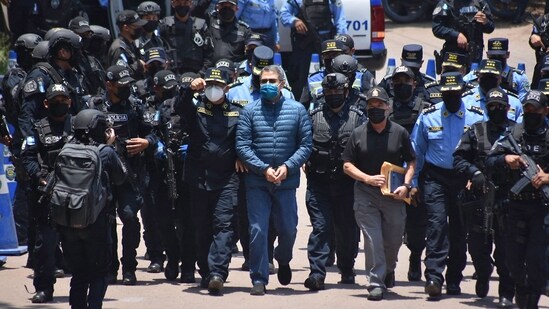
The move, confirmed by JOH’s wife Ana Garcia de Hernandez — “a day we will never forget” — triggered an avalanche of criticism, raising questions about the increasingly transactional nature of US foreign policy. It also left observers wondering what Trump's real stance is on the drug trade and “rule of law” in Central America.
Hernandez, who led Honduras from 2014 to 2022, was a high-profile figure in Central American politics. US prosecutors successfully argued that he had turned his office into a criminal enterprise, facilitating the import of approximately 400 tonnes of cocaine into the United States.
His conviction was considered a landmark victory for US agencies committed to combating corruption and drug networks in the region.
{{/usCountry}}His conviction was considered a landmark victory for US agencies committed to combating corruption and drug networks in the region.
{{/usCountry}}But a controversy has now exploded, at the core of which lies a contradiction. Trump administration’s stated foreign policy does not quite sync with the pardon.
President Trump has made the aggressive prosecution of a “war against Latin American drug trafficking” a centerpiece of his rhetoric. He has deployed US military forces in the southern Caribbean and ordered the bombing of small boats alleged to be carrying drugs, from countries such as Venezuela.
Irony in Trump's stance
Yet, in granting clemency to Hernández — a man convicted of trafficking hundreds of tons of the same substance — Trump had to give a clarification. He said JOH had been “treated very harshly and unfairly” by the previous administration, led by Joe Biden.
White House Press Secretary Karoline Leavitt doubled down on Trump's words, depicting Hernandez as a victim of “prosecutorial overreach”. She said JOH was convicted becasue he “was opposed to the values of the previous administration".
But the reversal drew immediate fire from both sides of the political aisle for the Republican Trump.
Senator Ed Markey of the Democratic Party posted on X, “Trump is illegally blowing up boats in the Caribbean — supposedly to stop drugs coming into the US. Yet he pardons the former president of Honduras who was convicted of sending cocaine to the US. It doesn’t make any sense.”
Republican Senator Bill Cassidy echoed the sentiment, asking, “Why would we pardon this guy and then go after Maduro (Venezuela's President) for running drugs into the United States?”
Honduran election angle
Trump’s act of generosity appears to be rooted in his geopolitical strategy — or interference, as some see it — around the ongoing Honduran presidential election.
Trump has explicitly backed fellow right-winger Nasry Asfura, who belongs to JOH’s Nationalist Party and currently leads by a tiny margin. The ruling party candidate Rixi Moncada has accused Trump of “interventionist” meddling.
By pardoning Hernandez, Trump has sent a signal to his regional allies: loyalty will be rewarded, and political alignment supersedes criminal conviction, an AFP report noted.
Trump issued a stark warning late Tuesday, declaring there would be “hell to pay” if Honduran authorities attempted “to change the results".