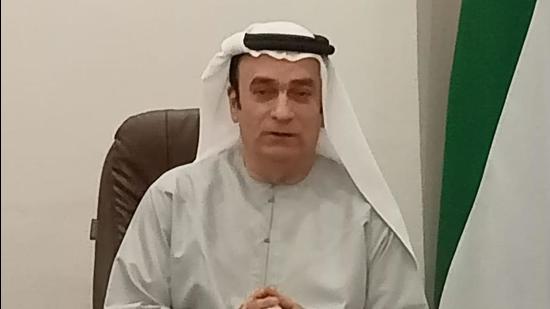
The United Arab Emirates (UAE) is keen on speedy restoration of normal air services with India as the lack of adequate flights is posing difficulties for travellers and has led to a spike in air fares, UAE ambassador Ahmed AlBanna said on Wednesday.
Under the air bubble arrangement worked out by the two countries following the Covid-19 pandemic, Emirates and Etihad, the flag carriers of the UAE, are currently operating at 30% of their total capacity under the normal air services agreement.
This is affecting traffic and the price of a return ticket has increased to almost ₹200,000 from the pre-pandemic rate of around ₹80,000 to ₹90,000. Besides going back to the air services agreement, which will result in the doubling of traffic, the two countries should look at increasing capacity under the pact, AlBanna told a group of reporters.
The UAE has also asked the Indian government to exempt flights to the emirates from restrictions for the duration of the Dubai Expo 2020, which will continue till March next year, but is yet to get a “green light”, he said.
The UAE is home to more than three million Indian expatriates, the largest ethnic community in the emirates comprising professionals and blue-collar workers and their families. The demand for flights has increased as a growing number of Indians are making their way back to the UAE. Dubai also serves as a key transit point for Indians travelling to other parts of the world.
{{/usCountry}}The UAE is home to more than three million Indian expatriates, the largest ethnic community in the emirates comprising professionals and blue-collar workers and their families. The demand for flights has increased as a growing number of Indians are making their way back to the UAE. Dubai also serves as a key transit point for Indians travelling to other parts of the world.
{{/usCountry}}AlBanna noted the total weekly capacity for Dubai alone under the air services agreement was about 65,000 seats, while only 24,000 seats are currently available. The frequency of flights on the Delhi-Dubai route has dropped from five a week to three a week, he said.
A clause in the air services agreement of 2007 mandates that when capacity on routes between the UAE and India touches 80%, new quotas to be shared between carriers of both countries should be re-negotiated. AlBanna noted that Indian carriers had reached 100% capacity before the pandemic.
“At that time, there were at 1,068 flights a week, with around 400-plus flights by the UAE carriers and over 500 by the Indian ones. We need to re-negotiate,” he said.
Two rounds of talks held in Mumbai in 2017 and New Delhi in 2019 had not been “successful in reaching a final decision on increasing capacities for the four sectors of Dubai, Abu Dhabi, Sharjah and Ras Al Khaimah”, he said. It would be to India’s benefit to end the air bubble, go back to the air services agreement and open all airports once travel restrictions are eased further, the envoy added.
AlBanna said the UAE and India had recently concluded the second round of negotiations on a proposed comprehensive economic partnership agreement (CEPA) in Dubai and a third round will be held soon.
Though the two sides are eyeing the completion of negotiations by March next year, AlBanna said: “I want it before March. Hopefully it will be in place. The CEPA will be a big plus point in our strategic partnership.”
Referring to the first virtual meeting of the foreign ministers of India, Israel, the US and the UAE last month, AlBanna said the four countries had no plans to create a NATO-like alliance. “That doesn’t make any sense. It is an economic bloc that concentrates on economic and business collaboration between the four countries,” he said.
Technical teams from the four sides are preparing for an in-person ministerial meeting. “Very soon, once that is done, the ministers will meet to discuss further sectors [of cooperation],” he said.