The judgement in the Nirav Modi extradition case will be delivered in the Westminster Magistrates Court on February 25, judge Samuel Goozee announced on Friday at the end of a two-day hearing after defence teams made concluding arguments.
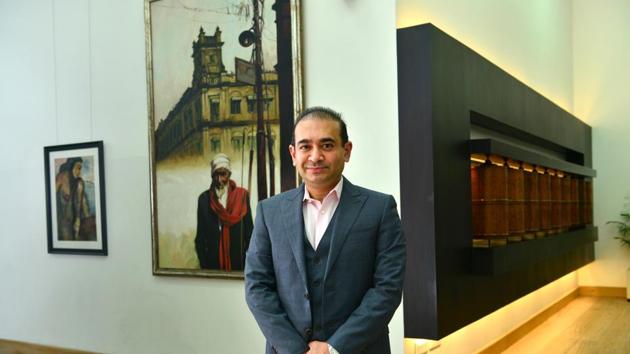
Claire Montomery, Modi’s lawyer, and Helen Malcolm of the Crown Prosecution Service representing India, quoted from emails, witness statements, bank and other documents, and presented their versions on issues such as prison conditions, mental health treatment facilities and the possibility of a Modi receiving a fair trial, if extradited.
Under the UK-India extradition treaty, India needs to establish in UK courts that there is a prima facie case against the person requested – not a conviction – based on charges that would amount to offences in law in both countries.
One of Montgomery’s major objections to the extradition is the alleged lack of a prima facie case against Modi, which was countered by Malcolm, who argued that the charges against Modi would amount to similar criminal charges under British law.
“There is multiplicity of evidence”, Malcolm told the court, that Modi indulged in fraud in relation to seeking loans from the Punjab National Bank in Mumbai. The evidence is sufficient to establish a prima facie case against him, she said.
{{/usCountry}}“There is multiplicity of evidence”, Malcolm told the court, that Modi indulged in fraud in relation to seeking loans from the Punjab National Bank in Mumbai. The evidence is sufficient to establish a prima facie case against him, she said.
{{/usCountry}}Malcolm also reiterated India’s charges that Modi interfered with witnesses, was involved in destroying servers and mobile phones, and also threatened to kill one of the witnesses. It is not for the court to “start double-guessing” what amounts to a crime in India, she added.
Besides the alleged lack of a prima facie case, Modi’s defence team has argued that he would not receive a fair trial in India, would not receive appropriate treatment for mental ailments and that there was a risk of suicide. There was no evidence on India’s charge that Modi and others conspired to defraud the bank, the team argued.
Modi, 49, who is lodged in the Wandsworth prison in west London and attended the hearing remotely, wearing a jacket and sporting a beard, is the subject of two extradition requests; one processed by the Central Bureau of Investigation and the other by the Enforcement Directorate.
Charges against Modi involve PNB’s Mumbai branch that extended his companies loans worth over ₹11,300 crores. The CBI case relates to large-scale fraud upon PNB, through the fraudulent obtaining of Letters of Understanding (LOUs/loan agreements); the ED case relates to the laundering of the proceeds of that fraud.
The second extradition request was made on the basis of two additional offences as part of the CBI case, relating to allegations that Modi interfered with the CBI investigation by “causing disappearance of evidence” and intimidating witnesses (”criminal intimidation to cause death”).