
 E-Paper



US ‘bomb cyclone’ threatens to kill wheat crops, freeze cattle
US Bomb Cyclone: Snow, blizzard, freezes and flood warnings stretch from Washington state to Maine and down to the Gulf of Mexico.

 Prefer HTon Google


Extreme cold from Texas to the Dakotas is endangering crops, livestock and rail lines in the latest blow to American food supplies.
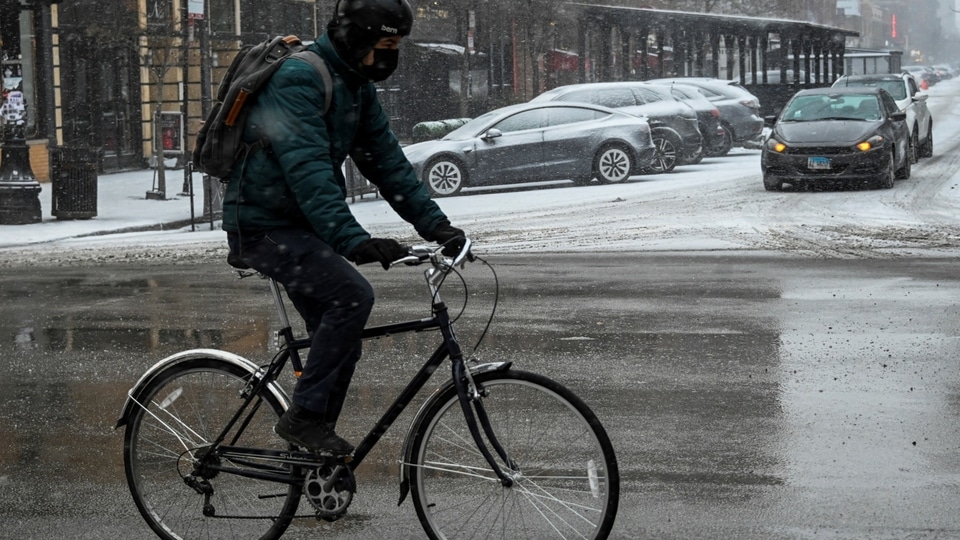
Record-low temperatures mean farm machinery is at risk of breaking down, while cattle herds are vulnerable to freezing. Frigid cold on the Plains is raising the threat of so-called winterkill for wheat crops, already under stress because of a prolonged drought.
While the arctic snap will likely last just a few days, the consequences for food prices could be longer lasting, depending on the extent of the damage. That’s at a time when the world has already been saddled by entrenched food inflation as war, climate change and supply-chain snarls hit supplies in the past year. Farmers, too, are bracing for the challenge.
“It goes without saying that this event is going to hit farmers’ bottom line,” said Corbin Catt, founder of Catt & Associates, a commodities trading adviser based outside Kansas City.
Snow, blizzard, freezes and flood warnings stretch from Washington state to Maine and down to the Gulf of Mexico. Frigid weather reaches as far south as Texas, with Dallas forecast to drop to 11F Thursday night.
Read more: 'Once-in-a-generation' winter storm freezes US: What is a bomb cyclone
In parts of Montana, where cattle, wheat and livestock feed are among the state’s top commodities, temperatures Thursday plunged to minus 50F (46C).
A historic US cold snap in 2021 left farmers struggling to get food and water to their livestock herds. Some ranchers even duct-taped calves’ ears to their necks to stop them from falling off.
While extreme weather is part of farming, the stakes are high heading into 2023 because many growers are battling dry soil on top of a recent surge in prices for diesel fuel, fertilizer and other farming necessities.
Winter Wheat Fears
In some parts of Kansas, the top US winter wheat producer, the conditions are raising concerns over stunted grains, according to Catt, who helps out on his family’s farm in west-central Missouri, where they raise cattle and grow crops including corn, soybeans and wheat.
The biggest worry for grain producers is a prolonged severe cold spell without snow to protect the fields, either because of high blizzard winds blowing it away or freezing temperatures without precipitation.
Futures for hard red winter wheat, a grain at high risk of damage from the storm, climbed for the fourth straight day on Friday, and were set for the longest rising streak in four months.
In South America, lack of rain is hampering fieldwork in Argentina, and soybean planting is just 61% complete, 18 percentage points below normal for this stage of the season. By contrast, in Brazil, rains have boosted crop progress. Winter-corn production in the second-largest producing state is estimated at 15.4 million tons, up from 13.3 million tons a year earlier.


