In an unusual development in global politics, archrivals China and the United States have found common ground on the issue of Iran's nuclear capabilities and its control of the Strait of Hormuz.
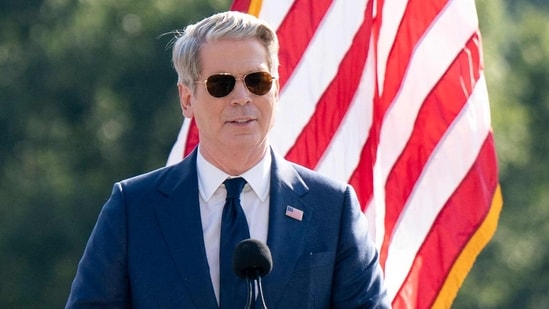
US Treasury Secretary Scott Bessent on Tuesday said the nations were in agreement that Iran cannot have nuclear weapons, CNBC reported.
"We have more in common with the Chinese on Iran than we disagree with them," said Bessent, adding that the Trump administration had "private discussions" with China on preventing Iran from acquiring a nuclear weapon.
China agrees on free trade in Strait of Hormuz
"China agrees that there has to be free maritime trade in the Strait of Hormuz," CNBC quoted Bessent as saying. He said Beijing also believes that oil and other goods should flow freely through the Strait of Hormuz, which has been restricted by Iran since the war broke out in February this year.
{{/usCountry}}"China agrees that there has to be free maritime trade in the Strait of Hormuz," CNBC quoted Bessent as saying. He said Beijing also believes that oil and other goods should flow freely through the Strait of Hormuz, which has been restricted by Iran since the war broke out in February this year.
{{/usCountry}}The Strait of Hormuz is a major trade route, through which one-fifth of the world's oil and natural gas was crossing before the US and Israel launched a war against Iran.
Bessent further said China obtains 50 per cent of its energy supply from the Gulf. "So I believe it's up to China, or incumbent upon China, to work toward a solution," he added. "We will see how they follow through."
The US treasury secretary is spearheading the Trump administration's 'Operation Economic Outcast' against Iran. In its latest bid to choke Tehran's economy, the US has decided to impose secondary sanctions on its its business partners.
Amid these efforts, questions arise about how the US would deal with China, which is Iran’s top oil buyer, as well as, its top trading partner.
US-China trade ties
The US meanwhile is also in long-term trade talks with Beijing. Chinese President Xi Jinping is scheduled to visit the US in the second half of September.
The Trump administration has blamed China for trade imbalances that have left it with a large trade surplus while the US has a sizable deficit.
ALSO READ: Iran claims 5 killed at wedding during US attack: 'Turned it into a funeral'
His remarks came at the end of a two-day meeting with finance ministers and central bankers where he tried to focus on growth, telling reporters he had urged some of his G20 counterparts to take a page from the Trump administration’s playbook of using tariffs and other measures to crack down on trade imbalances.
Bessent further said that 19 of the members of the G20 had agreed to address streams of “cheap exports” that cause global economic imbalances, but said China had dissented.
(With inputs from Reuters)