
 E-Paper


US trade court blocks Donald Trump’s ‘Liberation Day’ tariffs under emergency-powers law
A panel of three judges at the Court of International Trade ruled that Donald Trump didn’t have the legal right to make such broad tariff changes on his own.

 Prefer HTon Google


A US federal trade court has stopped President Donald Trump from imposing new tariffs on imported goods, saying that he went beyond the powers given to him by law, reported the news agency AFP.
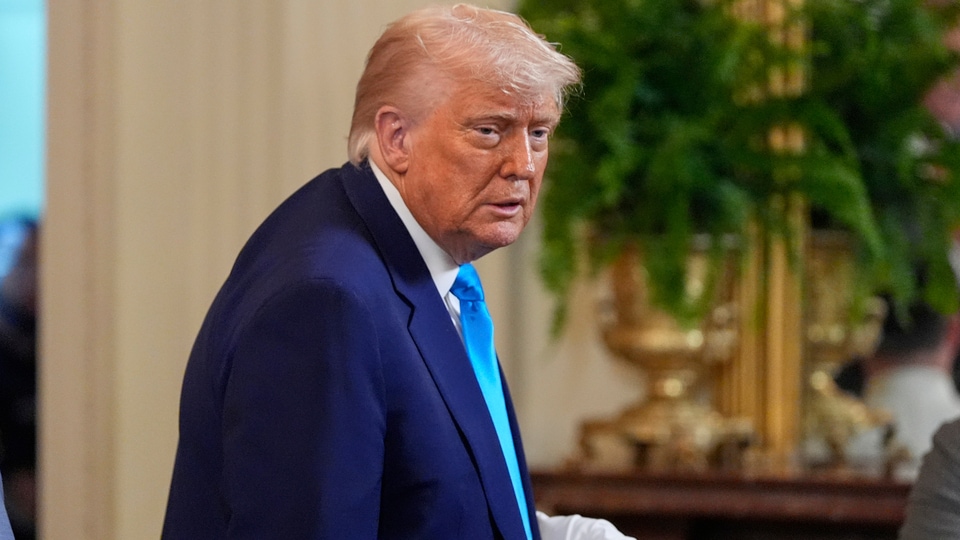
The case was about the tariffs Trump announced on 2 April. These tariffs would have added a 10% tax on most imports, with even higher taxes on goods from China and the European Union. He called this plan “Liberation Day.” Later, he paused some of the higher tariffs while trying to make deals with other countries.
However, on Wednesday, a panel of three judges at the New York-based Court of International Trade ruled that Trump had no legal right to make such broad tariff changes on his own.
“An unlimited delegation of tariff authority would constitute an improper abdication of legislative power to another branch of government,” the judges wrote in their decision.
The court said Congress never gave the president unlimited power to raise tariffs under the International Emergency Economic Powers Act of 1977 (IEEPA), the law Trump used to justify his actions.
The IEEPA gives the president the power to take economic action in an emergency, especially when there is a serious threat.
Meanwhile, the court observed that allowing any president to use the IEEPA to set any tariffs he wants would go against the Constitution.
“The Worldwide and Retaliatory Tariff Orders exceed any authority granted to the President by IEEPA to regulate importation by means of tariffs,” the court said, reported the Associated Press.
The decision is a severe legal blow to Trump’s approach to trade, especially as this is only the fourth month of his second term. Legal experts expect the ruling to be appealed, possibly to the US Supreme Court.
What the Trump administration argued
Trump had claimed that trade deficits and issues like drug trafficking were national emergencies, giving him the right to act without Congress. He used tariffs to pressure other countries into making trade deals favouring the US, saying they would bring back jobs and reduce the federal deficit.
White House spokesperson Kush Desai argued, “Trade deficits are a national emergency that has decimated American communities, left our workers behind, and weakened our defence industrial base — facts that the court did not dispute.”
Kush Desai added that the administration would use all executive powers to “restore American Greatness.”
His administration claimed similar actions by President Richard Nixon in 1971 were allowed, and argued that only Congress, not the courts, should decide whether a national emergency exists.
The case was brought by small businesses, including a wine importer called VOS Selections, whose owner said the tariffs threaten to shut down his company. A group of states, led by Oregon, also joined the lawsuit.
Trump is facing at least seven lawsuits over the tariffs. The people and groups suing him say the emergency powers law doesn’t allow the president to use it to place tariffs.
They also argue that even if it did, a trade deficit isn’t a real emergency, since the US has had a trade deficit with other countries for 49 years in a row.
Trump’s tariffs affected nearly every country, including the allies of the US, like Canada and Mexico.


