The jury in Lindsay Clancy’s murder trial began deliberations Thursday after prosecutors argued that she knowingly chose to kill her three children. Assistant District Attorney Jennifer Sprague told jurors there is no dispute that Clancy was mentally ill or that she later tried to kill herself. The key question, she said, is whether Clancy knew right from wrong when she killed Cora, Dawson and Callan in January 2023. “Killing them was a choice,” Sprague said during closing arguments. Clancy’s defense says she was suffering from postpartum psychosis and should not be held criminally responsible.
Did Lindsay Clancy really ‘choose’ to kill her kids?
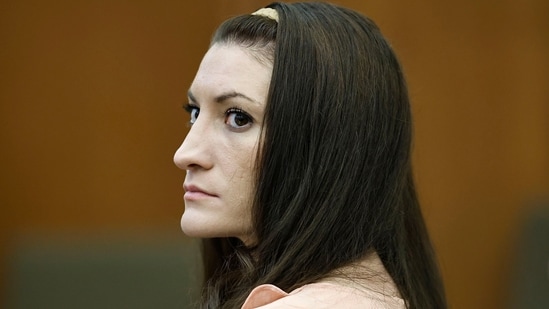
Sprague argued that Clancy’s actions before the killings showed planning and control. She pointed to the errands Clancy arranged for her then-husband, Patrick Clancy, including a CVS stop and a food pickup. Prosecutors say this gave Clancy time alone at home.
“Because she’s adding to this errand that she’s sending Patrick out on, and she has to make sure she’s not interrupted,” Sprague said.
Deep Dive
What evidence did the prosecution present to argue that Lindsay Clancy knowingly chose to kill her children?
How did Lindsay Clancy's defense argue against the charges of murder?
Could Lindsay Clancy's physical condition, specifically her paralysis, affect the jury's verdict?
The prosecution also questioned Lindsay Clancy’s account that a male voice told her to kill her children and then herself. Sprague said the voice allegedly gave no instructions about where or how to carry out the killings.
“[The voice] says kill the kids so you can kill yourself. So, she had to choose where: the basement. She had to choose how: strangulation. She had to choose with what: exercise band. Choose again: exercise band. Choose again: exercise band. She had to choose how to kill herself.”
What did the prosecution argue in its closing argument?
{{/usCountry}}What did the prosecution argue in its closing argument?
{{/usCountry}}Jennifer Sprague also focused on what Clancy did that day before the killings. She said Clancy took her daughter to a doctor, spoke with her husband and handled normal family activities.
Prosecutors argued those actions showed that Clancy could make decisions and understand what she was doing. The prosecution’s final expert witness, forensic psychiatrist Dr. Gregory Saathoff, also testified that Clancy had the capacity to understand right from wrong.
Sprague told jurors that Clancy’s claim of hearing the voice only once was important.
“She never heard it before, and she hasn’t heard it since.”
How did Lindsay Clancy’s psychosis defence respond?
Defense attorney Kevin Reddington presented a very different explanation. He told jurors Clancy was “a darn good mother” and argued that medication and poor medical care played a major role in her mental decline.
Reddington relied on forensic psychiatrist Dr. Phillip Resnick, who testified that Clancy was psychotic and unable to control her actions when she killed her children. The defense says she should therefore be found not criminally responsible.
The jury can consider first-degree murder, second-degree murder, manslaughter, not guilty and not guilty by lack of criminal responsibility. The case now rests with the jury after weeks of testimony.