
 E-Paper


US judge blocks Donald Trump's birthright citizenship order
Trump's directive instructed US agencies to deny citizenship to children born in the US if neither parent is a US citizen or legal permanent resident.

 Prefer HTon Google


A federal judge on Thursday temporarily blocked President Donald Trump’s executive order, which aimed to end the constitutional guarantee of birthright citizenship regardless of parents’ immigration status, the Associated Press reported.
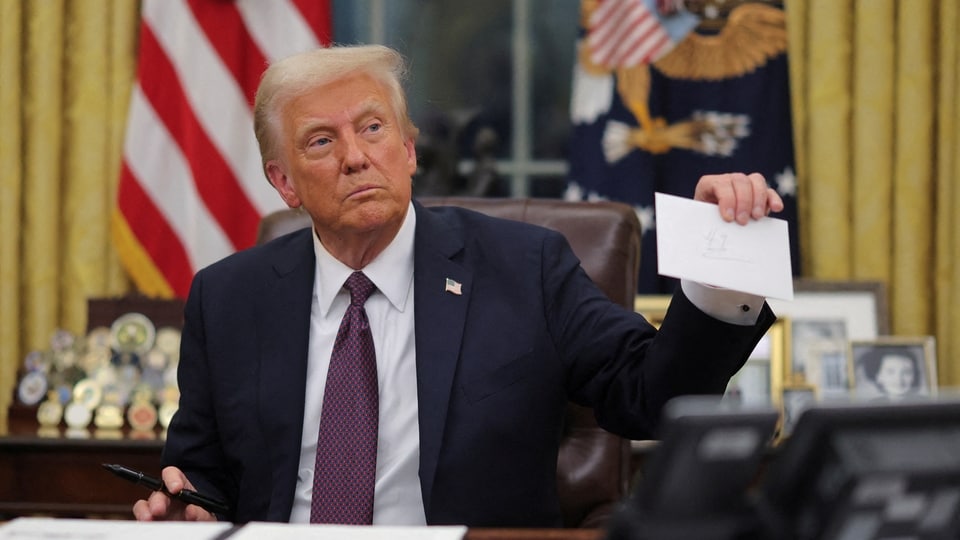
U.S. District Judge John C. Coughenour made the ruling in a case brought by the states of Washington, Arizona, Illinois, and Oregon. These states argue that the 14th Amendment, along with Supreme Court case law, has firmly established birthright citizenship.
The executive order, signed by the Republican president on his first day in office on Monday, has already sparked five lawsuits filed by civil rights organizations and Democratic attorneys general from 22 states. Critics describe the order as a blatant violation of the U.S. Constitution.
Trump’s directive instructed US agencies to deny citizenship to children born in the United States if neither parent is a US citizen or a legal permanent resident.
Also Read | Trump moves to end birthright citizenship: Will it impact the Indian real estate market?
The lawsuits include personal accounts from attorneys general who are birthright citizens themselves and highlight concerns from pregnant women fearful that their children may be denied US citizenship.
The legal challenges argue that the 14th Amendment to the US Constitution guarantees citizenship to individuals born or naturalised in the U.S., an interpretation upheld by states for over a century.
The amendment, ratified in 1868 after the Civil War, states: “All persons born or naturalized in the United States and subject to the jurisdiction thereof, are citizens of the United States and of the State wherein they reside.”
Also Read | ‘Threatens families with lifetime of exclusion’: Why Trump's birthright citizenship order was sued
Trump's executive order on birthright citizenship
Signed by Trump on Inauguration Day, the executive order is set to take effect on February 19 and could impact hundreds of thousands of individuals born in the US, according to a lawsuit. In 2022, approximately 255,000 children were born to mothers living in the country illegally, and about 153,000 to parents who were both undocumented, as per data cited in the four-state suit filed in Seattle.
The U.S. is one of about 30 countries that follow the principle of jus soli, or “right of the soil,” granting citizenship based on birthplace. This practice is common in the Americas, including Canada and Mexico.
Trump’s order claims that children of noncitizens are not under U.S. jurisdiction and directs federal agencies to deny citizenship to children without at least one citizen parent.
The debate around birthright citizenship traces back to an 1898 Supreme Court case, which ruled that Wong Kim Ark, born in San Francisco to Chinese immigrants, was a U.S. citizen. Immigration restriction advocates argue that this ruling applied to children of legal immigrants, leaving questions about its application to children of undocumented parents.
(With inputs from Reuters, Associated Press)


