E-Paper


US to revoke visas for Chinese students: Secretary of State Marco Rubio
US tightens scrutiny of foreign students under new State Department rules, part of Trump’s wider move to curb international enrolment in higher education.

 Prefer HTon Google


The United States will revoke visas of Chinese students with links to the Chinese Communist Party, announced Secretary of State Marco Rubio on Thursday.
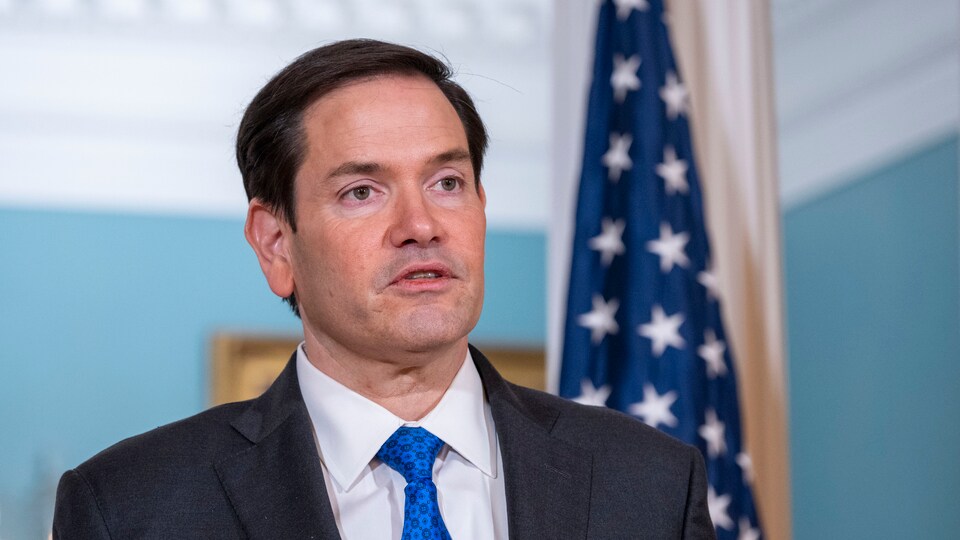
“Under President Trump’s leadership, the US State Department will work with the department of homeland security to aggressively revoke visas for Chinese students, including those with connections to the Chinese Communist Party or studying in critical fields,” he announced in a press statement.
“We will also revise visa criteria to enhance scrutiny of all future visa applications from the People’s Republic of China and Hong Kong,” Rubio added.
According to the Open Doors 2024 Report, as many as 277,398 students from China studied in the United States. This makes China the second largest source of foreign students studying in America, after India.
This is not the first time the Trump administration has sought to revoke visas for Chinese students. In 2020, Trump announced plans to restrict visas for Chinese graduate students with links to Beijing’s “civil-military fusion” efforts. In a presidential proclamation, Trump had pointed to risks of technology theft and espionage posed by some Chinese students.
Chinese students and scholars in America have faced increased scrutiny in recent years due to rising geopolitical tensions between Washington and Beijing. In particular, US agencies and lawmakers have raised concerns about the risks of espionage conducted on American university campuses by Chinese students and government institutions.
“The Chinese Communist Party has established a well-documented, systematic pipeline to embed researchers in leading U.S. institutions, providing them direct exposure to sensitive technologies with dual-use military applications,” said John Moolenaar, Chairman of the House Select Committee on the Chinese Communist Party, in a letter to the presidents of several top American universities in March.
“America’s student visa system has become a Trojan horse for Beijing, providing unrestricted access to our top research institutions and posing a direct threat to our national security. If left unaddressed, this trend will continue to displace American talent, compromise research integrity, and fuel China’s technological ambitions at our expense,” Moolenaar added.
In his letter, Moolenaar asked universities to provide more information about Chinese students studying in their institutions and their research activities.
China’s government-funded Confucius institutes have also come under the scanner of the American government. Earlier this month, the House of Representatives passed a bill restricting government funding for American institutions which maintain ties to CCP-linked institutions like the Confucius Institutes.
During Trump’s first term, a concerted effort was made to crack down on Chinese scholars in America who were suspected of intellectual property theft and economic espionage. This effort - christened the China Initiative - was launched by the Department of Justice in 2018. While the initiative undertook high profile prosecutions of a number of scholars and academics, it was also intensely controversial.
The MIT Technology Review found that only one-fourth of individuals and institutions charged with offences were convicted. The China Initiative was also accused of practicing racial profiling against Chinese scholars and academics. The program was ultimately shut down by the Biden Administration in 2022 after a review, citing civil rights concerns. However, calls to reinstate these efforts have remained over the last few years.