US Secretary of Defense Lloyd Austin urged China to avoid “destabilizing actions” toward Taiwan in his first face-to-face meeting with Defense Minister Wei Fenghe since House Speaker Nancy Pelosi’s visit to Taipei in August.
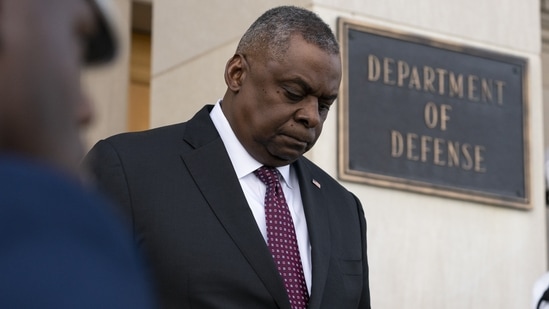
In talks Tuesday in Siem Reap, Cambodia, the Pentagon chief also called for the two sides to maintain open lines of communication and warned of “increasingly dangerous behavior” by Chinese military aircraft in the Indo-Pacific region, according to a statement from US officials after the meeting ended.
“Secretary Austin emphasized the need to responsibly manage competition and maintain open lines of communication,” according to the statement.
The meeting is latest effort to put the US-China relationship on a more stable footing following the first in-person talks between Chinese President Xi Jinping and US President Joe Biden last week in Indonesia. While the two sides have not resolved deep differences over Taiwan, human rights, US restrictions on tech exports or other issues, they have sought to at least restore rudimentary links that would keep accidents or disagreements from spinning out of control.
Read more: Video: Small plane crashes into building in Colombia, all 8 onboard die
{{/usCountry}}Read more: Video: Small plane crashes into building in Colombia, all 8 onboard die
{{/usCountry}}The US has watched with growing concern as China has built up its military into one of the world’s most powerful fighting forces. Last week, the US publicly acknowledged for the first time that China has fielded new, longer-range ballistic missiles on its six nuclear-powered submarines, allowing it to strike the continental US from much closer to its own shores.
Wei and Austin last spoke in June in Singapore, when the bulk of the conversation focused on Taiwan, the most intractable issue between the two sides. President Biden’s repeated statements that the US would defend Taiwan if it were under attack has alarmed Chinese offficials and signaled to many a shift in decades of American policy known as “strategic ambiguity,” in which Washington wouldn’t say how it would respond.
Why Taiwan’s Status Risks Igniting a US-China Clash: QuickTake
Though Biden administration officials insist US policy toward Taiwan is unchanged, they’ve also accused Beijing of altering the status quo with its more frequent military maneuvers and exercises around the island. Ahead of the meeting with Austin, Wei condemned American moves to sell arms to Taiwan, which it considers part of its territory.
Biden officials have repeatedly called for “guardrails” to prevent tensions between the world’s two largest economies from getting out of hand. In his encounter Saturday with Vice President Kamala Harris in Bangkok, Xi also emphasized his view that more communication is needed.
“I hope both sides will step up mutual understanding, reduce misunderstanding and misjudgment, and together push for Sino-US relations to return to a healthy and stable track,” Xi said.
In one potential area of agreement, the Pentagon statement said the two sides discussed Russia’s war in Ukraine and reiterated that they “oppose the use of nuclear weapons or threats to use them.” Austin also criticized recent North Korean missile launches and asked China to “fully enforce” UN Security Council resolutions against Pyongyang’s weapons program.
Austin arrived in Cambodia on Monday night after meeting with Indonesia’s defense minister in Jakarta. The Pentagon chief is scheduled to sit down with his counterparts from the Philippines, India, Vietnam and Cambodia later on Tuesday.