The United States has reiterated its support for “direct dialogue” between India and Pakistan to resolve Kashmir and all other issues rebuffing once again Islamabad’s continuing efforts to seek American mediation, or by any other third-party such as the United Nations.
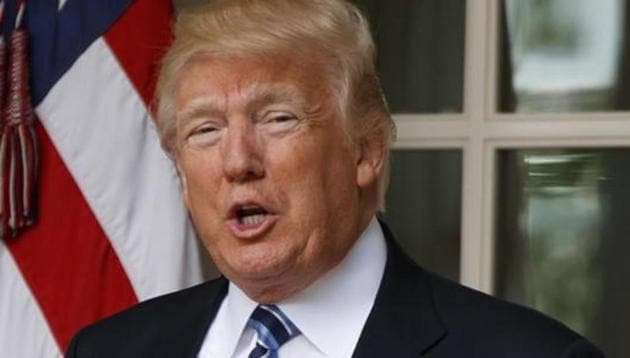
After initial confusion caused by President Donald Trump’s repeated offers to mediate, the United States has maintained a consistent position on Kashmir and other issues saying it was for India and Pakistan to resolve them bilaterally, and through direct dialogue, not through outside parties.
The same message was delivered by Deputy Assistant Secretary of State for Pakistan affairs Erwin Massinga at a recent meeting with leaders of the US Council of Muslim Organizations, which calls itself the largest coalition of leading national and local Muslim organizations.
“The US continues to support direct dialogue between India and Pakistan on Kashmir and other issues of concern—a message stressed in Deputy Assistant Secretary Massinga’s recent meeting with @USCMO leadership,” Alice G Wells, who is Massinga’s boss as the top US diplomat for South and Central Asia, wrote on twitter Friday.
Pakistan has been seeking US mediation on Kashmir for years and has has it at the top of the agenda for senior level meetings. Every Pakistani leader has pitched for it in their meetings with American counterparts, as did Prime Minister Imran Khan at his White House meeting with President Trump in July.
{{/usCountry}}Pakistan has been seeking US mediation on Kashmir for years and has has it at the top of the agenda for senior level meetings. Every Pakistani leader has pitched for it in their meetings with American counterparts, as did Prime Minister Imran Khan at his White House meeting with President Trump in July.
{{/usCountry}}Unlike his predecessors, who would have heard out the plea and moved on, Trump responded with an offer, throwing in for good measure a purported request for it also from Prime Minister Narendra Modi. India dismissed the offer within minutes, and denied Modi had ever asked Trump to intervene.
Trump repeated that offer a few more times, which was beyond Pakistan’s wildest expectations. But US officials were also reeling it back at the same time. They insisted publicly and privately there had been no change in US position on the issue and that it stood ready to assist but supports, as before, direct talks between India and Pakistan to resolve their disputes.
Pakistan persisted. “The time is now for the United States to make good on Trump’s offer of mediation — not for Pakistan’s sake or for India’s sake, but for the sake of the only people who have not been heard since India gagged them a week ago: the people of Kashmir themselves,” Asad Majeed Khan, Pakistan’s ambassador to the United States, wrote in the Washington Post.
It was greeted with silence from both the White House and the state department. And a fortnight later, President Trump himself buried his offer, after meeting Prime Minister Modi in Biarritz, France. “I think they can do it themselves very well,” he told reporters. “They’ve been doing it for a long time.”
Prime Minister Khan tried again. This time, he framed his plea as an appeal to the “international community” in an Op-Ed in the New York Times, written just days after the Biarritz meeting. “It is imperative that the international community think beyond trade and business advantages. World War II happened because of appeasement at Munich. A similar threat looms over the world again, but this time under the nuclear shadow.”