
 E-Paper



Why did South Korea declare martial law? All you need to know
In an unannounced televised address, South Korean president Yoon Suk Yeol said that he would “eradicate pro-North Korean forces.”

 Prefer HTon Google


South Korean President Yoon Suk Yeol declared martial law on Tuesday, saying that he would "eliminate anti-state forces" who are pushing the country to fall into "the depths of national ruin".
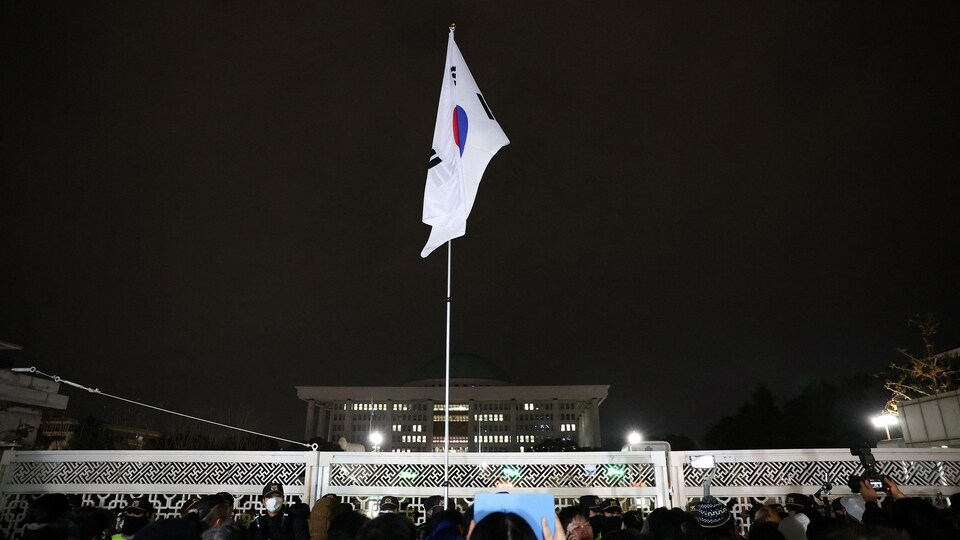
In an unannounced televised address, Yeol said that he would "eradicate pro-North Korean forces and protect the constitutional democratic order".
Notably, the president's move to declare martial law is the first since the country's democratisation in 1987. The last time martial law was imposed was in October 1979.
However, soon after South Korean President Yoon Suk Yeol declared martial law in a bid to eliminate “anti-state” forces, the parliament voted to lift the declaration.
The vote prompted President Yoon to back down. The martial law decree was lifted after a Cabinet meeting.
Why did Yoon declare martial law?
Yeol said that he was left with no choice, but to chose such a measure to safeguard the free and constitutional order. He said that the opposition parties had taken hostage of the parliamentary process to push South Korea into a crisis.
“I will eliminate anti-state forces as quickly as possible and normalize the country,” he said, asking the people to believe in him and tolerate “some inconveniences.”
Soon after the president's announcement, South Korean military proclaimed that parliamentary and other political gatherings that could cause "social confusion" would be suspended, news agency Yonhap reported.
As per South Korean law, martial law can be lifted with a majority law in the parliament, where, in this case, the opposition Democratic Party holds the larger number.
Opposition condemns decision
The country's opposition immediately denounced Yeol's decision. In fact, the leader of Yeol's own conservative People Power Party, Han Dong-hoon, called his decision "wrong" and vowed to "stop it with the people".
Opposition leader Lee Jae-myung of the Democratic Party, who lost the 2022 presidential election to Yeol with a narrow margin, called the martial law decision "illegal and unconstitutional".
Notably, president Yeol has also been struggling to push his agenda against an opposition-controlled parliament since taking charge of the office in 2022.
Additionally, Yeol has been at an impasse with the opposition party over the next year's proposed budget bill. The opposition has been trying to pass motions to impeach the country's top three prosecutors.
The South Korean president has also been dismissing calls for an independent probe into scandals involving his wife and top officials, drawing ire from his political rivals.
(with inputs from agencies)


