
 E-Paper



Internet shut as thousands rally against Pak government: What led to the mass protests in PoK?
The demonstrations come after the recent failure of talks between the Awami Action Committee (AAC), Pakistani ministers, and the administration of the PoK.

 Prefer HTon Google


Thousands flocked to the streets on Monday as Pakistan-occupied Kashmir (PoK) witnessed one of its largest protests in years. Visuals from the scene show massive crowds holding rallies in different regions and shouting slogans against what they call the “denial of fundamental rights”.
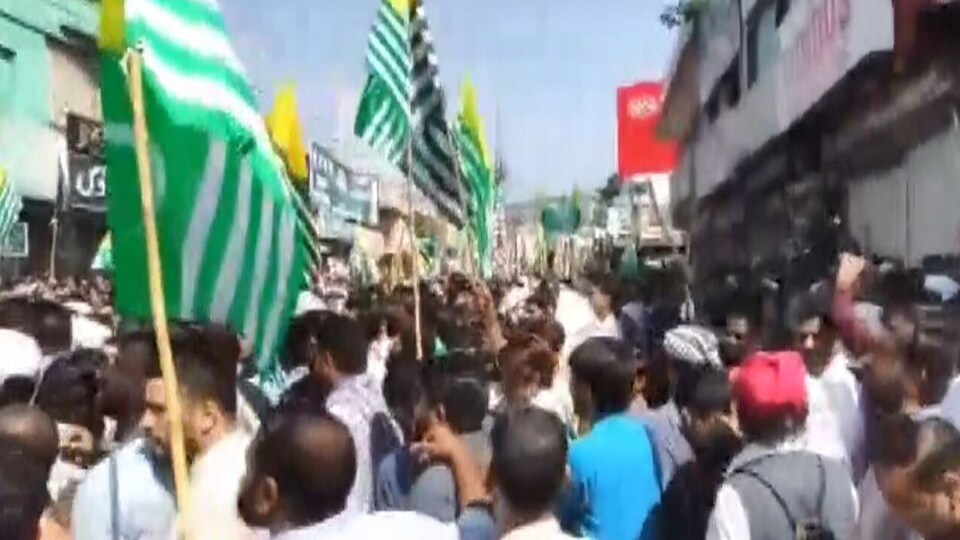
The Awami Action Committee (AAC) is leading the protests against the Shehbaz Sharif-led government, which has led to the suspension of internet and mobile phone services across the region.
ALSO READ | Is China worried about Pakistan 'flirting' with US?
But why are people protesting in the region?
What happened?
The “shutter-down” and “wheel-jam” protest saw thousands of protesters rally on the streets of Rawalakot, Mirpur, Kotli, Neelum Valley, and other areas of the Pakistan-occupied Kashmir.
Local media reports say at least two people were killed while several others were left injured. However, this death toll remains unconfirmed.
Visuals on social media showed massive gatherings of people raising slogans and waving flags amid a lockdown announced by the AAC.
Mobile phones, landlines, internet services, and social media were partially restricted in the region, according to reports.
Why are they protesting?
The AAC called for protests against the “denial of fundamental rights.”
The demonstrations come after the recent failure of talks between the AAC, Pakistani ministers, and the administration of the PoK.
Notably, the committee is demanding the abolition of 12 legislative seats in the PoK assembly that are reserved for Kashmiri refugees living in Pakistan.
ALSO READ | Pakistan PM Shehbaz Sharif confronted on cross-border terrorism before UN speech
This is one of the group’s 38-point charter demands, which also include subsidised flour, fairer power tariffs tied to the Mangla hydropower project, and implementation of long-delayed reforms promised by Islamabad.
These talks collapsed after the committee did not agree on removing elite privileges and refugee seats.
"Enough is enough. Either deliver on rights or face the wrath of the people," Shaukat Nawaz Mir, a core member of the committee, told the gathering in Muzaffarabad.
What is the Pakistan government doing?
Recently, thousands of troops were reportedly moved to the PoK regions from Pakistan’s Punjab, and convoys held flag marches as the anger against the administration grew.
Last week, the entry and exit points of many cities were also sealed.
An additional 1,000 police personnel were moved in from Islamabad to control the situation, according to local media.
Authorities said that maintaining peace is their responsibility and no one would be allowed to disrupt public life.
“Maintaining peace is a shared responsibility of the administration, police, and citizens. We have no quarrel with anyone, but our mission of public service will continue at all costs," District Magistrate Mudasser Farooq was quoted as saying by Dawn.


