
 E-Paper



Pakistan’s 39-yr-old NSA a key player in army’s Gilgit move that suits China
The change of Gilgit-Baltistan’s status fits in well with Pakistan NSA Moeed Yusuf’s long-standing project to turn the Line of Control with India into an International Border

 Prefer HTon Google


Army chief General Qamar Javed Bajwa has fronted Pakistan’s exercise to create a province in disputed Gilgit-Baltistan (GB) in the occupied Northern Areas, holding a quiet meeting with the country’s politicians on the topic before a minister went public with Islamabad’s plans last week. But the army, people familiar with the matter said, isn’t driving the creation of the fifth province alone.
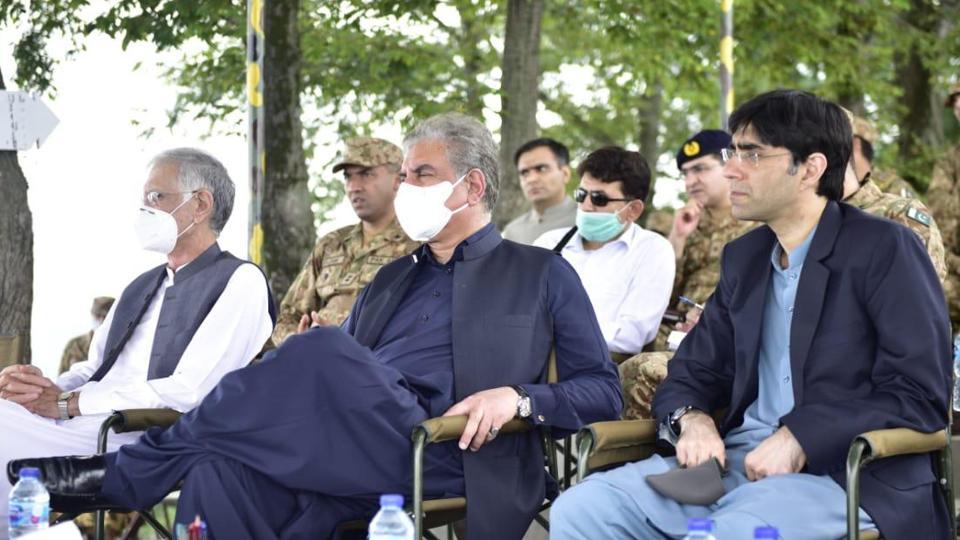
A 39-year-old has also been hard at work. Moeed W Yusuf.
Yusuf, Special Assistant to Prime Minister Imran Khan on National Security Division and Strategic Planning, has been a principal player in Islamabad’s decision to revoke the notional autonomy granted to Gilgit-Baltistan (GB) and incorporate the disputed region as one of Pakistan’s five provinces, Pakistan watchers in New Delhi said, describing Pakistan’s young National Security Adviser as one of the project’s key driving forces.
Gilgit-Baltistan’s assimilation into the Islamic Republic works well with China that has poured billions of dollars - even if much of it is a loan - into the China Pakistan Economic Corridor to build an alternative supply route to the choked, and vulnerable Malacca Strait, the main shipping channel between the Indian Ocean and the Pacific Ocean. The army has scaled up its presence in the GB region over the years to secure the CPEC that has faced some opposition from locals over concerns that it destroys the environment, culture and social fabric without much benefit to the people.
The effort to change Gilgit-Baltistan’s disputed status also fits in well with Moeed Yusuf’s long-standing project to turn the Line of Control with India into an International Border. Back in 2009 when he was still an academic and building his ties to the establishment in Pakistan and the United States, Moeed Yusuf had advocated converting the LoC into the IB, with both sides maintaining sovereign control over the respective parts of Jammu and Kashmir.
A Pakistan watcher said Moeed Yusuf explored the possibility of formalising the LoC as the border between the two countries nearly a decade later when he visited New Delhi in 2018. “By then, he had entrenched himself in the establishment in Washington via the US Institute of Peace and worked closely with the Pakistan Army and the Inter-Services Intelligence.,” he said.
Yusuf had cultivated an image of being an advocate of Indo-Pak peace and resolution of the Kashmir issue at USIP. He did run into a bit of a controversy at USIP months before Imran Khan picked him as his special adviser in December 2019 when objections were raised about the public-funded institution becoming a venue of choice for hosting Pakistani officials at events reserved for select invitees. One South Asia expert Dr Christine Fair also alleged that Yusuf had been sharing sensitive information with Pakistani agencies using his position and access within the USIP.
Moeed Yusuf is said to have continued to speak about his ideas on Indo-Pak relations after he joined Imran Khan’s team as well and plugged the agenda with General Bajwa and other top military officers.
In his new role in Imran Khan’s team, his understanding and familiarity with the American system helped to position him as the main strategic thinker for the Pakistani leadership, particularly on dealing with the US Administration, Congress, bureaucracy and the think-tanks.
Not much is known about his views on Pakistan’s support of terrorism to achieve political and diplomatic ends, particularly in Kashmir. Indian counter-terror officials said they had not heard of any instance where Moeed Yusuf had spoken of ending the establishment’s support to terrorists operating in India.
“What we do know is that he did come up with the idea that Pakistan should not seek mediation on Kashmir over concerns that Islamabad could be placed in an awkward position if the US came up with a unilateral proposal, akin to Donald Trump’s Middle East Plan,” a senior Indian official said. This idea, however, did not find any support within the military and the foreign office.


