Julet Michelet, the famous French historian of the 19th century, began his lectures on British history by saying ‘Britain is an island’. Commonplace though this may sound, the line is illuminating. There is a lot in Britain being an island. It is not unusual to find in learned articles references such as ‘exports to Europe and the UK’.
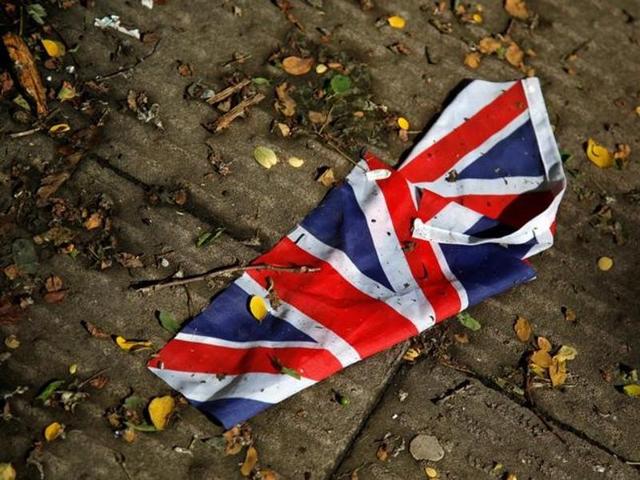
It may be ironical, or appropriate, that the people of the United Kingdom chose to opt out of the European Union in the 400th year of William Shakespeare’s death. In the play Richard II, Shakespeare described England as “this fortress built by Nature for herself; against infection and the hand of war ... this blessed plot, this earth, this realm, this England”. If by infection Shakespeare meant the impurities of the Continent, it’s his view. But if he had thought his ‘fortress’ was insulated from war he knew he was wrong. The play’s protagonist, Richard II, had himself taken part in the Hundred Years War with France though the wars were mostly fought on French soil.
Read: Angry Europe demands quick divorce as sparks fly over Brexit vote
How much of English is English? England had been ruled by foreigners throughout history. First the Romans conquered it and ruled the land as a colonial power. Towards the end of the first millennium, England had a Danish ruling dynasty, followed by the French in the first century of the second millennium. For centuries the language of the court was French. When the Stuarts became unpopular in the 17th century, they had to be replaced by a Dutchman. George I, the first ruler of the Hanover (a city in Germany) dynasty, did not know English. Queen Victoria evidently owed much of her personality to the Germans, else why would she call her dynasty ‘Saxe-Coburg-Gotha’, the place her mother belonged to?
{{/usCountry}}How much of English is English? England had been ruled by foreigners throughout history. First the Romans conquered it and ruled the land as a colonial power. Towards the end of the first millennium, England had a Danish ruling dynasty, followed by the French in the first century of the second millennium. For centuries the language of the court was French. When the Stuarts became unpopular in the 17th century, they had to be replaced by a Dutchman. George I, the first ruler of the Hanover (a city in Germany) dynasty, did not know English. Queen Victoria evidently owed much of her personality to the Germans, else why would she call her dynasty ‘Saxe-Coburg-Gotha’, the place her mother belonged to?
{{/usCountry}}Unlike the US, which had pursued a policy of isolation through the Monroe Doctrine of 1823, England did not keep itself out of continental affairs. In fact it embroiled itself in the War of Austrian Succession and the Seven Years, taking sides with one power and switching to another. It was part of the alliance to counteract Napoleon. When the First World War broke out in the Continent, and it was essentially a Continental war, British foreign secretary Edward Grey remarked: “The lights are going out all over Europe. We shall not see them lit in our lifetime.”
Read: Brexit: Media divided over Britain’s historic vote to leave the European Union
The Brits were aware of this, and so being a Brit was at one time being a liberal even for the Tories. The Jews were treated in a tolerant manner by Oliver Cromwell. Nineteenth Britain had a Jew prime minister. The Jew Karl Marx finally found a home in England.
Yet insularity in the British way of looking at the world there was, and the pettiness that results from it. It is most evident in the English language, which has derogatory words for the Scots (Jock), the Irish (Mick) and the Welsh (Taffy). To say one has welshed is to mean one has not returned the money one borrowed. If someone has levanted, someone has run away with money. We, Indians, were fortunate in that probably we did not even deserve that honour.
Read: Thousands sign ‘Londependence’ petition for London to join EU independently
All that is in the past now. So when they now say they have won ‘independence’ what is that they are looking for? To regain their British-ness? It does not exist anymore. They do not re-live their history or inheritance. The current angst, by all accounts, is just a matter of house-keeping.