
 E-Paper



Farm bills are welcome, but farmers need a rights-based protection law | Analysis
A base price will ensure a fair price for every farmer, removing MSP limitations, which cover only 22 crops. Such a mechanism would help both farmers and private buyers as it will bring about transparency and accountability in the farm trade

 Prefer HTon Google


A decade ago, a few top Indian companies entered the fruit and vegetable market in Himachal Pradesh (HP). For the first few years, they gave farmers a good price for their entire produce. As their control over the market grew, they bought the best quality produce and left the rest to be sold by farmers at depressed prices through the weakened mandi system. Whenever prices increased, the companies sold in mandis, depriving farmers the benefit of higher prices. They built cold storages for themselves, but not for the farmers. Whatever mechanisation happened for farmers was through government schemes. Farmers may have got more for their produce because of the corporates, but profitability has not increased as input costs — labour wages and fertilisers — have almost doubled during this period.
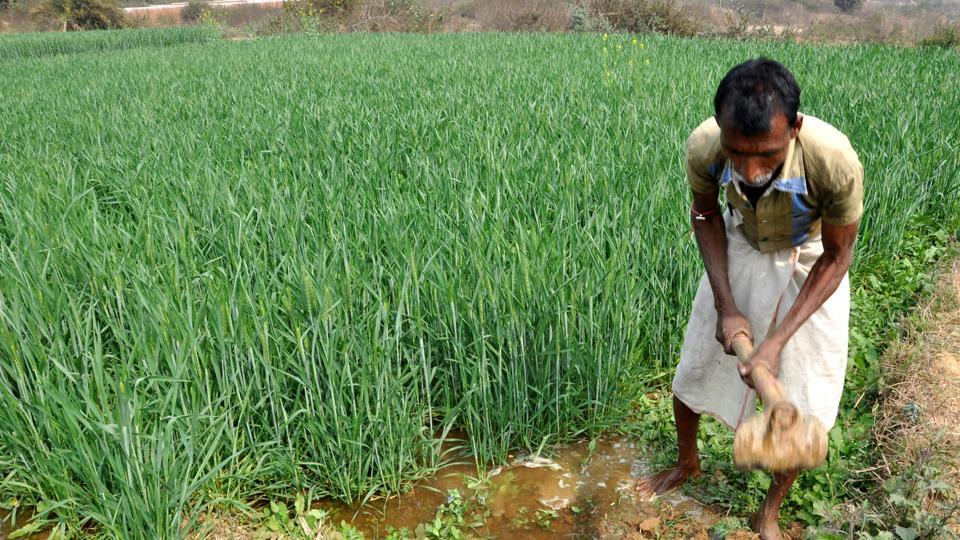
The farm reforms bills — Farmers’ Produce Trade and Commerce (Promotion and Facilitation) Bill, Farmers (Empowerment and Protection) Agreement on Price Assurance and Farm Services Bill and The Essential Commodities (Amendment) Bill — approved by Parliament this week will initially do what corporates did in HP; push up prices in the initial years and eventually control the agriculture trade. They may then manipulate prices as commission agents in the mandis do. This is a big danger to farmers. They could take on commission agents through the Agriculture Produce Marketing Committees (APMCs), which provides for quick dispute resolution. But, in the case of corporates, according to the proposed laws, grievance redressal is through civil courts, which could take years.
The government has said that the minimum support price (MSP) will remain in place. But, the question is whether the private player will buy at MSP or not. The farm bills are silent on this and experience from various states shows that they may not, especially in years when the crop is good. This year, less than 1% of wheat in Bihar, where the APMC Act was abolished in 2006, was bought by the state government and the rest, farmers’ organisations claim, was bought by private players at less than the MSP.
In Punjab and Haryana, which has a strong APMC-regulated mandi system, about 90% of wheat this summer was bought at the MSP by government agencies. So, Punjab and Haryana farmers get price protection while those in Bihar do not.
The claim that mandis control farm prices is not entirely true. Only 36% of agricultural produce is sold through mandis, mainly in the food bowl states of Haryana and Punjab, where the farmers are most agitated against the current bills. This is because APMC reforms initiated from the time of the previous National Democratic Alliance (NDA) government in 2003 through the APMC Model Act has opened the agriculture trade in most states. Electronic trading and direct sale of produce to buyers in allowed in 22 states, deregulation of markets has taken place in 17 states, selling in private markets is allowed in 21 states, according to the 2019 state agriculture ministers’ conference report. The changed scenario in most states allows the farmer to choose between private buyers and the regulated mandi system. The farms bills, by abolishing the second option, leaves farmers at the mercy of unregulated private players.
Both mandi and private buying should be based on the principle that a farmer has the right to recover inputs costs plus make some profit. There should be a base price for all agriculture and horticulture crops (a long-standing demand of farmers) below which the produce cannot be sold. Buying at a lower price should invoke penal action against the buyer and commission agent. The government can still have a higher MSP for limited crops they want to procure for food security and the public distribution system (PDS).
A base price will ensure a fair price for every farmer, removing MSP limitations, which cover only 22 crops. Such a mechanism would help both farmers and private buyers as it will bring about transparency and accountability in the farm trade. It would be best if this mechanism is introduced through a rights-based farmer-protection law.


