Mayawati’s Bahujan Samaj Party (BSP) has entered into an alliance with Akhilesh Yadav’s Samajwadi Party (SP) for the upcoming parliamentary elections in 2019. But that has not stopped all kinds of speculations in political circles. Some see the possibility that even after becoming part of the Opposition, she may shift towards the Bharatiya Janata Party (BJP) if she is gets a bigger share in the power. On the other hand, while many think that she does not want to go with the Congress, she may very likely surprise them in the post-election scenario.
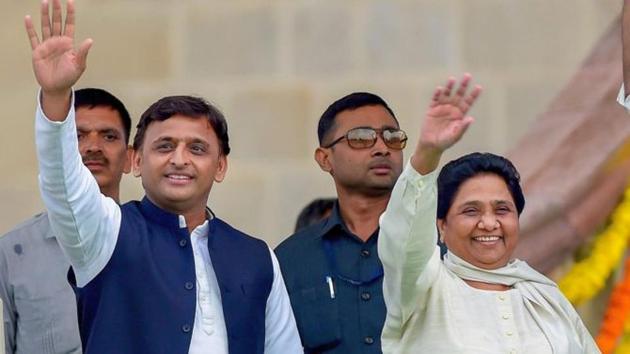
What makes a potential ally suitable for Mayawati? Some political analysts may consider her as an opportunist. But this kind of opportunism was defended by the late Kanshi Ram, the founder of the BSP and Mayawati’s mentor. He used to argue that if Brahmanical political parties indulge in opportunism, why shouldn’t others? If opportunism helped Brahmanical forces to become stronger and come to the power, it could also help Dalit political groups in acquiring power. So, forming or breaking alliance with anyone is not an ethical problem for Mayawati. She can very well convince her vote base about this so-called opportunistic political behaviour.
Her choice of alliance partners is usually guided by three factors. First, she allies with parties whose base vote can easily be transferred in the favour of the BSP and make her candidates win. This is a necessary condition on which Mayawati chose her alliance for the 2019 election. Second, she would select a party which is likely to support her own political ambitions. It would help, for example, if the ally pushes her candidature for the position of prime minister. Third, she would go with a party which is not likely to cannibalise her Dalit vote bank. Mayawati is always suspicious of such politics whenever she has to take a call on electoral alliances.
In a post-election scenario, she may prefer to go with a party that offers her and her party a better package in sharing power. Mayawati generally prefers to help the formation of a multi-party alliance government in the Centre in which no single party is the dominant one. She believes in “majboor sarkar” (weak and helpless government), not “majboot sarkar” (strong or independent government). She believes that in a majboor sarkar, the BSP will always have the possibility to grab a major share in power. Such weak governments, she believes, are better for serving the cause of Dalits as well as her party. By this logic, she is likely to choose the Mahagathbandhan for forming government at the Centre over the BJP-led National Democratic Alliance (NDA).
{{/usCountry}}In a post-election scenario, she may prefer to go with a party that offers her and her party a better package in sharing power. Mayawati generally prefers to help the formation of a multi-party alliance government in the Centre in which no single party is the dominant one. She believes in “majboor sarkar” (weak and helpless government), not “majboot sarkar” (strong or independent government). She believes that in a majboor sarkar, the BSP will always have the possibility to grab a major share in power. Such weak governments, she believes, are better for serving the cause of Dalits as well as her party. By this logic, she is likely to choose the Mahagathbandhan for forming government at the Centre over the BJP-led National Democratic Alliance (NDA).
{{/usCountry}}Various media reports in the recent past have suggested that Mayawati does not want to go with the Congress as part of the Mahagathbandhan in Uttar Pradesh. It is not because Mayawati finds the Congress weaker in Uttar Pradesh, but because she thinks that the Congress’ vote share in the state cannot be sufficiently transferred to her own party’s candidates. The Congress lacks a cluster of social bases which can be transferred to any political party collectively.
The SP, too, is not a natural choice for Mayawati. In fact, Dalits and Other Backward Classes (OBCs) have conflicting interests in rural Uttar Pradesh because most Dalits are landless labourers on the fields of OBC landlords. The two social groups are natural political rivals given their conflicting economic interests. In such a scenario it would be difficult for Mayawati to tell her Dalit voters to work with Yadavs, a dominant OBC caste, to achieve electoral success.That is why in previous by-polls, Mayawati didn’t ally with the SP, but merely supported latter’s candidates in Phulpur and Kairana.
She has opted to enter into an alliance with Akhilesh Yadav for the 2019 Lok Sabha elections due to political compulsions.She understands the need to bring OBCs and Dalits together — an effort without which the BJP cannot be defeated in Uttar Pradesh, and, probably, the NDA cannot be prevented from returning to power at the Centre. The suspicions,dilemmas and doubts notwithstanding, political necessity is dictating Mayawati’s choice to enter the Mahagathbandhan.
Badri Narayan is a professor at Govind Ballabh Pant Social Science Institute, Allahabad
The views expressed are personal