
 E-Paper



India is too diverse for a one-size-fits-all education policy
There is no need of a national policy to address the issues that afflict school education. Most of the actions relating to education lie in the states

 Prefer HTon Google


There is no doubt that the school education system is beset with huge problems. However, it is a moot point whether the dismal performance is on account of a policy gap or other factors that are operational in nature.
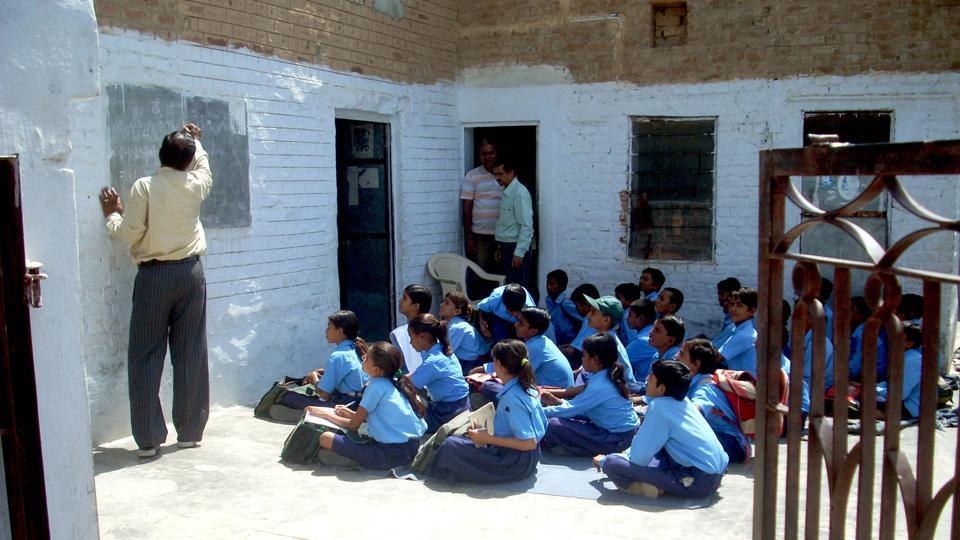
What has not happened in the education sector? Why has it not happened? How can it happen (whether through policy intervention or otherwise)?
Two things have certainly happened during the current millennium. The infrastructure (school buildings) has shown remarkable improvement. And, thanks to the midday meal programmes, we have managed to get the child to the school. However, what is appalling is the poor quality of education that is being imparted. The learning outcomes have actually come down during the past decade despite enormous amount of investments. Increase in the number of teachers has not solved the problem of quality. To begin with, a large number of teachers are not qualified, yet they are teaching. According to an estimate by the government, out of eight million teachers, roughly 1.4 million fall in this category.
The Right to Education (RTE) Act did precious little to salvage. In fact, the legislation made the task of delivering quality education complex and difficult. The focus of the Act is primarily on inputs rather than outcomes. The norms and standards prescribed in the schedule for a school are far removed from ground reality. What is perhaps desirable has been made mandatory. This has resulted in a phenomenal increase in the number of teachers. On an average, an amount of around ₹10,000 is spent per child per annum in government schools. The budget private schools do it for much less and impart as good, if not better, education. Unfortunately, the focus so far has primarily been on regulation and not on development of the private sector. Consequently, even after eight years of enactment of this legislation, the country is no better off in this regard.
The RTE Act has done more damage to delivery of education. Section 16 of the Act provides that “no child admitted in a school shall be held back in any class or expelled from school till completion of elementary education”. The model of no detention was apparently picked up from the West and transplanted in this country without taking into account the objective conditions here. The consequences have been devastating as there is a huge bottleneck getting created at Class 10, where the pass percentage has plummeted. The government has subsequently decided to provide an option to the states and the amendment is under consideration of the Parliament.
The new Education Policy has been on the anvil for a while. However, there is no need for a policy to address the issues that afflict school education. Most of the actions relating to education lie in the states. In any case, the country is too diverse to consider a single mandate by way of policy for the entire country. If a teacher does not go to a school in Kerala, he could well be lynched but in some of the states of north India, they consider it their right to not go to the school. There are instances of these regular teachers employing a substitute to represent them and even teach on their behalf.
Instead of a policy, an action plan for each state is required. It should clearly outline the following: What needs to be done? How it will be done? Who will do it? And, by when it will be done? The roles of respective entities should be clearly defined so that performance can be assessed. This action plan needs to focus on the teacher who plays a pivotal role in imparting education. The entire value chain needs to be looked at, understood and interventions clearly outlined. Beginning with pre-service training, to selection process, to in-service training, to transfer and posting, to engagement of teachers in non-educational activities, to their promotional avenues and morale will need to be examined. Roles of the Central government and the respective state government will need to be clearly outlined. Interventions will vary from state to state. The whole approach has to be outcome-based rather than input-based as has been the case so far.
We need to facilitate identification, understanding and scaling of successful practices. If these homegrown practices have succeeded in the prevalent objective conditions, the chances of their replication and scaling are pretty high as compared to an imported idea or practice. We need to learn from states like Rajasthan, Chattisgarh and Maharashtra, which have turned it around through some remarkable state-level interventions, both administrative and financial.
Policy debates provide food for intellectual stimulation but what matters is what is done on the ground. Hence, there is the dire need for an action plan even as policy debates continue.


