The employability of engineering graduates in India has been a matter of concern for the last several decades. Many reports have stated that only 20-25% of the graduates are employable in industry. A recent report has mentioned that only 5% of computer science and information technology graduates (a majority of our engineers are in these disciplines) have any reasonable programming skills, which is the most basic skill for such a graduate. Another 15% can still be trained to perform tasks in IT industry.
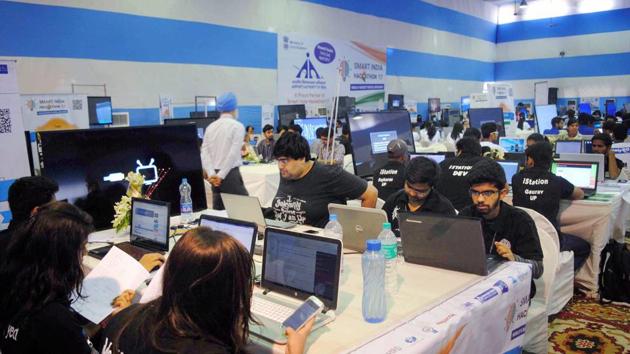
Whenever a new report comes out, there are immediate calls for greater interaction between industry and academia and to have more industry-focussed curricula in colleges. And seeing that such calls have not had any impact on the ground level, AICTE has announced that such interaction will now be mandatory. Each college must have an industry consultation committee to rework the curriculum of each course taught there every year.
AICTE appears to have forgotten that it regulates only affiliated colleges, and it has very little regulatory control over universities. Affiliated colleges have no control over their curriculum. They teach the curriculum that the affiliating university decides. These universities are expected to have a Board of Studies for each program, and that board invariably has members from industry as well. So there is already an industry input to the curriculum design. Now, if a college creates such a committee and the industry person advises even small modifications to the courses, can the college implement these modifications? The answer, unfortunately, is in the negative for all colleges, barring a few “autonomous” ones.
More fundamentally, do we even know whether unemployability is because of an outdated syllabus, or is it due to poor quality education? How many of our graduates know what they have learnt in existing courses? GATE (graduate aptitude test in engineering) results show that almost half the graduates get a zero in the exam. How are they getting a degree at all? I have been involved with drafting of computer science syllabi in several universities and even AICTE model syllabus. I can confidently say that even if the syllabus is not changed for 10 years, there will be no impact on employability. AICTE should focus on finding out why someone who has never written even a single line of code is not just passing a course on programming, but passing it with distinction. A majority of our engineering graduates do not deserve their degrees. For computer science, that number could be as high as 95%.
{{/usCountry}}More fundamentally, do we even know whether unemployability is because of an outdated syllabus, or is it due to poor quality education? How many of our graduates know what they have learnt in existing courses? GATE (graduate aptitude test in engineering) results show that almost half the graduates get a zero in the exam. How are they getting a degree at all? I have been involved with drafting of computer science syllabi in several universities and even AICTE model syllabus. I can confidently say that even if the syllabus is not changed for 10 years, there will be no impact on employability. AICTE should focus on finding out why someone who has never written even a single line of code is not just passing a course on programming, but passing it with distinction. A majority of our engineering graduates do not deserve their degrees. For computer science, that number could be as high as 95%.
{{/usCountry}}Talking about industry, how many people in the industry are capable of understanding the impact of various curricular and pedagogical interventions on learning? How many of these people will be able to understand the interplay of various courses, recognise the gaps, and then suggests revisions to plug those gaps? This is difficult even for experienced academics. Very few people in the industry are capable of this. In the absence of such people, these committees will become another ritual, as most AICTE directives have become.
If the AICTE wants to improve the quality of engineering education and ensure that a larger number of graduates are employable, it has to stop coming up with new regulations. Instead, every month, it should send a note to all colleges on what all previous regulations it is junking. If you don’t control every aspect of a college, they will figure out how to survive in a market where supply is more than demand. For now, their only hope is that AICTE will allow them to close.
Dheeraj Sanghi is dean of academic affairs and external relations, Indraprastha Institute of Information Technology, Delhi (on leave from IIT Kanpur)
The views expressed are personal