No matter which side of the debate you are on when it comes to the students’ protests across India and the turmoil we are seeing on some of our best campuses, you cannot deny the extraordinary courage that Deepika Padukone showed by making an appearance at Jawaharlal Nehru University (JNU).
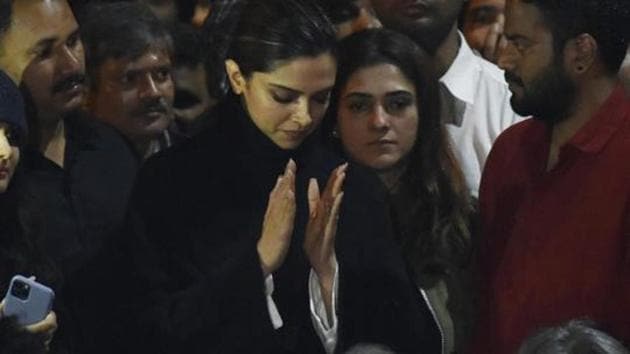
In choosing to greet Aishe Ghosh, the young JNU Students’ Union president, whose skull was nearly broken open with an iron rod, with her hands folded in a respectful namaste, Padukone marked an important breakaway from her industry’s past apathy.
She was, however, not the first one to speak up. Other notables are Sonam Kapoor, Alia Bhatt, Taapsee Pannu, Swara Bhasker, Richa Chadda, Farhan Akhtar, Anurag Kashyap, Anubhav Sinha and Zeeshan Ayyub — marking an evident generational shift. But she certainly made the most dramatic and risk-laden gesture.
If the worst you can say about her fiercely individual assertion to be at JNU is that it was a promotional stunt for her new film Chhapaak, you have no idea how the film industry’s public relations masters and brand managers think.
In fact, a few days ago, but before the violent assault at JNU, I met Padukone and the film’s director Meghna Gulzar at an event in Jaipur. They were surrounded by half a dozen advisers and publicity managers. As we sat talking backstage, both Gulzar and Padukone asked me thoughtful, reflective questions about the controversy around the new citizenship legislation and the proposed National Register of Citizens. Their minders worried that this would come up in our formal conversation. In fact while Padukone — who is also a producer on the film — and Gulzar seemed comfortable in taking these questions from an essentially young audience, everyone around them was positively paranoid. The one comment Padukone did make to me was about actors being a soft target. Why did we not demand the same accountability from our industry leaders or our sports stars or other celebrities, she wondered. Everything that has happened since then vindicates Padukone ’s point and reinforces the fact that she would have had a tough time convincing the multiple stakeholders around her about the need to go to JNU. They are more risk-averse and status-quoist than you can even begin to imagine.
{{/usCountry}}In fact, a few days ago, but before the violent assault at JNU, I met Padukone and the film’s director Meghna Gulzar at an event in Jaipur. They were surrounded by half a dozen advisers and publicity managers. As we sat talking backstage, both Gulzar and Padukone asked me thoughtful, reflective questions about the controversy around the new citizenship legislation and the proposed National Register of Citizens. Their minders worried that this would come up in our formal conversation. In fact while Padukone — who is also a producer on the film — and Gulzar seemed comfortable in taking these questions from an essentially young audience, everyone around them was positively paranoid. The one comment Padukone did make to me was about actors being a soft target. Why did we not demand the same accountability from our industry leaders or our sports stars or other celebrities, she wondered. Everything that has happened since then vindicates Padukone ’s point and reinforces the fact that she would have had a tough time convincing the multiple stakeholders around her about the need to go to JNU. They are more risk-averse and status-quoist than you can even begin to imagine.
{{/usCountry}}In part, the credit for triggering this change must go to students across India who have generated a first-of-its-kind moral pressure on people, irrespective of political affiliations. Their optimism, their idealism in going to battle for constitutional values, the proud embrace of symbols of nationalism and the disturbing videographed images from Jamia Millia Islamia to JNU of the violence they have suffered — all of this makes neutrality a near impossibility, even for those who regard themselves as apolitical. But if the students have made the protests almost cool, Padukone’s presence has enabled many others to shun silence. Since her visit, others like Sunil Shetty, Varun Dhawan and Sunny Leone have jumped into the conversation.
Already, for the choice that Padukone has made, there have been calls to boycott her new release. Some ministers in the government have targeted her in the coarsest of language. Padukone could well be dropped from other government-linked promotional campaigns. And the hideous, sexist online trolling is relentless. If, for any reason, her film does not do well, you can’t even begin to count the number of so-called well-wishers who will argue that it was linked to her presence at JNU.
They will then advise her to zip up forever.
But Padukone has reflected a quiet-but-ferocious strength even before this. The very decision to transform herself into an acid attack survivor, in an industry where they often forcibly retire female actors in their thirties, is reflective of that stubborn strength. She told me that a top male director had advised her not to do Chhapaak precisely because she “wouldn’t look good,” in the way the industry defines it.
A few years ago, Padukone came out to me in an interview about an intensely private and anguished battle with mental depression. Then too, I asked her whether she was not scared of possible repercussions. But she had made up her mind. And there was no turning back. Her volubility is in unmissable contrast to most of the top male actors of her fraternity. In particular, Aamir Khan and Shah Rukh Khan appear to have fallen silent since their straight-shooting on issues such as mob lynching of Muslims a few years ago caused them awful backlash online. I did one such interview with Shah Rukh where he spoke bluntly about the Dadri lynchings. Of course he was trolled viciously. A new release of his a couple of months later flunked the box office test. Later I found his managers believed that the interview was one reason for the flop. This is how minds and opinions and thoughts are controlled and curtailed in Bollywood.
And this is why Padukone has shown such remarkable integrity.