More than a decade ago, when Uddhav Thackeray started handling the affairs of the Shiv Sena, a grudge Sena workers had against him was that he was not available for them at Matoshree. For years, the workers could land up at Matoshree anytime and seek an audience with the late Balasaheb Thackeray. Uddhav, then designated as Thackeray’s successor, sought to change the system.
“I am putting in place a system so that their grievances can be heard at local level. They can even send me a mail or fax instead of travelling all the way to Bandra,” Thackeray had told me then, in response to my query during an interview.
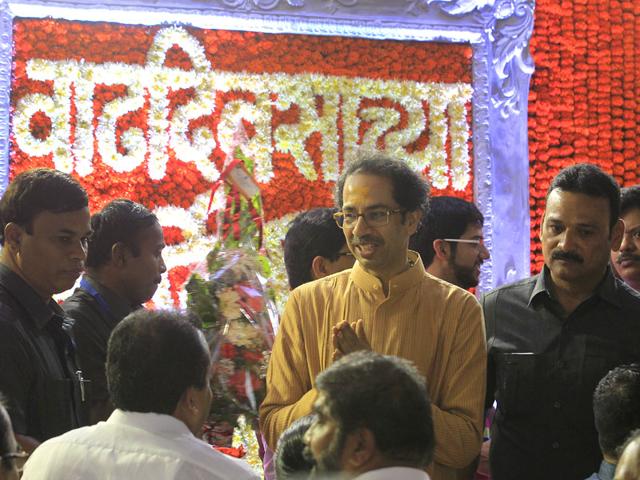
“I am not avoiding people. We are living in an age where the communication is so easy. Also, my style of working is different than that of my father’s,” he had pointed out. It took some time for the sainiks to get used to this. The scene at Matoshree on Monday, however, was a picture in contrast. Hundreds of supporters — from party MPs to fisherwomen from Versova - turned up at Matoshree to greet Uddhav on his 55th birthday and he made it a point to meet them.
There has been a surprising change in Uddhav over past few years, even in the way he is handling the party. He has a complete grip over the Sena and has managed to retain power in Mumbai civic body, apart from being part of the ruling formation at the Centre and state. The challenge posed by the Maharashtra Navnirman Sena looks weak. From the common Sena workers’ viewpoint, things are looking good. So, does this mean the future is bright for the Sena?
{{/usCountry}}There has been a surprising change in Uddhav over past few years, even in the way he is handling the party. He has a complete grip over the Sena and has managed to retain power in Mumbai civic body, apart from being part of the ruling formation at the Centre and state. The challenge posed by the Maharashtra Navnirman Sena looks weak. From the common Sena workers’ viewpoint, things are looking good. So, does this mean the future is bright for the Sena?
{{/usCountry}}The answer is not easy, even for the Sena strategists.
The party did well in the Lok Sabha election, largely thanks to the Modi wave. Uddhav surprised everyone by not giving in to the pressure mounted by the BJP during the Assembly seat-sharing talks. As the BJP chose to dump the party, he took the risk by directly attacking Modi (who was then at the peak of his popularity) during the Assembly polls. In a four-cornered contest, the Sena emerged second largest party in state with 63 seats and ensured the BJP didn’t win a majority on its own.
After the elections, the BJP survived the trust vote but later had to take Sena’s support. The two parties are now back as allies though the relations between them are anything but cordial. The BJP wants to make Maharashtra its stronghold like neighbouring states such as Madhya Pradesh and Gujarat. A major hurdle in its plans is the Sena, which shares its voter base. Little wonder, it would try to cut Sena to size and won’t mind dumping it again at a convenient time.
Many in political circles are wondering whether Uddhav made errors while reading political situation at crucial junctures in the past year.
They think Uddhav lacked political acumen and as such couldn’t strike a good deal with the BJP before the Assembly elections. Further, he couldn’t play his cards well (the way Sharad Pawar did with the Congress) to get a better bargain in exchange of support to the BJP government in the state. That is why, the Sena has ended being in a position where it is in power but barely has a say in the matters of governance. Uddhav’s aides, however, point out that he didn’t have enough options in the given situation. Instead of taking on the powerful BJP, he chose to buy time, hold on to his strength while waiting for the right time to chart his independent course.
In either case, Uddhav’s acid test will be the 2017 civic elections. The outcome may have major impact on his plans. By snapping its ties with Sena to go with a locally strong outfit in Kolhapur, the BJP has made its modus operandi clear: It doesn’t want Sena to become an obstacle in its growth in Maharashtra. How Uddhav reacts to the same would be interesting to watch.