To attempt a critique in 750 words of four judgments in the Sabarimala case aggregating over 1 lakh words is to seek the Nobel prize for miniaturisation. To do so as the lead (but losing) counsel for the Sabarimala Board makes the exercise even more hazardous and entitles the reader to discount everything which follows.
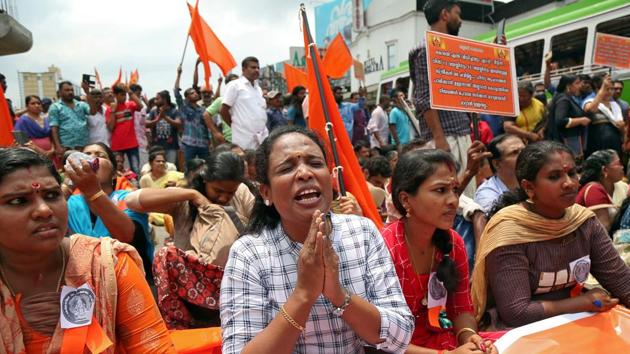
Each of the four judgments, by some of the best and brightest from our judiciary, reflect an outstanding scholastic approach, so that disagreement apart, it is exhilarating to find such painstaking research, conceptual innovation, industry and elegance of language as is found there.
The building blocks of the Temple Board’s case were firstly, that from inception, antiquity and time immemorial, the Sabarimala temple excluded women within the reproductive age bracket of 10 to 50 years since the Lord Ayyappa deity, uniquely and only at Sabarimala, depicted a Naishtik Brahmcharya viz perennial celibate student who shunned any contact with women in that age group. Secondly, that this reproductive age span had always been linked to the menstrual cycle, thereby generating no gender based exclusion (since women below 10 and above 50 could worship) but was an exclusion emanating from the very concept, origin, evolution and identity of the deity. Thirdly, that Ayappans constitute an identifiable religious denomination and sect following an identifiable set of beliefs, customs and usages with a peculiar 41 days “Vratham pilgrimage” and hence are entitled to the group religious rights of a distinct denomination under Article 26. Fourthly, Vratham, female exclusion and all other self denying practices, rituals and observances constituted the genuinely and bona fide held beliefs of the sect and were considered vitally essential for the sect.
While Justice Chandrachud’s judgment (DYC) soars in spirit and is imbued with inspired eloquence, it suffers from several legal errors. Firstly, it subjects all the Articles 25 to 28 constitutional religious rights to general constitutional notions of “human liberty, equality, fraternity and dignity”. Inspired by high liberal and progressive thought, it falls foul of the established law that Article 26, unlike Article 25, is subject only to public order, morality and health while Article 25 is additionally subject to other Part III rights. Secondly, such general constitutional goals cannot be applied as objective criteria for derogation from specific constitutional rights of seminal importance like religion. Thirdly, morality is interpreted by him to mean “constitutional morality”, a phrase though frequently used in many judgments in the past one year, cannot assume the character of the “Chancellor’s foot” viz extreme subjectivity. Fourthly, DYC appears to travel very far by subsuming exclusion of women from Sabarimala within the rubric of “untouchability” under Article 17, misinterpreting the substantial Constituent Assembly material suggesting that only conventionally understood caste and religion based exclusion was considered “untouchability” by our founders. Fifthly, by holding that all custom, usage and personal law constitutes “laws in force” and hence are fully subject to constitutional judicial review just like legislation, DYC mandates, contrary to established case law, objective standards of judging of even purely religious beliefs. Sixthly, he propounds a further “objective” test of what the court, in its view, considers as fit and proper essential religious practice whereas established jurisprudence repeatedly holds that subjective but bona fide and long held beliefs of a religious denomination are sufficient to qualify the practice as an essential part of religion. Seventhly, none of the other three judgments accept any of the above legal findings of DYC or go so far.
{{/usCountry}}While Justice Chandrachud’s judgment (DYC) soars in spirit and is imbued with inspired eloquence, it suffers from several legal errors. Firstly, it subjects all the Articles 25 to 28 constitutional religious rights to general constitutional notions of “human liberty, equality, fraternity and dignity”. Inspired by high liberal and progressive thought, it falls foul of the established law that Article 26, unlike Article 25, is subject only to public order, morality and health while Article 25 is additionally subject to other Part III rights. Secondly, such general constitutional goals cannot be applied as objective criteria for derogation from specific constitutional rights of seminal importance like religion. Thirdly, morality is interpreted by him to mean “constitutional morality”, a phrase though frequently used in many judgments in the past one year, cannot assume the character of the “Chancellor’s foot” viz extreme subjectivity. Fourthly, DYC appears to travel very far by subsuming exclusion of women from Sabarimala within the rubric of “untouchability” under Article 17, misinterpreting the substantial Constituent Assembly material suggesting that only conventionally understood caste and religion based exclusion was considered “untouchability” by our founders. Fifthly, by holding that all custom, usage and personal law constitutes “laws in force” and hence are fully subject to constitutional judicial review just like legislation, DYC mandates, contrary to established case law, objective standards of judging of even purely religious beliefs. Sixthly, he propounds a further “objective” test of what the court, in its view, considers as fit and proper essential religious practice whereas established jurisprudence repeatedly holds that subjective but bona fide and long held beliefs of a religious denomination are sufficient to qualify the practice as an essential part of religion. Seventhly, none of the other three judgments accept any of the above legal findings of DYC or go so far.
{{/usCountry}}Eighthly, Justice Nariman’s (RFN) erudite discussion establishes the universality of the link between menstruation and impurity in diverse religious cultures (except in Sikhism and Bahaiism), which actually validates the exclusionary rule for menstruating women in Sabarimala, but ironically leads him to an opposite conclusion. Ninthly, he proceeds on the assumption that the reasons for barring women from Sabarimala are an essential facet of the belief of those worshippers, a strong finding in favour of the Board. RFN does far less violence to established jurisprudence by limiting himself to two narrowly tailored bases for striking down the exclusion viz. Ayappans not being a denominational sect and hence not protected under Article 26 and the exclusion being violative of those women’s fundamental rights to worship under Article 25.
While the judgment of the Chief Justice is more expansive than that of RFN, it is far less so than that of DYC. The dissenting lady judge has focused precisely and boldly on the basic four prongs delineated at the beginning of this article.
Abhishek Singhvi is Rajya Sabha MP, Congress National spokesperson, former Chairman, Parliamentary Standing Committee and former Additional Solicitor General, India.
The views expressed are personal