On May 4, 2012, the Onchiyam village in Kerala's northern Kozhikode district was rocked by an incident that sent shockwaves through the political establishment in the state. T.P. Chandrasekharan, a leader of the Revolutionary Marxist Party (RMP) a breakaway group of the Communist Party of India (Marxist), was riding a motorcycle on his way home when a group of hired killers arrived in an SUV. They threw crude country bombs at him, and when Chandrasekharan fell off the motorcycle, he
On May 4, 2012, the Onchiyam village in Kerala's northern Kozhikode district was rocked by an incident that sent shockwaves through the political establishment in the state. T.P. Chandrasekharan, a leader of the Revolutionary Marxist Party (RMP) a breakaway group of the Communist Party of India (Marxist), was riding a motorcycle on his way home when a group of hired killers arrived in an SUV. They threw crude country bombs at him, and when Chandrasekharan fell off the motorcycle, he was hacked to death with sharp weapons.
An autopsy confirmed his body bore 51 deep wounds. The brutality of the act sent shivers down the spines of a wide spectrum of people across the country, particularly among those engaged with mainstream left-wing politics.
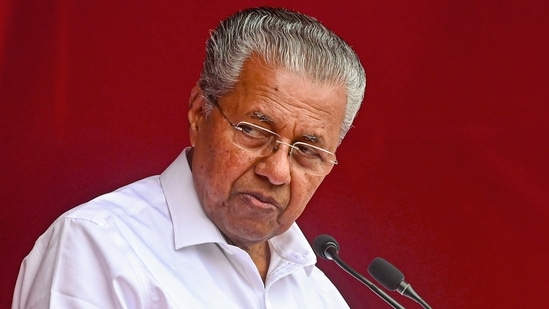
The 51-year-old Chandrasekharan had left CPI (M) on ideological grounds and floated a regional left outfit named the Revolutionary Marxist Party (RMP). Chandrasekharan launched scathing attacks on the then CPI(M) state secretary and present chief minister, Pinarayi Vijayan, who, according to him, had facilitated the infiltration of corruption, criminal politics, and anti-communist tendencies into the party's ranks and files.
When his splinter group started gaining support and challenging Vijayan's dominance in many traditional CPI(M) strongholds in north Kerala, it angered some CPI(M) leaders who later plotted to eliminate him.
The assassination case has gained significant attention over the years across Kerala. Despite a strict High Court directive, the government recently attempted to grant remission to four convicts in the case, sparking widespread opposition, and leading the Vijayan government to retract its decision. Critics of the CPI(M) have used this move to accuse the party of employing totalitarian tactics to suppress dissidents.
What led to the Chandrasekharan murder and the subsequent controversy
Chandrasekharan contested the 2009 Lok Sabha elections as an independent candidate from the Vadakara seat, which was considered one of the strongholds for the CPM. Even though Chandrasekharan lost the election, ceding defeat to Mullappally Ramachandran of the Congress, he still secured nearly 22,000 votes. With Chandrasekharan's campaign contributing to CPM’s defeat, the prosecution alleged that local CPM leaders hatched a conspiracy to assassinate Chandrasekharan.
In the investigation, local CPM leaders P K Kunhanandan, K C Ramachandran, C H Ashokan, K K Krishnan, and Geothi Babu were arrested. The arrests of the accused revealed that local CPM leaders had hired a group of seven individuals to carry out Chandrasekharan's murder. These individuals were found to have been involved in a total of 75 criminal cases, including nine political murders, all allegedly committed for the CPM.
In 2014, a trial court in Kozhikode convicted seven hired assassins and six CPI(M) leaders and awarded life terms to all except one while acquitting two others. In February this year, the Kerala High Court increased the punishment for nine convicts to two life terms and revoked the acquittal of K K Krishnan and Geothi Babu, both CPI(M) leaders, and sentenced them to life imprisonment.
Critics say the conspiracy aspect of the case still needs to be thoroughly investigated. The Kerala High Court upheld the punishments given by the special trial court to the assassins and the leaders who aided them. Civil society in the state periodically re-evaluates this case, and the Vijayan government is criticised for allegedly making repeated concessions to the assailants and being accused of yielding to their demands.
Why did the Kerala government attempt to grant remission to convicts?
Despite the Kerala HC’s stance on the case, the Vijayan government recently tried to grant some of these convicts remission by including them in a list of reformed prisoners to be released on Independence Day.
DGP Balram Kumar Upadhyay of the state prisons department compiled a list for this purpose, but it was discovered that "ineligible persons" were on the list. As a result, the state home department asked the DGP to create a new list that adhered to the proper guidelines and added new names. This led to the jail authorities initiating the process of obtaining probation reports from the police, necessary for the jail authorities to recommend special remission to the state government, and they require the police to record statements from the victim's family.
In Kannur Central prison, the jail authorities requested probation reports for three convicts: T K Rajeesh, K K Muhammed Shafi, and S Sijith, members of the gang that murdered Chandrasekharan. In this instance, the reports were requested in June, just a few months after the Kerala High Court increased the convicts' punishment to two life terms and directed the state government to ensure they were not granted parole.
When it was revealed that the state government had requested the probation reports for the Chandrasekharan murder convicts, and it boiled into a controversy, the CPI(M) government attempted to address the situation and subsequently suspended three prison officials from Kannur.
Chandrasekharan's widow and current Vadakara MLA, K K Rema has criticised the CPI(M) government, accusing it of being afraid that the convicts would expose the conspiracy behind her husband's death if they weren't released, even claiming that the convicts were receiving privileges in prison.
Since the Vijayan-led CPI(M) government came to power in 2016, the convicts in the case have been repeatedly granted prolonged paroles, which Rema has raised as an issue in the Assembly since her election in 2021. Before the recent Lok Sabha elections, six convicts were also granted parole. Moreover, senior CPI(M) leaders have frequently visited the prison to meet with the convicts.
The political aftermath of the Chandrasekharan murder
"The murder of Chandrasekharan marked a significant shift in the history of political violence in North Kerala, exposing the involvement of CPI(M),'' notes Kozhikode-based political observer Prof. M N Karassery.
Vadakara, once a stronghold of the Left, slipped out of the CPI(M)'s influence after Chandrasekharan departed from the party. A year after he founded the RMP, the Left lost the Vadakara Lok Sabha seat to the Congress in 2009. It faced further defeats in the 2014 and 2019 elections. In the recent Lok Sabha elections, in an attempt to regain the seat, the Left fielded a popular woman candidate, K K Shailaja, but she too lost to the Congress's Shafi Parambil.
Since the murder of Chandrasekharan, the Left party has faced defeat in the assembly polls. The JD(S) won the Vadakara seat in the 2016 polls, and in 2021, Rema emerged victorious.
After the assassination, Rama took charge of leading the RMP and became a prominent advocate against violent politics in Kerala, garnering support even from pro-Left groups.
Although the RMP's influence is mostly limited to the Vadakara region in Kozhikode district, Rama, supported by the Congress-led UDF, ran for the Vadakara constituency in the 2021 Assembly elections and emerged victorious. Her central campaign focus was combating the criminalisation of politics.
One Subscription.
Get 360° coverage—from daily headlines
to 100 year archives.
Archives
HT App & Website