There is a renewed political vigour to implement changes which have eluded successive governments. The conclusion of GST, banking ordinance and fiscal rectitude are some examples. The Regional Connectivity Scheme (RCS) or UDAN (Ude Desh Ka Aam Nagarik) will unleash market forces to improve connectivity, given the constraints of topography and distance. GST ensures economic integration, UDAN fosters physical connectivity. The burst of private operators has enlarged consumer choice, reduced costs and improved linkages among metropolitan centres. Notwithstanding dramatic improvements in roads and railways, faster integration of rural India remained a quest. Economising on time through air connectivity has multipliers beyond the narrow calculus.
The UDAN scheme has the vision of “creating an eco-system to make flying affordable for the masses”. It secures regional connectivity by harnessing the power of market forces. Deeper air penetration between tier-2 and tier-3 cities through low-cost and reliable air connectivity will spur growth. The essence of the scheme rests on its market-based principles designed for long-term sustainability. The incentives of reduced excise and Value Added Tax (VAT) on Aviation Turbine Fuel (ATF), and constitution of a Regional Connectivity Fund (RCF) financed through fee or levy on domestic flights enables its operational funding. The provision of Viability Gap Funding (VGF) and exclusive operational rights for three years balances incentives with competition.
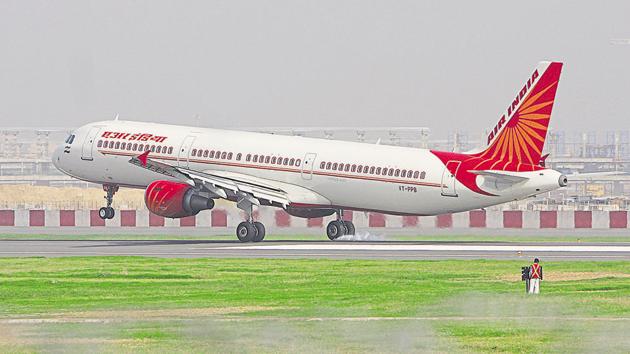
Any civil aviation policy without a fundamental restructuring of Air India Limited (AIL) is like whistling against the wind. AIL is the elephant in the room. The national carrier, also famous as the ‘Maharaja’, is a classic example of ‘Emperor without clothes’. It represents all that can go wrong when governments seek to run businesses, often unimaginatively. Reckon with the following.
First, its dismal financial health. AIL has consistently incurred losses and is severely debt-ridden. Notwithstanding the massive equity infusion of around Rs. 25,000 crores since 2012 under its turnaround plan/financial restructuring plan (TAP/FRP), the total debt stood at Rs. 52,815 crore on March 31, 2016. An annual interest burden of Rs. 4,000 crore and a net loss of Rs. 3,836 crore (2015-16) erodes profitability. It continues to have a cash deficit of around Rs. 200 crore per month which is financed by fresh borrowings and deferred payments to its creditors. A default on its debt obligations is inevitable without constant infusion of fresh public funds. Second, its poor market performance. The less said about the illogical merger of Indian Airlines and Air India in 2007, the better. Its market share has monotonically come down from 60% to below 15%. It consistently lags behinds its peers on performance indicators like passenger load factor, complaints, delays and operational lapses. Third, compounding its financial problems is its miserable personnel management. For instance, there has been no recruitment in AIL (except pilots and cabin crew) for the last 20 years. Ironically, in a country replete with young talent, the employees’ average age of 48 years is misaligned.
{{/usCountry}}First, its dismal financial health. AIL has consistently incurred losses and is severely debt-ridden. Notwithstanding the massive equity infusion of around Rs. 25,000 crores since 2012 under its turnaround plan/financial restructuring plan (TAP/FRP), the total debt stood at Rs. 52,815 crore on March 31, 2016. An annual interest burden of Rs. 4,000 crore and a net loss of Rs. 3,836 crore (2015-16) erodes profitability. It continues to have a cash deficit of around Rs. 200 crore per month which is financed by fresh borrowings and deferred payments to its creditors. A default on its debt obligations is inevitable without constant infusion of fresh public funds. Second, its poor market performance. The less said about the illogical merger of Indian Airlines and Air India in 2007, the better. Its market share has monotonically come down from 60% to below 15%. It consistently lags behinds its peers on performance indicators like passenger load factor, complaints, delays and operational lapses. Third, compounding its financial problems is its miserable personnel management. For instance, there has been no recruitment in AIL (except pilots and cabin crew) for the last 20 years. Ironically, in a country replete with young talent, the employees’ average age of 48 years is misaligned.
{{/usCountry}}There have been multiple failed attempts to restructure AIL. Privatisation and securing strategic partners have been discussed for decades. Its humongous debt and past liabilities is a constant deterrent. Political opposition, trade union action, exaggerated fears and ideological predilections remain insurmountable barriers.
What is the way forward then?
There is now a change in the overall milieu. This is the opportune moment to think of the obvious, namely, privatise the carrier. Given legacy and other issues, this is easier said than done. It needs a multi-pronged and sequenced approach.
First, why not replicate the philosophy contained in the recent ordinance amending the Banking Regulation Act, 1949? It empowers a regulatory entity, i.e. the RBI, to take difficult bona fide decisions without excessive fear of vigilance and surveillance agencies. Second, constitute a consortium of banks, financial Institutions, corporate houses and airline operators to undertake a debt restructuring. Transferring management and shareholding to this consortium will foster sound commercial practices, improve the balance sheet, secure managerial optimisation and protect bona fide decision-making. Ceasing to come under the narrow definition of a PSU has many advantages. However, in any such process, majority shareholding must remain in Indian hands. Its unique identity emanates from its ability to promote Indian heritage, culture and soft power. Third, this consortium could then offload 26% of its share to a strategic investor and utilise the proceeds to repay the debt. The consortium and the strategic partners could secure commercial viability, even in this competitive oligopolistic market. Employee conditions can be protected as also the fear of a takeover by a foreign airline. A special inter-ministerial oversight committee under the cabinet secretary or the PMO can monitor time-bound implementation.
The ‘Emperor’ must be dressed innovatively and enabled to join the beauty pageant. The time to act is now.
NK Singh is a member of the BJP and a former Rajya Sabha MP
The views expressed are personal