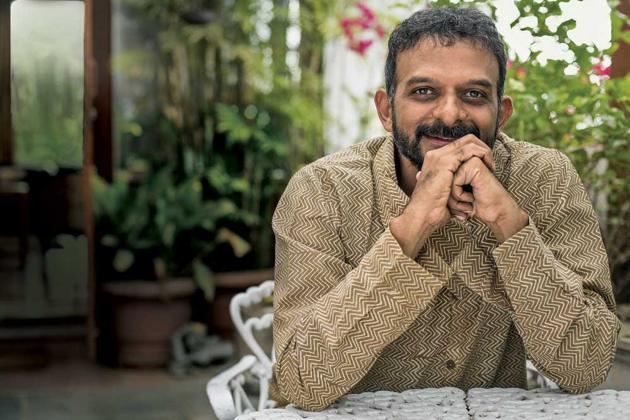
Besides making innovations in Carnatic music, vocalist, writer and activist TM Krishna has also spoken about causes concerning the environment, caste system, communalism, religious reform and so on. In 2016, he was awarded the Ramon Magsaysay Award. In his new book — Sebastian and Sons: A Brief History of Mrdangam Makers, Krishna takes a deep dive into the lives of the men who are instrumental in engineering the mridangam, thereby telling us a dark tale of systematic caste discrimination and oppression.
Excerpts:
Your book is a case study of the Mrdangam and it explores the workings of caste discrimination within it. What inspired and motivated you to work on this book?
My first book on Carnatic music was called A Southern Music — The Karnatik Story, which explored Carnatic music’s inner workings, its technicality, history, aesthetics and social structures. Over the years, I realised, I had not mentioned anything about the instrument makers. It was clear to me that I had ignored them. Even while I wrote about caste and its many discriminative features, I had discriminated too by completely ignoring the makers. That’s when the idea that maybe I should understand their lives came about.
But why did you choose to focus on the lives of mridangam makers?
The relationship between the mridangam maker and the mridangam player is constant and long-term because the instrument has to be made, maintained, the skin has to be changed, the tuning has to be checked very often, the instrument needs constant care. Except for the shell which has about 20 to 40 years (or even more) of longevity, everything needs to be constantly changed. So, automatically, the relationship between the player and the maker becomes very intimate. The artiste doesn’t know how to do any of these things. It has to be the maker and his identity and condition is dictated by his caste. So, I thought why not speak to the makers and explore their history.
{{/usCountry}}The relationship between the mridangam maker and the mridangam player is constant and long-term because the instrument has to be made, maintained, the skin has to be changed, the tuning has to be checked very often, the instrument needs constant care. Except for the shell which has about 20 to 40 years (or even more) of longevity, everything needs to be constantly changed. So, automatically, the relationship between the player and the maker becomes very intimate. The artiste doesn’t know how to do any of these things. It has to be the maker and his identity and condition is dictated by his caste. So, I thought why not speak to the makers and explore their history.
{{/usCountry}}What was it like to work on this book?
The world of mridangam making and the maker was completely different. It was a world I knew nothing about. I learnt about their history, the difficulties and complexities in their lives, their mastery of mridangam making and the history of how they have moved from place to place.
What were the difficulties you faced while researching?
I come from immense privilege, from gender, caste, class, economy, etc, and honestly I have not done this kind of work before. All my writings have been based on my observations, research and my own ideations. This book is more journalistic, sociological and anthropological. It was completely new for me. I had to remind myself on many occasions of my social cultural capital. I kept that in mind, when I was writing too. So, you will notice that, at times the names of the mridangam makers in the book have been changed. That was done very consciously. It was important that they were not exposed to any kind of backlash or unnecessary repercussions because I wanted to write a book on them.
Do you think that the Dalit community needs an upper caste man to talk about them?
I don’t think the Dalit community needs an upper caste man to tell their stories. I don’t know what is the correct answer to this. Ideally, mridangam makers should be writing this book. Ideally, Mrdangam makers should be writing this book but our social structure makes that so difficult. At the same time, their voices need to be heard, nobody knows enough about their lives, their work and the sheer brilliance in workmanship. Nothing has been written. So, I consider myself only an enabler for a conversation. Now I step back.
Has writing and researching on this book changed your understanding about caste structure?
One very important thing I have learned is how caste gets into every nook and corner of relationships. It is not black and white at all. It is only in the grey. The person who is coming from the oppressing community and the one from a privileged caste are both, in a way, negotiating this. The most ugly thing about caste is that the person who is oppressed becomes a participant in its functioning. I hadn’t seen its inner workings so clearly before.
There is an instance in the book where the master maker refuses to leave the funeral pyre of the musician who was his patron, in spite of being exploited at the hands of the patron all his life...
What are the feelings that go through the mind of a person who is stuck in a social construct like that? It is important for upper caste people to realise that this is not just love, it is a mess, the whole feeling is messy.
Why were the women considered an anomaly when it came to participating in the making of a mridangam?
Women do not make the mridangam except for one lady in Bangalore. The main participatory work that they do is crushing the black stone that is required for the black spot. They also do help in skin drying work at the home. It is a completely male-dominated profession. So, the two women who did skin processing and trade, and the one lady who did mridangam making itself are anomalies to what is fundamentally a male dominated profession.
You’ve written so many books, do you have an opinion about the publishing industry? Are people reading enough books?
Well, we should always hope that people are reading enough books. We keep saying that people’s attention spans have reduced. Everything is becoming shorter, columns are not even thousand words anymore, they are merely 400 words. At the same time, I do think that books will not die. Formats may change, you may not read actual books, you may read it on your Kindle, but people will continue to read. I don’t think that the life that literature gives society will die.