In January, a photo of rainbow-hued mountains showed up on Instagram, was shared on travel pages, and prompted users to report it as fake. Instagram’s India-based verification partner NewsMobile confirmed that candy-coloured canyons do not exist, and labelled the photo ‘false’. All hell broke loose.
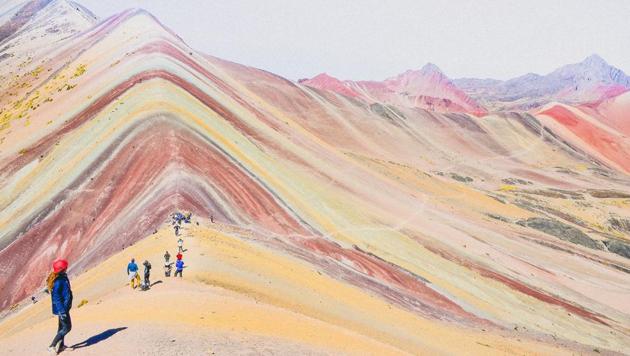
Because, duh, no one believes that mountains come in pastel hues. It wasn’t a lie masquerading as a truth. The image was obviously colourised for creative effect. There were enough complaints that Instagram removed its ‘false’ disclaimer and apologised.
This month, it happened again. Tristan Zhou’s shot of Hong Kong’s densely packed buildings, extending up to seeming infinity, shared on the @Saatchi_Gallery feed, acquired the ‘false’ warning. Commenters were furious. Art didn’t need to be checked, they said. Its very nature is to manipulate reality, go beyond documentation, take creative liberties, and trigger new ideas using new techniques. To liberate thought, not limit it.
What constitutes true or false in the art world, then? Imagine if Man Ray’s photograms came with a warning that they were not actual objects. Imagine being told that Van Gogh’s Starry Night isn’t really what that night looked like. Or having it pointed out that there is only one Frida Kahlo, even though some paintings feature two. Or, that Warli tribals do not have two triangles for torsos.
Photographs, however, find themselves in a tricky space. The most enduring images in our collective memory tend to document historic moments and events — Gandhi spinning khadi, Marilyn Monroe in her billowing white dress, the weeping old man during demonetisation. There’s less tolerance for manipulation in this medium, even though technology allows more room for it.
{{/usCountry}}Photographs, however, find themselves in a tricky space. The most enduring images in our collective memory tend to document historic moments and events — Gandhi spinning khadi, Marilyn Monroe in her billowing white dress, the weeping old man during demonetisation. There’s less tolerance for manipulation in this medium, even though technology allows more room for it.
{{/usCountry}}Digital artists have devoted entire artistic practices to photo manipulation. Images are copied, collaged, cheekily re-staged, colourised. They deploy high-speed cameras, low light, magnifying lenses, trick makeup and optical illusions. Many are created on a computer, with no lens, no subject in the real world.
The Metropolitan Museum of Art devoted a show to digitally enhanced photo art as early as 2012, covering image-alteration techniques that preceded and followed the introduction of Photoshop in the 1980s. Look up the works of Ellen Sheidlin, Gregory Crewdson, Sandro Giordano — Instagram’s binary would classify them all as ‘false’ and yet, they tell truer stories than the millions of duckface selfies and super-saturated travelscapes.
Good fact-checking can expose propaganda, prevent a riot, even bring down a corrupt government. Saatchi, however, believes it has no place in art. The gallery is inviting everyone to share their most creative digitally altered lockdown views. The best images are posted on their Instagram page. Let’s see what fact-checkers make of that.
Over the moon about something that’s still under the radar? Tell me at rachel.lopez@htlive.com
Follow more stories on Facebook and Twitter