
 E-Paper



Assembly elections: Are Punjab and Goa headed for a change in guard?
EC data shows higher polling means change of guard.

 Prefer HTon Google


Punjab and Goa, which reported high voter turnout for assembly elections on Saturday, could be looking at a change, an analysis of past poll data reveals.
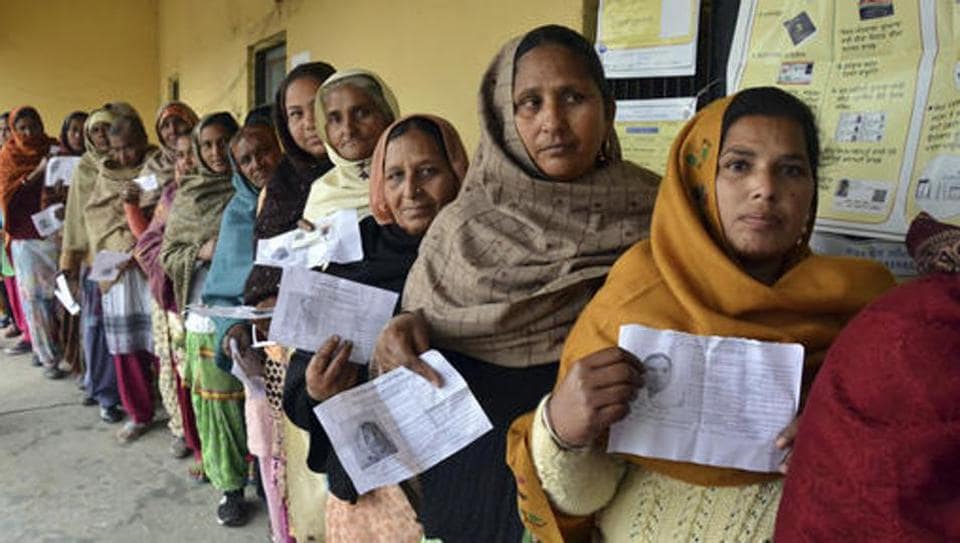
In around 80% of the state assembly polls whenever voting percentage has been higher than the previous election, there has been a change in the government, election commission data for the last 20 years reveal. The probability of change is even higher when women voters outnumber men.
Punjab reported 77.37% polling, a shade lower than 78.57% in the 2012 election. Goa turnout was 82.23% against 81.73% the last time. In both the states, more women turned up at polling booths than men.
High voting, a recent phenomenon, has led to change in governments in most states though there are exceptions. Voters in Punjab took everyone by surprise in 2012 when they returned SAD-BJP to power, a first for the state where Akalis and Congress took turns to rule the state.
Last year, Mamata Banerjee was given a second successive term by voters in West Bengal. When she ended the Left’s three decades of rule in 2011, it was a new voting record for the state. Sheila Dikshit returned as the chief minister of Delhi with a higher majority in 2003.
“Invariably the enthusiasm at polling booths is for a change,” said Sanjay Kumar of the Centre for the Study of Developing Societies, which has been monitoring voting patterns of assembly elections for the last 20 years.
Kumar said understanding voting pattern was a complex issue and could vary from state to state in a big country like India, as elections also have caste and community dimensions. “But what we observe from analysing long-term data is that if people are satisfied with the incumbent government, they normally may not come out in large numbers,” he said.
In the last 20 years, India has seen voters’ enthusiasm rise.
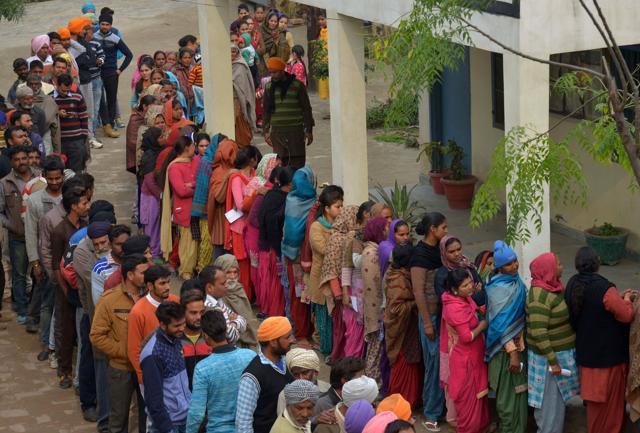
Higher turnouts can primarily be attributed to three factors — weeding out of bogus names from poll rolls, the election commission’s efforts to encourage voting and bring polling stations closer to voters’ homes and adequate security. The number of polling stations has more than doubled in the last two decades. All polling booths now have a central election observer to ensure free and fair polling.
At least 10% of the names on polls rolls were found to be bogus or duplicate and were struck off, EC has said. “The ECI has worked a lot on this and it is showing results,” former chief election commissioner SY Quraishi said. These factors have helped build voter’s confidence. In around 160 assembly polls, including those for union territories, held since 1990, higher voter turnout was reported in about 122 elections, leading to change in the government in about 79.4% cases. Moreover, data also show that it is getting increasingly difficult for the ruling parties to retain power when compared to early years of Independence.
When the turnout is higher in the strongholds of the ruling party, the chances of its decimation are higher. That means the SAD-BJP combine have a reason to worry.
In Goa, the record turnout may cause concern for the ruling BJP, which in the last lap propped up defence minister Manohar Parrikar for the top job. Parrikar was a popular chief minister before he moved to the Centre. Most opinion polls put the BJP ahead but history and poll data are stacked against it.
The BJP lost when the coastal state hit a voting record in 2007. The party came back in 2012, with polling percentage scaling a new high. On Saturday, Goa’s voters went even better on 2012.


