
 E-Paper



Aatish Taseer: ‘I had an unusual parenting. My father was someone I discovered’
On not always fitting into an Indian frame of belonging, his relationship with his father, and writing his new book, Return to Self

 Prefer HTon Google


Many of us live our lives trying to belong to our country, to society, and even to ourselves. You also explore the issue of belonging in your book, Return to Self; Excursions in Exile. Please tell us more about that.
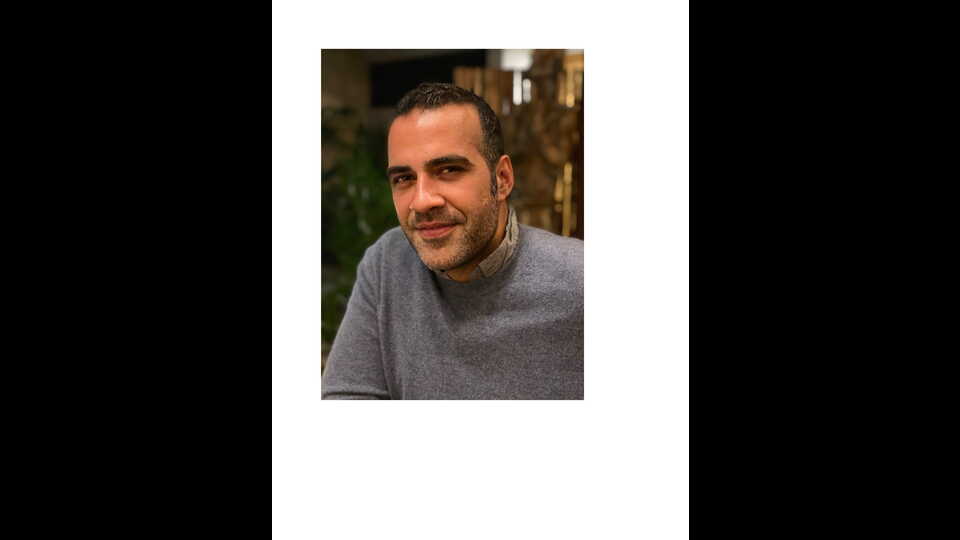
I guess that in this book, the question of belonging is seen more in the way of the kind of burden that it places on the individual. Because, the belonging of a group is fraught with dangers for the individual. Especially in India, I felt that there were aspects of myself that didn’t fit in an Indian frame of belonging. And some of those aspects were inherited, while other aspects that I developed were also a part of me. I think that if there’s a sort of euphoria or a sense of wonder, or a kind of underlying joy running through these pieces, it’s that sense of being a little bit free. I think of belonging, of being in the world of the individual; and the individual as a vector of sympathy, of curiosity, of listening to other people. Those things, which are like parts of myself that I treasure most, are like allowed to come to the fore. And that pressure to belong is kind of released and left behind a little bit.
In two specific instances, first, the death of your father and then your OCI status being revoked, you’ve mentioned how, in both cases, the loss of something eventually became an act of freedom for you. How did you make that connection?
Well, I’ll tell you. I’m trying to remember that wonderful quote of Panditji where he describes India as a mother who clings to all her children. India clings to me as she does to all her children in innumerable ways. And that idea of India as a parent, and we feel this all the time when you’re in India, people are always testing you for authenticity. You could be using an air conditioner and they’d be like, oh, you’re sitting in AC! You know, you somehow betrayed the reality of India. You go abroad, maybe for a holiday, like, why shouldn’t you go abroad? People go abroad here all the time. They don’t get tried for treason for going to Europe. So there’s this feeling in India that is not a two-way street. Like in America, if somebody says to you, make America your home; they’ll say, you have economic opportunities, you’ll have clean roads, you’ll have a park, you’ll have the chance to build a community. The country is offering you a reason to belong.
In India, it’s the opposite. You always have to prove yourself. And it’s really never enough. The minute you get into that game, you’re going to lose. I had a very unusual parenting; my father was somebody I discovered. And almost from the beginning, he was a very patriarchal figure, the head of a kind of powerful, large Pakistani family and I thought, it’s wild, I’ve just come here; you haven’t done anything for me; you haven’t been around in any way. And now, you’re making demands on me. You’re telling me what to write, what not to write and then obviously, later, I kind of internalized certain aspects of his disapproval. I remember, he said to my younger brother, I don’t care if you’re a murderer, I don’t care if you’re a rapist. But if you’re like a faggot, I’ll kill you. I remember hearing this and thinking later, when I was trying to be more open about sexuality, there would be another way in which I was potentially going to let him down or disappoint him. So, when he was killed, it was Naipaul – I was speaking of [my father] in ways that were probably a little bit like how everyone was speaking of him, because he died kind of a hero in a brave death – who just stopped me short and said, “But he was your great enemy. So, you must also be relieved that he’s dead.” It was such a shocking thing to hear. That’s probably the last thing you’re allowed to express, a sense of relief that a parent is dead. But it was like that. I think it was part of Naipaul’s generosity, because he was always more interested in the particularities of the individual.
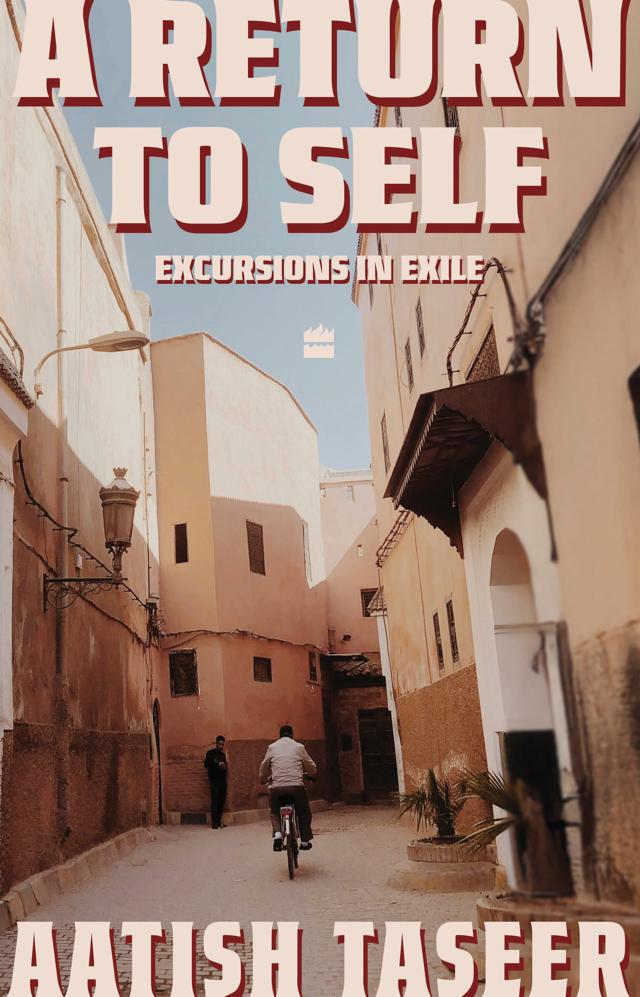
Your OCI status was revoked. The government said it was due to the concealment of the fact that your father was a Pakistani national. How would you describe the condition of dissent in India today?
I’m probably not equipped any longer to answer that question. It’s been six years since I set foot in India. When I was last there, I felt that India on the ground still felt very, very much like a robust democracy.
I felt there’d been a certain kind of institutional collapse, in the way of an opposition and media, and perhaps in the way of the judiciary too. But I was very heartened by the fact that on the ground, it still felt very much like kind of a big free country with many, many opinions and different sorts of ways of dissent being expressed and internalized. I don’t know if it’s profoundly different in these last six years.
In your “excursions in exile” to several different countries what did you learn about yourself?
One of the things that I learned about myself as a traveller, and a novelist, is that you develop characters, and you live with these characters over a long period of time. And you’re really completely absorbed in carrying these people in your mind, and of being able to listen to them and to really live with them. I found as a traveller that there was a corresponding experience of being in the world and of hearing certain kinds of human stories, like of a young man who wanted to commemorate the loss of his father during COVID by going on the pilgrimage that his father took him on, and playing at the high mass in memory of his father.
I felt like I was able to extend that same ability that I could to certain characters to actually living people. I felt it was a great resource, or a great advantage, or something that made the world a very beautiful place for me. It made the world somewhere that I really loved to be, because I found this way of doing the thing that probably I do best.
It dawned on me that I could go anywhere in the world, and if I could start to find these things, the human element as it were, I would be able to write about those places in a way that was interesting, but also that had an emotional power. It was a very simple discovery, but it was a very important discovery.
You have explained certain differences between India and Bharat. Tell us more about that.
Every modern nation-state is an imperfect articulation of a cultural and historical reality. In the case of India, what made it very interesting was the whole history of what the country is. No word has been more misused than India, because every time they didn’t know what something was, they would say it was Indian. Columbus was after India. The turkey in French is dinde, which means the chicken of India. India was the perfect metaphor of being seen through other eyes, of being understood or told what you are because of the gaze of an outsider. All along, there was this other sense of how India saw itself, free of the gaze of the outsider. It’s not like I’m trying to privilege one way of seeing over another. I’m really trying to put that tension between what you feel you are in your bones and what you feel you are when seen through the eyes of other people.
I think that tension of what Indians feel, the Indian truth, as it were, versus India as an image, the tension between those two things is still very key. It’s not just a key tension in India, but it’s actually a key tension everywhere.
One of the things that comes up in this book again and again is this idea of gaze, this idea of the anger that arises from feeling seen and made invisible, misrepresented. All of these things are a mechanism or an engine for a lot of cultural and historical tension. Now, in this country, in the US, you have the opposite thing where people in the interior feel seen by people on the coasts in ways that they don’t like. They don’t like to be seen like that. Even in the advent of somebody like Zohran Mamdani, he’s the expression of a gaze that they don’t know what to do with. They don’t know how to assimilate. It produces a kind of turmoil in them. That was what I was trying to use India to express.
Chittajit Mitra (he/him) is a queer writer, translator and editor from Allahabad. He is co-founder of RAQS, an organization working on gender, sexuality and mental health


