Aircraft magazines fascinated Aadil Desai (56) as a college student. But as libraries and regular bookstores in Mumbai didn’t keep them, he turned to raddiwalas.
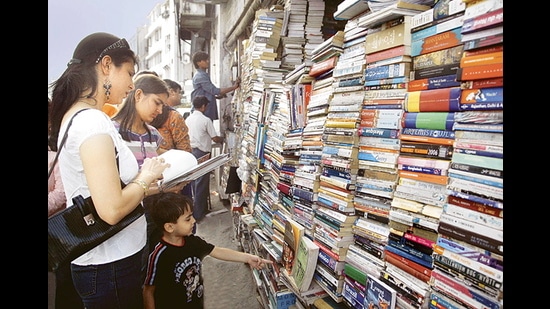
“I often got brand new copies for one-fifth the price as publishers dumped unsold stock with them,” recalls Desai for whom reading those magazines paved the way to his career as an aircraft service engineer.
Great bargains helped him as a student and continue to help the bibliophile that he has become. Desai’s collection, which includes biographies, antiquarian books and volumes on art, astronomy and history, runs into thousands. He now pays a vendor rent to store it.
Similarly passionate, Mansi Dhanraj Shetty (36), buys 15 books a month. “After moving to Mumbai and discovering second hand books, I realised you don’t need to spend Rs1000 on two books when you could buy 10 for that amount. About half of my book purchases are second hand,” she says.
Pre-owned books aren’t always cheap. “Out-of-print copies or books unavailable at bookstores are expensive. Second hand stores have great books you don’t get in regular bookshops,” says Desai. The thrill of discovery is what makes Shetty return to second hand stores too. She usually buys books that she can read and then pass on. “But I’ve also bought some of the biggest keepers from second hand stores -- obscure books on English and world literature, literary fiction, even a graphic novel of Paris-based bookstore Shakespeare and Co’s history. You won’t get these at any bookstore in the city!” she says.
These stores are also part of Shetty’s attempt to cultivate a reading habit that’s eco-friendly, a need roused after seeing loads of old books dumped in landfills at Topsia in her hometown of Kolkata. “I’d been building my home library for years. Then, six years ago, it struck me, “Why can’t I pass on books to someone who wants them or get copies from someone who wants to offload?” She recalls thinking that such a practice would be “much better than dumping” and purchased a domain name to create an online platform for it. On moving to Mumbai she discovered SWAP Book, a book club that does exactly that – except that its members only exchange books on a returnable basis. A huge community of second hand book readers, they also introduced Shetty to good vendors.
{{/usCountry}}These stores are also part of Shetty’s attempt to cultivate a reading habit that’s eco-friendly, a need roused after seeing loads of old books dumped in landfills at Topsia in her hometown of Kolkata. “I’d been building my home library for years. Then, six years ago, it struck me, “Why can’t I pass on books to someone who wants them or get copies from someone who wants to offload?” She recalls thinking that such a practice would be “much better than dumping” and purchased a domain name to create an online platform for it. On moving to Mumbai she discovered SWAP Book, a book club that does exactly that – except that its members only exchange books on a returnable basis. A huge community of second hand book readers, they also introduced Shetty to good vendors.
{{/usCountry}}The second hand books trade in India is still largely unorganised but online players, including Amazon and some start-ups, have entered the space. One such player is BookChor, started in 2015 by four college students to ease the challenge of procuring second hand text books. Their pilot website aimed to cater to students at their college. Within the first month, though, the site had 5,000 hits and requests from students of other colleges as well. “There was a demand for novels too. Looking at the potential, we began studying how to run a successful business and haven’t looked back since,” says BookChor co-founder Alok Raj Sharma. By 2019, BookChor was selling close to 5-10 lakh books/year.
But the pandemic has changed things. “Earlier, people were reluctant about e-books, but acceptance rose after print copies became tough to access during lockdown. Now buyers of business books, people in positions of power, who previously purchased at airports, and even fiction readers, are shifting to Kindle. Therefore, the second hand book market has been hit. Digital piracy and pirated copies sold as second hand books are also hurting sales,” says Vikas Gupta, former President of the Association of Publishers in India.
Gupta is right. During the initial lockdown, businesses of street vendors like Hitler Nadar came to a standstill. Even when things eased, sourcing books, usually procured from raddiwalas and readers, was challenging because several buildings restricted entry to vendors. Events were cancelled and had an impact on the business at BookChor. While their inventory (10 lakh books) should have come in handy, restrictions around their warehouse in Haryana meant that it was inaccessible for a long period. Imports from the US and UK, which have a huge market of pre-owned books – BookChor’s other source – also stopped.
BookChor survived by offering bargain prices for bulk purchases online as they used to offline. Shetty, also the founder of Twice Told, helped vendors like Nadar harness the power of WhatsApp to reach readers.
“I had no knowledge of WhatsApp. Mansi and Nitin of SWAP Books taught me,” says Nadar whose group now has over 250 customers. “I post 150 books on it every Sunday and people bid for the one they want. From having just local clients, I’m now sending books all over India -- to Assam, Haryana, Tamil Nadu and Gujarat. 60 percent of my sales are now from WhatsApp. Technology has been really beneficial,” he says.
While e-books have had an impact on the sales of print books, including second hand ones, Alok Raj Sharma believes doomsday forecasts are exaggerated. Books are being imported again, BookChor’s first offline event got a fair response and sales are already nearing pre-Covid numbers.
In fact, in Nadar’s experience, the pandemic improved things. “I have been in this business for 26 years. For the last decade, readership has been falling. Earlier, people would demand a good variety of books – on philosophy, literature, and certain types of fiction. Then, after Amazon and Google, things got tough. But reading increased during the pandemic and now people are asking for old books and books on spirituality, among others.”
Sharma believes past predictions have never matched actual numbers. “2014-15 projections suggested that digital markets would take over physical books in two or three years, but they haven’t. There’s no dedicated website for e-books, moreover, consumption is linked to internet penetration and India still has fractured internet,” he says. “Affordability is also a factor. A Kindle costs about ₹8000, so when we talk about the sales of e-books rising, we’re thinking of a very privileged section. Given that we’re a middle-income country with a growing readership, I believe the sale of physical books will continue to increase and at a greater pace than e-books. It will be another 20 years before they take over in India.”
The jury is still out on how soon digital books will take over but the demand for second hand books is a positive indicator for print books in general, especially given that this market seems to attract readers who buy more books, more regularly. And they’re discerning too. During phone-based purchases, Nadar always informs clients about the condition of a book while BookChor’s website has photos and a chart indicating condition parameters.
But perhaps what keeps regular buyers of second hand books hooked is the idea that they, the reader, are part of stories twice told. Flowers, currency notes, post cards, train tickets, question papers are some of the collectibles that Aadil Desai has amassed over four decades of buying second hand books. “Sometimes, if I find something interesting inside a book at a second hand bookstore, I buy the book for it rather than for the book itself,” he says.
Many vendors are enthralled too. “Old books are exciting. The print, the paper, the smell of the pages, black and white photos... There’s a beauty to it all. It’s always intriguing to find what the previous reader has left inside – letters, a 6 paise bus ticket, a 1947 Republic Day bookmark! Recently, I found a book on the Japanese war signed by Lara Bush,” says Nadar, who keeps an eye out for these details and capitalises on this fascination that is shared by his regular buyers.
“Many of my books are pre-owned,” says Amir Hasan (40). “They tell you two tales – one that’s in the book, and another that’s about the previous owner (s).”
It’s these multiple stories - the written and the imagined - that continue to bring readers like Hasan and Desai to second hand book stores.
Pooja Bhula is an independent journalist based in Mumbai. She is the co-author of Intelligent Fanatics of India. She is @poojabhula on Twitter