Sally Rooney has recently rejected the offer by her Israeli publisher Modan Publishing House to translate her latest novel, Beautiful World, Where Are You, into Hebrew. Amitav Ghosh and Margaret Atwood had both accepted the Dan David Prize by the University of Tel Aviv in the presence of Shimon Peres in 2010. How do we weigh these two disparate positions on the human rights scale? Is literary boycott a useful weapon or merely a personal statement?
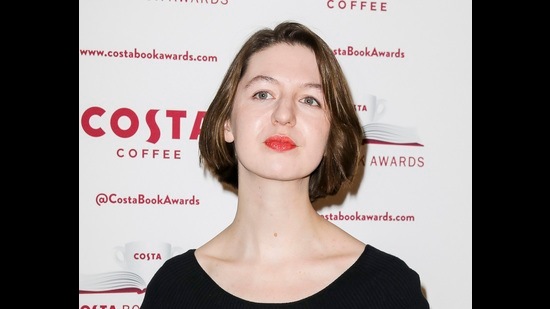
Rooney is a supporter of the Boycott, Divestment, and Sanctions (BDS) movement, an “anti-racist and nonviolent grassroots campaign” against “the apartheid system and other grave human rights violations.” Also, she is Irish, and Ireland has traditionally been a huge supporter of Palestinian rights, seeing it as a mirror of its own historical sufferings by the British. So, in a sense, Rooney is following an establishment point of view.
However, there is much to be said about taking a stand. But when she says she would be pleased and proud “if I can find a way to sell these rights that is compliant with the BDS movement’s institutional boycott guidelines”, the partial withholding of a work already in the public domain sounds like political-correctness.
Israeli commentator Anshel Pfeffer has an obvious axe to grind, but does raise a point about the pragmatism of such a boycott: “Under ‘BDS rules’ Ben & Jerry’s for example isn’t BDS-compliant because they’re willing to continue selling ice cream in Israel, just not in the West Bank settlements. Rooney and any other author can’t be BDS-compliant without boycotting all Hebrew-readers.”
{{/usCountry}}Israeli commentator Anshel Pfeffer has an obvious axe to grind, but does raise a point about the pragmatism of such a boycott: “Under ‘BDS rules’ Ben & Jerry’s for example isn’t BDS-compliant because they’re willing to continue selling ice cream in Israel, just not in the West Bank settlements. Rooney and any other author can’t be BDS-compliant without boycotting all Hebrew-readers.”
{{/usCountry}}This has resulted in accusations of anti-Semitism. When Alice Walker had taken a similar stand and denied permission for the publication of The Color Purple in Hebrew, Harvard Law professor Alan Dershowitz had said that she had “resorted to bigotry and censorship against Hebrew-speaking readers”. Symbolic gestures, however genuine, often deflect from the issue, and sometimes hand victimhood on a platter to the victimisers.
Human rights violations are the bane of most countries, be it China or Russia, or parts of Europe and South Asia, and right inside the US where bigotry and racism are prevalent. There are cultural and religious prejudices against people based on clothes, eating habits, lifestyle, and beliefs.
When Amitav Ghosh accepted the Dan David Prize he said that he did not believe in embargoes and boycott: “On the contrary I believe very strongly that it is important to defend the notion that institutions of culture and learning must, in principle, be regarded as autonomous of the state.”
The BDS group responded to him, saying, “When you reject our call for the academic and cultural boycott of Israel, you undermine our struggle for freedom and ignore the voices of almost all prominent Palestinian artists, writers and other cultural workers and the many international intellectuals who have joined our boycott.”
Much of such solidarity ends up as a culture of patronage where the patrons reap the benefits. People are ordering Sally Rooney books. She has turned into a victim-hero; the general belief is that she has stuck her neck out. To an extent, that is true. At 30, and as a popular millennial writer, she could have continued to bask in bestseller fame. But do her books speak about Palestine or the dispossessed? A flattering review described her as “the signifier of millennial late-capitalist malaise”.
Almost all literary works can be deemed to be political since they convey the ethos of a given space and time. Even though black lives continue to suffer despite such powerful works by her, Alice Walker’s relevance lies in the fact that she speaks intimately about her experiences as a black woman. Therefore, the literary community should be more supportive of native writers and their authentic experiences instead of being outsider saviours.
For any protest to be serious it has to be purist and not merely popular. Writers should shun the spoils of all fascist establishments. After accepting the Dan David Prize and half of the million dollars she shared with Amitav Ghosh, Margaret Atwood expressed a different viewpoint: “None of this changes the core nature of the reality, which is that the concept of Israel as a humane and democratic state is in serious trouble. Once a country starts refusing entry to the likes of Noam Chomsky, shutting down the rights of its citizens to use words like Nakba, and labelling as anti-Israel anyone who tries to tell them what they need to know, a police-state clampdown looms.”
Writers seem to choose what to support and when. Sally Rooney’s previous books Normal People and Conversations with Friends were released in Hebrew by the same Israeli publisher she is rejecting now.
Ghosh had earlier refused the Commonwealth Prize because he was against the colonial construct being retained; he writes in the language introduced by the colonisers. His comment that the Israeli prize was not being given by the state is fallacious, for a state that has repressed a people who own the land is unlikely to have independent organisations functioning within it.
We can extend the argument to any society. How many writers with a conscience have shunned American publishers and awards, when the US looks constantly for war opportunities to give itself a continual semblance of the greatest superpower?
And what about the 2016 Nobel Prize in Literature to Bob Dylan? Following the award, he was lauded for speaking up against racism and imperialism; his support for Israel was not mentioned. Neighbourhood Bully was clearly an anthem to Israel:
“The neighborhood bully been driven out of every land
He’s wandered the earth an exiled man
Seen his family scattered, his people hounded and torn
He’s always on trial for just being born
He’s the neighbourhood bully”.
He used counter-projection of how the bully is not really a bully but is painted as such because “his enemies say he’s on their land”. Dylan even seems to justify the bully’s destruction of a bomb factory because those bombs were for him:
“Well, he knocked out a lynch mob, he was criticized
Old women condemned him, said he could apologize
Then he destroyed a bomb factory, nobody was glad
The bombs were meant for him. He was supposed to feel bad.”
Peaceniks got their time too:
“Well, he’s surrounded by pacifists who all want peace
They pray for it nightly that the bloodshed must cease
Now, they wouldn’t hurt a fly. To hurt one they would weep
They lay and they wait for this bully to fall asleep.”
Towards the end, there is the question: “Does he pollute the moon and stars?” The query is at once a challenging assertion that the bully obviously would not do so and it would do the world good to look upon him well for he took their crumbs “and he turned it into wealth”.
We continue to hum his songs, to read Atwood and Ghosh, and many read Rooney. I’m hard put to think of similar celebrated Palestinian literary voices who’ve lived through the persecution.
Palestinian rights have not been protected according to international law by the nation states and they will not be given on a platter because of literary intervention. It appears easier, though, to lead and fete ostrich lives, heads in the sand, from where we can wait for others to bring about change.
Farzana Versey is a Mumbai-based writer. She tweets at @farzana_versey