
 E-Paper



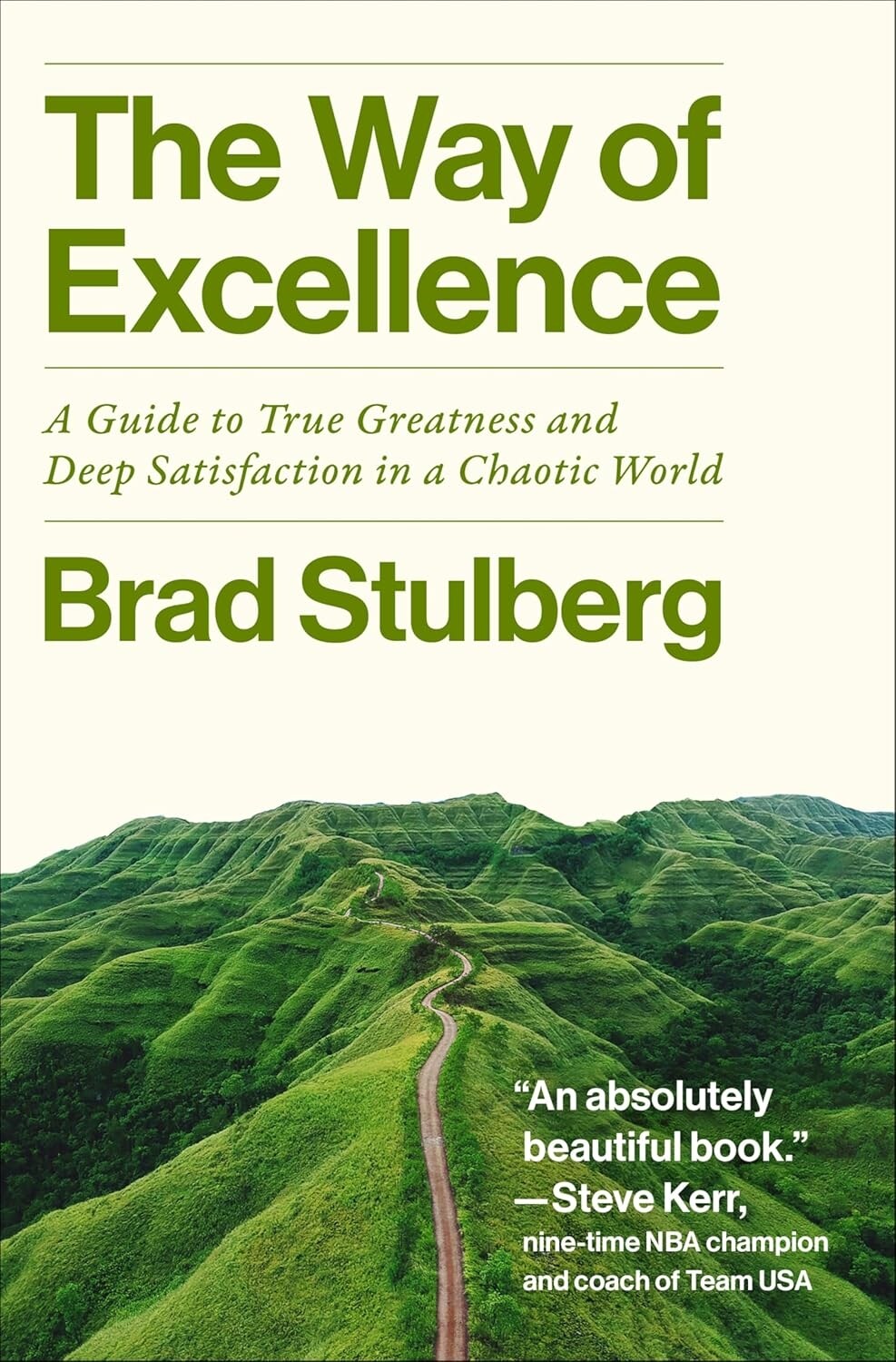
Excerpt: The Way of Excellence by Brad Stulberg
This extract from a chapter on maintaining routines talks about the things we can do to create order amid the chaos of our daily lives

 Prefer HTon Google


Some people have elaborate, optimized morning routines. Other people, like myself, hit snooze on the alarm, stumble to the coffee maker, and putter about as they gradually come to life. There’s been a deluge of morning-routine content on social media and in the pages of magazines, newspapers, and books. According to Google’s Ngram Viewer, which tracks the appearance of words and phrases in books, “morning routine” has nearly quadrupled in the last two decades. If you don’t follow an intricate series of steps upon rising, it can make you feel like you are doing something wrong. But the truth is more complicated.
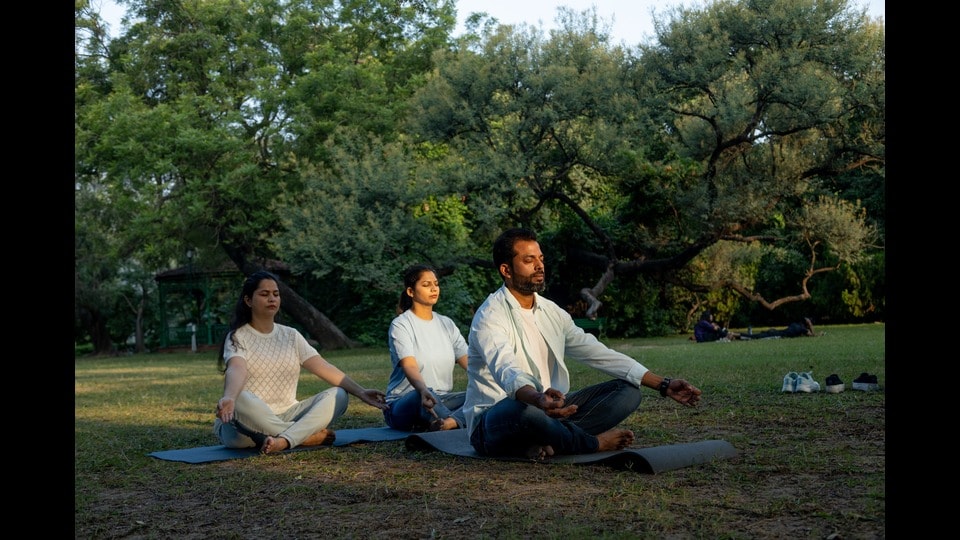
Every day we wake, we face a messy and complex world rife with uncertainty. We cannot control the weather. We cannot control other people. We cannot control the feelings we experience from moment to moment. If you believe otherwise, try for an hour and see how it goes. Yet there are things we can do to create order amid the chaos and settle into a rhythm. Herein lies the power of routines.
Nearly everyone who attains excellence relies on routines. Routines provide structure to our days, offer a sense of predictability in an inherently unpredictable world, help us to activate when we are feeling low, and keep us grounded when we are bursting with energy. They automate decisions so we don’t burn willpower and prime our minds and bodies to perform. Routines support focus, consistency, discipline, patience, confidence, and many other factors of excellence. If you work out, write, sketch, or journal every morning, you don’t have to think about it. You just do it. It becomes part of your routine.
Research also shows the objects with which we surround ourselves elicit certain behaviors. For example, the more you pair going to a specific coffee shop at a specific time of day with writing, the easier it becomes to enter into a productive flow. It’s why people find comfort in having a game-day blazer for public speaking, or a particular pair of jeans they wear to the artist’s studio. These artifacts serve as a signal to step outside of ordinary life and into your respective craft. The best routines are like easy chairs, writes George Leonard in Mastery. You settle into them, unaware of the time and turbulence of the world.
Here’s the catch: Although routines can be magical, there is no magic routine.
Many features found in so-called “optimal routines” affect people differently. Some perform better while listening to music. Others do not. Some get a boost from caffeine. Others experience anxiety or an upset stomach. Some find a cold shower energizing. Others shiver for hours and find the whole ordeal exhausting.
We cannot develop optimal routines by mimicking what other people do. While it’s true that certain behaviors are close to universally effective — such as exercise, social connection, and sleep — even then, there is no single best time, place, or way to engage in each. It is only through astute self-awareness and experimentation that we discover what works best for us. The remainder of this chapter will show you how.
Different people have different chronotypes, a term used to describe the natural ebb and flow of energy we experience over the course of 24 hours. Whether it’s a physically or cognitively demanding task, research shows most people tend to perform at their best in either the earlier or later part of the day. These individual differences are rooted in our unique biological rhythms — when various hormones associated with energy and focus are released and when our body temperature rises and falls. Scientists refer to those who are most alert in the morning as larks, and those who are most alert in the evening as owls. There is no evidence that either chronotype is inherently better. What matters for each of us is trying to align our activities with our energy levels.
In his book Daily Rituals, the author Mason Currey detailed a typical day for over 50 of the world’s greatest artists, writers, musicians, and thinkers. Nearly all of them had tried-and-true routines. But the routines themselves varied significantly. This was especially true for when people did their best work. Some, like Mozart, worked late into the night. Others, like Beethoven, were most productive at the crack of dawn. The take-home message wasn’t that the majority of great performers accomplished their best work at a certain time of day or that there is an optimal hour for productivity. Rather, each individual figured out when they were most alert and focused, and did what they could to design their days accordingly.
Designing Days
Researchers from the Sleep Research Center at Loughborough University in the United Kingdom developed an evidence-based questionnaire to help people determine their chronotype. Answering the following three questions gives you a good idea of where on the lark-owl spectrum you fall:
1.“If you were entirely free to set up your evening, with no commitments in the morning, what time would you go to sleep?”
2.“You have to do two hours of physically hard work. When would you do this work if you were entirely free to plan your day?”
3.“You have to take a two-hour test, which you know will be mentally exhausting. When would you choose to take the test if you were free to choose?”
This questionnaire is a valuable tool, especially when paired with listening to your body in real time. For the next few days, you could pay attention to when your energy levels are highest and also when you fall into a foggier brain state where your attention lags and your work starts to suffer. Most people recognize their chronotype after just a day or two of paying close attention. However, the gold standard is to go seven days without setting an alarm clock or compensating for fatigue with caffeine or other stimulants. Not only will you accurately zero in on your chronotype, but you’ll also benefit from a reset period during which your body can return to its natural rhythm.
Once you have a sense of your chronotype, you can take advantage of it by intentionally scheduling your hardest and most demanding work for when your alertness peaks. When your biology shifts and your alertness diminishes, you could focus on tasks that demand less attention, such as responding to emails, scheduling unavoidable meetings, or doing basic chores around the house. Finally, when your attention begins to wane completely, you need not force yourself to keep going. Rather, you can let your mind and body recover.

To be sure, there are as many unique situations as there are people in the world. Family, colleagues, teammates, and other obligations all place constraints on what you can and can’t do, and also when. But even having just a general sense of your chronotype running in the background is advantageous. For instance, I’ve come to learn that I do my best work in the first half of the day, and that my brain is essentially useless after 6:30 pm. Does that mean I write uninterrupted every day from six in the morning to noon, or that I never do any work in the evening? No. But I get much closer to that than I would if I didn’t keep my chronotype in mind. The goal is not to be rigid or perfect. The goal is to use this information as best you can. Instead of thinking about managing your time, think about managing your energy.
Daily, Weekly, and Monthly Practices
Another powerful way to think about routines is to develop daily, weekly, and monthly practices. These become foundational elements of our lives that prime us for excellence. Rather than trying to concoct elaborate routines with 19 components — and in the process, generating more stress rather than alleviating it — we can simplify and focus on what matters most. We can name the main things and keep them the main things.
My three daily practices are 45 to 90 minutes of physical activity, at least one block of deep-focus work on a meaningful project, and not fighting evening sleepiness, which usually means going to bed before 10:00 p.m.
My three weekly practices are at least two long walks outdoors, gathering with friends at least once, and spending one day completely offline (a digital sabbath).
My three monthly practices are at least one chunk of meditation, contemplation, listening to music, or some other form of deliberate reflection on who I am and why I’m here; at least one day when I’m predominantly outdoors; and at least one outing when I’m involved with my local community.
These practices and rhythms work for me. Yours will almost certainly be different. But the broad catalog — movement, sleep, community, nature, meaning — is aligned with decades of research on health, longevity, and flourishing.
The other area to explore is nutrition. What we put into our bodies can have a profound impact on how we feel and what we do. Whereas some people find rules around food unhelpful (and in the case of disordered eating, quite harmful), other people find them beneficial. Examples include eating a certain number of vegetables daily, avoiding fast food, limiting dessert to special occasions, or developing a general menu of options for breakfast, lunch, and dinner.
It cannot be stressed enough that there is considerable variability from one person to another. We can be confident that coming up with daily, monthly, and weekly practices is beneficial, but only you can figure out what those practices ought to be.

What makes an approach like this powerful is its simplicity and concreteness. Developing a few anchors fosters stability, predictability, and strength in a world of chaos, complexity, and infinite choices. I’ve yet to meet someone who hasn’t found this framework effective, if not transformative. Remember that it is the seemingly small day-to-day routines that set the foundation for peak moments and even greatness. Everyone loves to talk about the latter, but we don’t get there without the former.
The simpler our lives, the more stringent we can be with our routines. Someone who lives alone and sets their own working hours may find it advantageous to do most things at a certain time and place. Someone with children and a variable profession will almost certainly need a broader and more flexible set of principles. Neither approach is better or worse. Problems only arise when you try to fit a square peg into a round hole. The point is that routines are personal. What works for one person may not work for another. What matters is being cognizant of the trade-offs and then intentionally choosing the best routine for you.


