What first sparked the idea of Saraswati? Was it the myth, or the idea of a family scattered across the world?
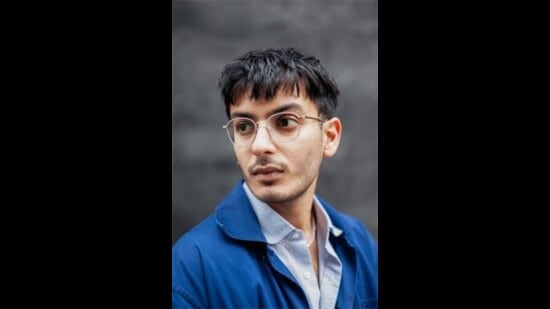
It was a mixture of the two. The journey began when my babaji died. His ashes were taken back to Punjab to scatter in one of the rivers, and that struck me as a beautiful tradition. But, at the same time, there were stories of rivers in India being declared dead. So, I was researching about rivers and the way they intersect, especially in India, with religion, spirituality and the climate crisis. And that led me to discovering news stories around Saraswati, where certain publications were reporting that the government might be putting money into research centres and bringing the river back. That just seemed like the perfect what-if moment to start the book. What if the water returned?
You’ve previously published a short story collection. Did Saraswati first start off as discrete stories or was it always a novel?
I think I quite like the murky space between short story and novel. In my first collection, each story is interconnected. So, it does use some of the techniques of the novel, but it still is definitely a short story collection. And Saraswati always felt like a novel because it had this big background plot that was driving it forward. The characters are clearly connected, but I still use some of the techniques of a short story collection. My natural impulse with writing is to follow multiple characters and that involves, I suppose, splitting the whole into different sections.
In contrast to writing We Move, how did the process of writing a novel compare to you?
{{/usCountry}}In contrast to writing We Move, how did the process of writing a novel compare to you?
{{/usCountry}}It was a lot of fun actually. A novel can expand to whatever you add into it. Whereas with a short story, there’s a natural feeling of, this idea is too big to fit in. With the short story, it’s a lot about exercising concision. Whereas with a novel, I was allowed to be more freewheeling and follow my impulses. But as fun as it was in the beginning, I ended up having to apply my old [short story] rules, because most of the editing process was about narrowing things down.
You’ve set up the chapters around the Sapt Sindhu and interspersed them with interludes. How did you land on that structure for Saraswati?
That’s a great question. It came somewhere in the middle [of writing the book]. I was thinking about the family tree, and the image we usually have of it. Around the same time, I must’ve been looking at a map of Punjab, for the planning part of the book. That is when it clicked for me — the rivers branching in towards the Indus, all from different sources in the mountains, coming together to join the sea. And the family tree branches in an opposite direction — the descendants, now in different parts of the world, going against the current towards the source: their ancestors. And I really loved that juxtaposition between the two moulds.
As the characters are spread across the world, there is a distinct difference in between how each of them talks. Yet, somehow, they also sound the same, owing to their common values. How did you approach writing such varied voices while keeping that core intact?
At the start, I was trying to make a very conscious effort to have each person sound very different, without going into caricature. Later on, in the novel, a first person narrator comes in, who becomes the connecting thread between all of the characters. So, while I wanted a sense of variance in their voice, since the whole novel gets filtered through this one person, I made a deliberate decision to ensure that these voices are not too different. Giving each character little tics was one of the ways I used to establish that distinction. Another way was by playing with how close the reader gets to a character. For some of them, it feels like we’re outside them, while with others we get to hear their inner monologue.
READ MORE: Review – We Move by Gurnaik Johal
There is an underlying ecological grief which takes form through comments on glacial melt, and characters involved in eco-terrorism. How did climate change and the anxiety it brings shape your narrative choices?
The eco-terrorism section was a fun one to write. For me, it was a great way of exploring what happens when people with very high moral ideals engage and apply them in the real world. It becomes a situation of, “We’re gonna have to annoy one group of people for a greater good to happen in the world,” and that tension rang in my ears as a novelist.
When I set out to write about climate change and the anxiety it brings, I saw most of it being explored in speculative, and more recently, contemporary fiction. We don’t locate that climate anxiety in any kind of historical fiction. When I was writing the sections set in the late 19th century, I realised that the anxiety of famine, water shortage that people experienced then was a microcosm of what is happening now. The novel is also obsessed with this idea of prophecy and looking forwards, but if you pay attention, the events of the past act as prophecy. The answers we’re looking for are already there — in what has happened before.
There’s a common thread among the characters about migration, alienation and, in some cases, returning to your “homeland”. What does “home” mean to you?
Home, for me, is definitely London. I was born and raised here. Although as a person of diaspora, I more so locate that home in the community in London. But at the same time, I can’t separate India that is melded within that home. If you go back a few generations, my life in London is merely a blip.
I’ve always wanted to write about India. But I was also very wary of my perspective as an outsider. And that’s why I thought of the device of using seven characters who are all from different diasporas, with different levels of closeness to India. I loved exploring how our relationship with the origin country changes with time. With each generation, you drift slightly further away from the facts of where you came from. And that also ties in, in the sense that, a part of the book is also interested in the idea of how we preserve our own family histories.
Was it ever difficult to resist the pressure to explain your characters and the myths for a non-South Asian readership?
Honestly, it was very easy not to. I’m always annoyed when you read a book and non-English words are put in italics. It makes it feel like a weird joke. No matter if it’s an American book set in the 1800s or a Russian character from the 1700s, what I’m drawn to is the idea that despite the divide of demographics, I can relate to these characters and stories on a personal level because of their emotional resonance. So, I’d hope to have a readership that reflects the same impulse of looking to stretch their minds across the divide, because that is the essence of fiction — to put you in the mind of someone else. No other form of art can achieve that.
Saraswati is a big undertaking in terms of its characters, mythic roots, and political foundations. What was the research process like to bring this book to life?
Really fun, actually. My rule for myself is: if the research stops being fun, the content is not gonna be fun to work with. So, I don’t take an academic approach. I read widely and I remind myself that this is a novel, I can do with the facts what I want. I allow myself to go down rabbit holes, which is made terribly easy because of the internet. They’d link me to movies and books. And to capture voices for some of the characters, I was watching a lot of YouTube shorts and Instagram reels to get a feel of the vernacular and current slang.
Saraswati feels like it’s in conversation with both myth and contemporary global fiction. Which writers — classic or contemporary — inspired the tone and structure of this novel?
In terms of structure, two contemporary writers influenced me: Valeria Luiselli, author of Lost Children Archive and Ben Lerner, author of The Topeka School. Both of these novels did an interesting thing with the structure in terms of following multiple strands and bringing them together. Also, I’m glad you picked up on the story’s interest in origin myths. I can draw it back to reading Ovid’s Metamorphoses in Uni. I was just struck by the flair of storytelling in there and how it’s relentless over so many pages. There was also an interesting relationship between the human and non-human, like in one of the opening stories a woman is running from a man who’s pursuing her. She calls upon the gods and is turned into a tree. Which is a parallel of sorts to the myth of Saraswati running away from Brahma.
You also draw from non-literary influences like the qisse. How do these non-traditional formats inspire your storytelling?
To start with, I just think they’re great stories. I was more interested because I’m writing a book and my name is going to be all over it. But I’ve always been drawn to folk traditions — be it music or tales or even weaving — where there isn’t the same idea of individual authorship attached. Someone first did make it, but it’s refined over generations. And I wanted to bring that element in the book, and it came in through the qisse.
The tone of Saraswati shifts between lyrical, journalistic, and folkloric. What does your writing process look like? And how do you find the right voice for each section?
My writing process is mainly just rewriting. My early drafts are very playful and fun. I then figure out what the book is when I’m editing it. Part of it is because I find it easier when I already have words on the page to work with. And when you’re editing, the novel sort of gives you feedback. It doesn’t feel like an active decision that I make. It’s more so these slightly below-conscious-level realisations that decide the tone for me.
If you were to curate a Gurnaik Johal reading list, what books would be on it?
Oh, amazing! Along with the others I mentioned, I’d add Robinson Crusoe by Daniel Defoe. Interpreter of Maladies, Jhumpa Lahiri’s first short story collection is an important one for me. It had such an effect on me and made me realise that I want to have that effect on someone else. Another book I read recently which I really loved, Godwin by Joseph O’Neill. I’m a big fan of football and it was lovely to read a really good literary novel about it.
After telling such an expansive story, are you now drawn to tell something more intimate or do you still feel the pull towards these large-scale narratives?
I think with each book, it’s a reaction of one against another. My first book was about this group of people brought together in a diaspora community in London. So, after that, for Saraswati, I did the inverse — a global narrative following one family. And now that I’ve done two multi-voice books, I’m going to try and attempt to write one where we follow just one or two main characters but still retain that global adventure element. It’ll be a while before it’s ready, though.
Rutvik Bhandari is an independent writer. He lives in Pune. He is a reader and a content creator. You can find him talking about books on Instagram and YouTube (@themindlessmess).