
 E-Paper



Harini Nagendra: “I didn’t come up with the character; she came to me”
The author of the Bangalore Detectives Club series on her mathematical, sari clad protagonist, and on using the tropes of the cosy mystery to shine a light on the flaws of 1920s India

 Prefer HTon Google


You’ve been working on Kaveri, the main character of the Bangalore Detectives Club series, for over 15 years. How did Kaveri first come into your mind?
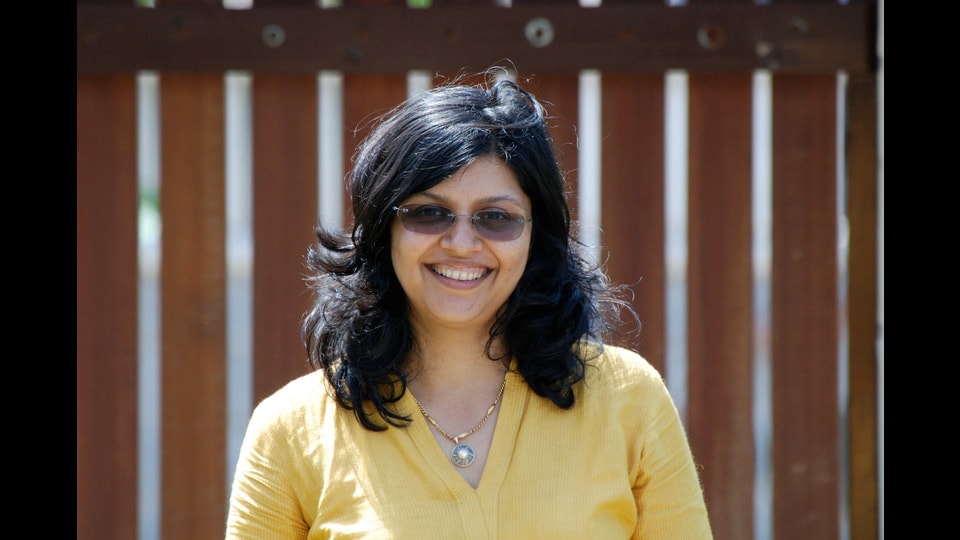
Much longer than 15 years, actually — around 18 years ago. I was sitting surrounded by a pile of documents on Old Bangalore, researching for my first book — Nature in the City. There were all kinds of archival documents like gazettes, proceedings, ledgers — and throughout that process I came across lots of fascinating little stories. Like, there was an incident in the Bangalore Museum where curator after curator would mysteriously die in the 1890s. I started wondering what happened. I was also pregnant at that time so I was ruminating a lot on questions about the future and women’s rights issues and other topics. Kaveri emerged from that swirling mess of thoughts in my head. I mean now I can find these threads and the logic of how she came to be, but in that moment — she came to me almost fully realized. Her name actually was Bhagirathi and her husband’s name was Lakshmi Kanth. And then somewhere along in the writing journey they changed into Kaveri and Rama Murthy. I didn’t come up with the character, she came to me.
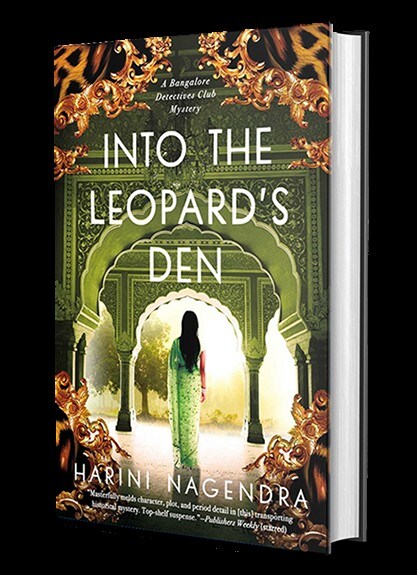
Kaveri is a sari-clad, mathematical detective — such a unique character. In what ways does she reflect parts of you, and in what ways is she very different from you?
Haha, I am very maths shy. I didn’t have the right kind of teachers so I landed up with mathphobia, and I wanted to make sure my daughter didn’t end up the same as me. And also historically, there was a lot of push from society for women towards botany. So, I wanted to make Kaveri interested in something completely different — which women didn’t do at the time. I also don’t swim, and Kaveri loves it. Kaveri is the kind of person I would have liked to be. Her family values, the way she wants to see justice done and truth brought to the world, is where I feel like she is similar to me.
You bring Bangalore to life with rich detail and textures, from tonga rides to markets to the clubs as well as the caste divide. How much of it is shaped by oral histories and how much from personal or familial memories?
It’s a mix of everything. Because of my access to archival documents and original material, the geographical part of it was shaped by them. But those documents were often a bureaucrat’s view. They’d mostly be British, sometimes Indian but a male always. So that gap was then filled by oral history — some of it from interviews for our research. The oral histories helped me shape the community life of people in the series without exoticising it. Because even though parts of the community were in poverty, were abused, they also had a lot of pride, love and that sense of duty and community, which the documents forget to mention. And the third part which was Kaveri’s own domestic life — there I go to familial memories. My mothers, aunts would tell me about their mothers and grandmothers, how they used to do things, how their houses were like, what they ate on a daily basis.
Has writing this series changed your relationship with Bangalore in any way?
Bangalore is my favourite city, so it was very natural for me to set the books in Bangalore. But the main way writing this series has changed my relationship to the city is that it’s opened my eyes, and now I see the city in very new and different ways. Earlier, due to the nature of my work, I used to see it through a very ecological lens. Now I see it through a wider lens, like architecture, the culture, the heritage issues and even very trivial things like what furniture or flooring people use. I am always imagining what the city would look like in the 1920s.
Even though the series is a “cosy mystery”, you shine light on the flaws of Indian society in the 1920s, apart from the influence and rule of the British. Was talking about serious topics like the caste divide, prejudices and literacy, intentional or did it just fit with the way books evolved?
I’d say both. When I came across information on these topics, I knew they would naturally fit in the story. And I personally love to read about new places, their culture through mysteries. I didn’t want to write something that shies away from presenting the area and the era as it was. I wanted to show both the positives and negatives. For every book I usually have an idea; that this is the main theme for this book. Be it caste, violence against women, fake religious men, etc. And then other issues organically fit in, because everything relates to one another and builds up to give a fuller picture.
How did you balance maintaining the light tone while still acknowledging the dark part of British colonial rule in the series?
It’s always a challenge. There was this scene in the second book, Murder Under The Red Moon, about Venu rounding up a group of boys who catch rats in exchange for money. I came across it in the archives. What struck me was how unemotional, almost clinical, it was. So, I started writing it and added a layer of humanness to it — who were the boys? What lives would they have had? And then I balance that scene with a scene of sweetness. A lot of important moments of the Swaraj movement happen during the time of the series, so it would have been disingenuous for me to ignore it. I do move the timelines around a bit under the guise of creative freedom, and to better fit the plot.
There’s a lot of warmth and humour in the series, and so much of that comes from the cast of misfits that make up the Bangalore Detectives Club. How important is community to you — both in the books, and in your own life?
Very important. I strongly believe that more than individuals, communities have the strength to achieve impossible feats. Even for any of the global problems that confront us — climate change, society collapse, biodiversity collapse — there’s only one solution: bring back collectives and communities. My work with Nobel Prize-winner Elinor Ostrom on commons and commune, make communities very important in my professional life as well. And that’s why I was very clear from the beginning that it would not be Kaveri alone. Even though she is the leader, the group as a whole is pulling things together.
What drew you to the cosy mystery genre, rather than a grittier crime novel?
I have always read mysteries; starting with Enid Blyton when I was a kid and then moving to Agatha Christie. I like the idea that there might be bad things in the world but that it is also possible for justice to be done and to put things right. I think that we need a certain level of moral stance in the world, which is where cosy mysteries come in. In a lot of psychological, dark thrillers, the idea of grey morality is pushed forward. The world is very dark as it is. I don’t want to go further inside and imagine things in the darkness.
What is the hardest part of writing a mystery for you — the plotting, the red herrings, the twists, or something else entirely?
For me, the hardest part is making it coherent from start to end. In fiction, there’s no foundation most of the time, it’s all made up. When I’m writing the first third of the book, it feels like one small blow and the whole thing will come crashing. That’s when the imposter syndrome kicks in. Even though I’m four books in and currently writing the fifth book, I often ask myself: What made you think you can write a book?!
You are an ecologist and urban historian. Does your academic background help your fiction writing process?
I think it helps hugely. I have to write so much at my day job — we’re always working on op-eds with students, or there’s a curriculum document — so I have developed the muscle of being able to write easily. You give me space and time and I’ll be able to write. Of course, fiction is different from science writing which is very linear, very crisp and clear, so I have to switch that part of my brain off. I mostly write my fiction early in the morning and then switch my academic writing mode on because having to turn it off after an entire day’s work is much harder for me. Another thing it has taught me is how to develop thick skin. Academic papers are ruthlessly criticized and so seeing a GoodReads review of my fiction book feels like light work. I’ve also learnt how to extract constructive criticism from those reviews, no matter what frame the review is written from.
Rutvik Bhandari is an independent writer. He lives in Pune. He is a reader and a content creator. You can find him talking about books on Instagram and YouTube (@themindlessmess).


