
 E-Paper



Advancing India-Australia defence ties
This article is authored by Rahul Mishra and Prisie L Patnayak.

 Prefer HTon Google


Prime Minister (PM) Narendra Modi’s recently-concluded three-nation tour to Indonesia, Australia and New Zealand brought home several tangible gains.
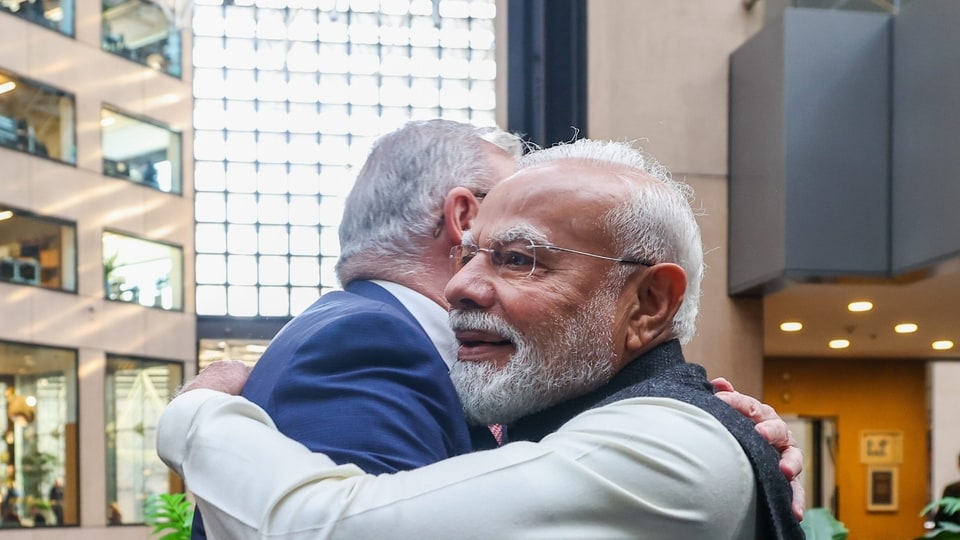
While in Indonesia, the two countries agreed that Indonesia would procure BrahMos missiles from India, in Australia, Modi’s visit resulted in several significant defence-related agreements, including the Joint Declaration on Defence and Security Cooperation (JDDSC), the Maritime Security Collaboration Roadmap (MSCR), and a Memorandum of Understanding (MoU) between the Indian Coast Guard (ICG) and Australia's Maritime Border Command (MBC). Additionally, India and Australia have signed an agreement to finalise the Administrative Arrangement of the India-Australia Civil Nuclear Agreement, thereby operationalising the 2014 accord and enabling Australia to supply yellow cake to India. Collectively, these developments represent a substantial advancement in bilateral relations, particularly in the defence sector.
These agreements support cooperation across several sub-sectors of defence. The JDDSC is a renewal of the 2009 Joint Declaration on Security, focusing on key priorities for Indian and Australian armed forces: force interoperability, capacity-building, maritime security, defence-industrial collaboration, cybersecurity, counterterrorism, humanitarian assistance and disaster relief (HADR). It also calls for joint engagement in frameworks like UNCLOS, ASEAN, PIF, and IORA. The MSCR enhances maritime security through information sharing, capability development, and operational coordination. The MoU between the ICG and MBC sets a framework for collaboration in maritime law enforcement, domain awareness, and border protection.
Interestingly, the foundation for strengthened defence ties has been established over recent years, with Modi’s visit to Australia representing the culmination of these efforts. For example, in June 2025, Australian deputy PM and defence Minister Richard Marles visited New Delhi, followed by Indian defence Minister Rajnath Singh’s visit to Australia in October 2025 for the inaugural annual defence ministers’ dialogue, the first in over a decade. During these exchanges, both countries signed three key agreements: An Agreement on Information Sharing, an MoU on Submarine Search and Rescue Cooperation, and Terms of Reference for the establishment of Joint Staff Talks. Singh’s visit reciprocated Marles’s earlier visit, and both sides agreed to deepen and diversify defence industry collaboration.
Since 2020, India and Australia have significantly transformed their bilateral relationship. That year, they elevated their ties to a Comprehensive Strategic Partnership (CSP), moving beyond the colloquial impression of India-Australia ties being all about "commonwealth, cricket, and curry." Key developments include Australia’s participation in the Malabar exercise (2020), the Mutual Logistic Support Agreement (2020), the Joint Guidance for the India–Australia Navy to Navy Relationship (2021), and the air-to-air refuelling agreement (2024). India regularly participates in Australia’s Operation Kakadu, while Australia is a key partner in India’s MILAN naval exercises.
Historically, India and Australia have experienced both cooperation and tension. They share a colonial legacy, with India as Australia’s first trading partner. However, the Cold War divide, Australia’s criticism of India’s nuclear tests, its support for Pakistan on security issues, and a longstanding ban on uranium exports led to prolonged estrangement.
Today, strategic relations are shaped more by shared interests and aligned priorities than by historical or cultural ties. Since their strategic partnership began in 2009, India and Australia have joined several multilateral and minilateral platforms, including Quad, IORA, ADMM Plus, ARF, SCRI, EAS, TDIO, and the Australia–Canada–India Technology and Innovation (ACITI) Partnership. These platforms reinforce their commitment to peace, security, stability, and prosperity in the Indo-Pacific. Australia also supports India’s Indo-Pacific Ocean Initiative (IPOI).
Despite some shared interests, India and Australia have distinct strategic priorities. India focuses on the Indian Ocean Region (IOR), positioning itself as the net security provider. While India’s engagement in the Pacific has grown through the Act East Policy, and the MAHASAGAR and FIPIC initiatives, Australia has traditionally focused on Southeast Asia and the South-West Pacific, but the Indo-Pacific concept has led it to increase engagement in the eastern Indian Ocean.
An aspirational divergence also shapes the bilateral relationship. India aims to become a leading Indo-Pacific power and a representative voice of the Global South. India prefers strategic autonomy and multi-alignment and is reluctant to enter formal alliances. In contrast, Australia seeks middle power status, prioritising national prosperity and security, and generally favours alliances over non-alignment.
However, China’s growing assertiveness in the Indo-Pacific and uncertainty about the US’ commitment have prompted India and Australia to strengthen their cooperation, aiming not only to bolster bilateral ties but also to influence and shape the Indo-Pacific's strategic dynamics in their own ways.
Initially, India was hesitant about Australia’s participation in the Malabar exercise due to a trust deficit stemming from Australia’s ambiguous stance toward China. In recent years, mutual trust has grown, allowing both countries to support each other’s engagement in their primary regions.
Australia’s recent Defence White Papers have identified the Indian Ocean as a critical strategic focus, underscoring its growing importance. Australia now regards India as a top-tier defence partner. India has offered maintenance, repair, and overhaul services for Royal Australian Navy vessels in Indian shipyards during their deployment in the Indian Ocean Region. Simultaneously, India has intensified its engagement with Pacific Island countries, recognising their strategic importance. During Singh’s 2025 visit, Australia’s defence minister invited India to participate in future iterations of Operation Render Safe, an Australian Defence Force initiative aimed at removing explosive remnants of war from World War II in Pacific Island countries to enhance community safety and development. Building on this alignment, the two countries are also taking their high-level strategic cooperation to a much deeper operational level. They have agreed to continue aircraft deployment from each other's territories to build operational familiarity.
India and Australia have also committed to advancing defence collaboration. The Defence Research and Development Organisation (DRDO) of India and Australia’s Defence Science and Technology Group are already working together on towed array sensor technology. Most Original Equipment Manufacturers (OEMs) in Australia are field offices of European, East Asian, or American firms, so India must engage directly with their main offices.
In essence, Modi’s visit to Australia has set the stage for elevating defence and strategic ties between the two countries, which would not only bring them in tighter embrace but also shape the Indo-Pacific security dynamics. Effective and speedy implementation of these agreements hold the key to advancing India-Australia defence ties to higher levels.
(The views expressed are personal)
This article is authored by Rahul Mishra, senior research fellow, German-Southeast Asian Center of Excellence for Public Policy and Good Governance, Thammasat University, Thailand, and associate professor, Centre for Indo-Pacific Studies, Jawaharlal Nehru University, New Delhi and Prisie L Patnayak, doctoral candidate, Centre for Indo-Pacific Studies, School of International Studies, Jawaharlal Nehru University.


