China, Afghanistan and the new Asian geopolitics
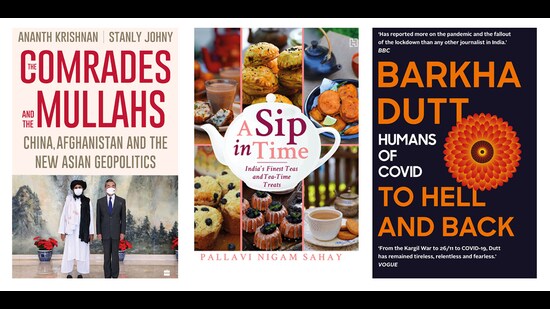
The withdrawal of the United States from Afghanistan has left a lasting impact on both Afghanistan’s future and on Asian geopolitics. It has also brought China into focus. This book traces the emergence of China as a key player in Afghanistan and the evolution of China’s Afghan policy especially with respect to its relations with the Taliban. Beijing’s dominant role in Afghanistan’s future is a potentially game-changing development in Asian geopolitics, even if questions remain about the former’s appetite to step in to fill the void and the limits of its ambitions.
In The Comrades and the Mullahs, Ananth Krishnan and Stanly Johny examine what Beijing’s interests are and the driver of its foreign policy, and, more specifically, how its new Silk Road project – the Belt and Road initiative – is shaping China-Afghan relations. They look at how Afghanistan has emerged as a key point on the corridor heading west from Xinjiang and discuss the Xinjiang factor, drawing on their travels to China’s western frontiers, as well as the internal dynamics that are pushing Beijing’s westward march.
Another factor is the East Turkestan Islamic Movement and the terror groups that are leading to an increasingly securitized approach to China’s western regions and beyond, including possible Chinese plans to deploy special forces along the China-Afghan border areas in the Wakhan corridor and Badakhshan region.
China’s Afghan engagement has also deepened its all-weather alliance with Pakistan – with Beijing increasingly leaning on Islamabad, particularly in its outreach to the Taliban and other elements in Afghanistan that have long been supported by the Pakistani state – and is a perennial source of tension between Islamabad and Kabul. The authors show how this increasing closeness is alarming for India, and might have far-reaching consequences, especially in Kashmir.*
{{/usCountry}}China’s Afghan engagement has also deepened its all-weather alliance with Pakistan – with Beijing increasingly leaning on Islamabad, particularly in its outreach to the Taliban and other elements in Afghanistan that have long been supported by the Pakistani state – and is a perennial source of tension between Islamabad and Kabul. The authors show how this increasing closeness is alarming for India, and might have far-reaching consequences, especially in Kashmir.*
{{/usCountry}}India’s finest teas and teatime treats
In an exclusive blend for experts and enthusiasts alike, well regarded chef and tea connoisseur Pallavi Nigam Sahay brings together culinary expertise, wide ranging travel and her passion for the beverage in a sumptuous visual book, lush with photographs.
Infused with personal experience, her exploration of the various kinds of Indian tea, their histories and the unique qualities that make them coveted around the world, this charming volume brings alive the taste and aroma of each tea it encounters – form the traditional Phalap and the robust varieties growing in Assam to the fragrant Darjeeling and the delicately nuanced brews from Arunachal and Munnar.
Lovingly paired with the teas are recipes for over 60 delectable dishes – from cakes, puffs, biscuits and sandwiches to breads, cookies, chaats and muffins – making A Sip in Time the perfect companion for teatime tête-à-têtes for home chefs and foodies alike.*
Humans of Covid
Since 2020, our world has battled a single enemy – the coronavirus. In dealing with the pandemic, India has seen its own challenges and special tragedies. Two years of the pandemic may have already claimed anywhere between three and five million Indian lives. The lockdown of the first wave, the world’s largest, caused unprecedented devastation, arguably even more than the virus. And in 2022, Omicron has triggered a new challenge.
When India’s lockdown was first announced in March 2020, journalist Barkha Dutt started an extraordinary series of road trips recording the human story of the pandemic, one which she continues even today as we wrestle with the virus’s latest avatar. Travelling from Delhi to Kerala, on trucks and trains, visiting hospitals and slums, villages and cities, her reporting constitutes the deepest, most comprehensive account of how this crisis has affected Indians through all three waves.
In this book, she tells India’s pandemic story through the stories of the people she covered – the migrant workers and politicians, businessmen and bureaucrats, doctors and nurses, factory workers and farmers, teachers and students. Husbands and wives parents and children. And through these accounts, she draws a startling picture not just of our plague years but the very nature of our country with its deep-rooted inequalities across class, caste and gender.
To Hell and Back is moving, gripping and vivid.*
*All copy from book flap.