The Wanderers Who Shaped Our World
Humans have been on the move for most of history. Even after the great urban advancement lured people into the great cities of Uruk, Babylon, Rome and Chang’an, most of us continued to live lightly on the move and outside the pages of history. But recent discoveries have revealed another story . . .
Wandering people built the first great stone monuments, such as the one at Göbekli Tepe, seven thousand years before the pyramids. They tamed the horse, fashioned the composite bow, fought with the Greeks and hastened the end of the Roman Empire. They had a love of poetry and storytelling, a fascination for artistry and science, and a respect for the natural world rooted in reliance and their belief. Embracing multiculturalism, tolerant of other religions, their need for free movement and open markets brought a glorious cultural flourishing to Eurasia, enabling the Renaissance and changing the human story.
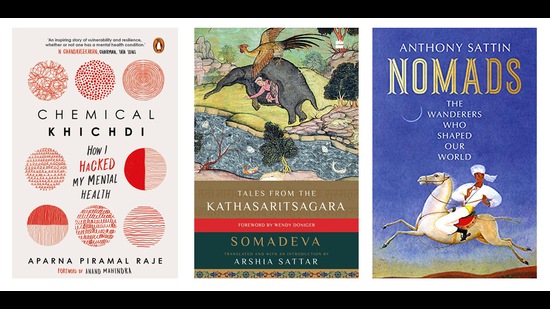
Nomads races the paths of wanderers across 12,000 years, from before Cain and Abel to the modern day. With both nomads and the natural world on which they rely facing extinction, Anthony Sattin uncovers a string of their extraordinary and little known stories, asking what we can learn form them and what we will lose without them. Reconnecting with our deepest mythology, our unrecorded antiquity and our natural environment, Nomads is the alternative history of civilisation, told through its outsiders.*
The ocean of stories
{{/usCountry}}The ocean of stories
{{/usCountry}}The Kathasaritsagara – the ocean of stories – is among the world’s great story collections, truly an ocean that carries the reader on its gentle swell to shores far and near, to places known and imagined, to people familiar and strange.
Drawing from earlier collections of tales, the Kathasaritsagara was composed in Sanskrit by Somadeva in eleventh-century Kashmir. In a period and a language still largely dominated by religious texts, the Kathasaritsagara is a breath of fresh air. No set of beliefs dominates, no sacred texts are glorified – what it revels in most is the pulsating carnival of human life and experience.
Priests and monks, gamblers and courtesans, kings and bandits, merchants and housewives, talking animals, divine and demonic beings – all cavort through its pages, in cities and forests, across seas and on islands. And in Arshia Sattar’s masterful translation, the many universes of adventure the Kathasaritsagara holds within itself come alive for a new generation of readers.*
How I Hacked My Mental Health
Some said children were out of the question, but she is a mother of two boys.
Some said she couldn’t handle business life, but she has interviewed over a hundred CEOs, and counting.
Some said she wouldn’t be able to write a book on mental health, but here it is.
Aparna Piramal Raje is happy, thriving and bipolar. And this is her story.
Part memoir, part reportage and part self-help guide, Chemical Khichdi presents a pathway for all those with a mental health condition, as well as for their family, friends, colleagues, mental health professionals and everyone in their ecosystem.
Empathetic, candid and accessible, it outlines ‘seven therapies’ that have enabled Aparna to ‘hack’ her mental health and find equilibrium over the years, and shows how you or someone you know can also do the same.*
*All text from book flap.