Searching for truth and clarity
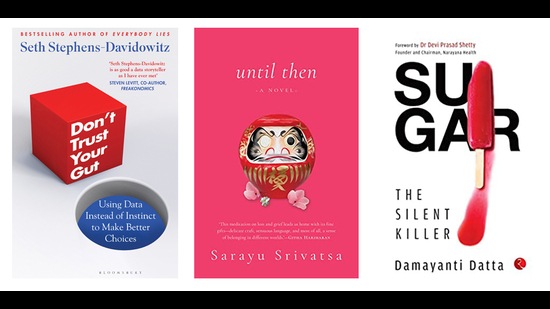
Orphaned at six with no memory of what happened to her family, Kavya was raised in the bustling city of Bombay by her uncle and aunt. In fleeting moments, like her time in Bangalore with spirited teenager Malli, or her summers in Kyoto with budding architect Yasunari and his ageing grandparents, the truth of her traumatic past is revealed. With an eclectic cast of characters — including timid photographer Ryu, rebellious artist Akiko, and the mysterious S-san — she searches for clarity on the streets of Tokyo and truth in the mountain villages of the Himalayas. In this poignant coming-of-age story, what Kavya discovers within turbulent dreams and vibrant memories will shape and nurture the woman she will become.*
Numbers don’t lie
Big decisions are hard. We consult friends and family, make sense of confusing “expert” advice online, maybe we read a self-help book to guide us. In the end, we usually just do what feels right, pursuing high stakes self-improvement — such as who we marry, how to date, where to live, what makes us happy — based solely on what our gut instinct tells us. But what if our gut is wrong? Biased, unpredictable, and misinformed, our gut, it turns out, is not all that reliable. And data can prove this. In Don’t Trust Your Gut, economist and former Google data scientist Seth Stephens-Davidowitz reveals just how wrong we really are when it comes to improving our own lives. In the past decade, scholars have mined enormous data sets to find remarkable new approaches to life’s biggest self-help puzzles. Data from hundreds of thousands of dating profiles have revealed surprising successful strategies to get a date; data from hundreds of millions of tax records have uncovered the best places to raise children; data from millions of career trajectories have found previously unknown reasons why some rise to the top.
Telling fascinating, unexpected stories with these numbers and the latest big data research, Stephens-Davidowitz exposes that, while we often think we know how to better ourselves, the numbers disagree. Hard facts and figures consistently contradict our instincts and demonstrate self-help that actually works — whether it involves the best time in life to start a business or how happy it actually makes us to skip a friend’s birthday party for a night of Netflix on the couch. From the boring careers that produce the most wealth, to the old-school, data-backed relationship advice so well-worn it’s become a literal joke, he unearths the startling conclusions that the right data can teach us about who we are and what will make our lives better.*
{{/usCountry}}Telling fascinating, unexpected stories with these numbers and the latest big data research, Stephens-Davidowitz exposes that, while we often think we know how to better ourselves, the numbers disagree. Hard facts and figures consistently contradict our instincts and demonstrate self-help that actually works — whether it involves the best time in life to start a business or how happy it actually makes us to skip a friend’s birthday party for a night of Netflix on the couch. From the boring careers that produce the most wealth, to the old-school, data-backed relationship advice so well-worn it’s become a literal joke, he unearths the startling conclusions that the right data can teach us about who we are and what will make our lives better.*
{{/usCountry}}That murderous sweet tooth
India has a ravenous appetite for the sweet stuff, way above any other country, if both traditional and modern sugars are counted. We also take excessive amounts of poor-quality carbohydrates, especially, refined cereals like white rice and white wheat, sugar-sweetened drinks and fruit juice, sweet treats and savouries, which ultimately turn into glucose, a simple sugar the body uses for energy. And Indians today manifest an increased predilection for diseases linked to sugar (and the fat with which sugar is inextricably linked): obesity to diabetes, heart disease to hypertension, cancers to dementia, Covid-19 to black fungus.
Despite a long association with sugar, there have been very few attempts to understand sugar’s hold in India. Books have been written mainly on the sugar industry, some on diabetes and low-sugar diets. Sugar: The Silent Killer attempts to fill the lacunae. It attempts to demystify the way we eat now, the pre-eminence of refined sugar in our diet, what it does to us and what we can do to mitigate its malign influence. Weaving together history, culture and science, it seeks to analyse why we have such an intimate relation with sugar, why it holds on to us so doggedly, why we do can’t do without it, even when we know it can harm us.*
*All copy from book flap.