From Orientalism to the hippie trail and beyond
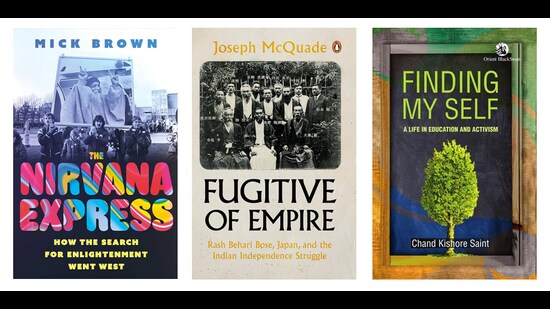
The captivating story of the West’s love affair with Indian spirituality ― from the Orientalism of the British Empire to modern counterculture. In 1897, an Indian yogi exhibited himself at London’s Westminster Aquarium, demonstrating yoga positions to a bemused audience. Four years earlier, Hindu philosopher Swami Vivekananda spoke at the first World Parliament of Religions in Chicago, where Annie Besant extolled the “exquisite beauty” of his spiritual message. The Victorians were fascinated by, yet suspicious of, Indian religious beliefs and practices. But within two generations, legions of young Westerners were following the “hippie trail” to the subcontinent, the Beatles meditating at the feet of Maharishi Mahesh Yogi. Journalist Mick Brown’s vivid account charts this eccentric history of Western obsessions with Indian faith, through a curious cast of scholars, seekers, charlatans and saints. From bestselling epic poems on the Buddha to murder plots, magic and the occult, The Nirvana Express is an exhilarating, sometimes troubling journey through the West’s search for enlightenment.*
Rash Behari Bose: a perpetual thorn in the side of the British Empire
In 1912, Rash Behari Bose made his dramatic entrance into India’s anticolonial freedom movement when he orchestrated a bomb attack against the British viceroy during a public procession in Delhi. Forced to flee his homeland, Bose settled in Japan, becoming the most influential Indian in Tokyo and earning the affectionate title “Sensei” among Japanese youth, military personnel, and far-right ultranationalists.
Throughout the 1920s and 1930s, Bose remained a perpetual thorn in the side of the British Empire as he built and maintained a global network of anticolonialists, radicals, smugglers, and intellectuals. After siding with Imperial Japan against his British adversaries during the Second World War, Bose died in 1945, just two years before India gained independence.
{{/usCountry}}Throughout the 1920s and 1930s, Bose remained a perpetual thorn in the side of the British Empire as he built and maintained a global network of anticolonialists, radicals, smugglers, and intellectuals. After siding with Imperial Japan against his British adversaries during the Second World War, Bose died in 1945, just two years before India gained independence.
{{/usCountry}}A complex, controversial, and often contradictory figure, Bose has been described as a committed democrat, an authoritarian, an advocate of religious harmony, a Hindu chauvinist, an anti-communist, a political pragmatist, an idealist, a Japanese collaborator, an anti-racist, a cultural conservative, a Pan-Asianist, an Indian nationalist, and much more. Drawing on extensive archival research from India, Japan, and the UK, this refreshing new biography brings to life the largely forgotten story of one of twentieth-century Asia’s most daring revolutionaries.*
Memoir of an activist and an educator
Finding My Self is an insightful and self-reflective account that spans over seven decades, from the 1940s to the present. Beginning with his experiences as a young man who found his vocation in lands far from home, activist and educator Chand Kishore Saint (1932–2022) recounts his life’s work across four continents in these memoirs. The author migrated to the British colony of Kenya in the aftermath of the 1947 Partition and worked in both Kenya and USA of the 1960s, a time of intellectual fervour and ferment. His memories of student life in the UK, the Indian diaspora in Kenya, and life as an educator in Kenya’s government service (both before and after the country’s independence) provide a personal glimpse into a world that was just emerging from the long shadow of colonialism. Returning to India in 1972 to keep his tryst with his motherland, Kishore Saint worked in social and rural development, eventually forming the voluntary organisation, Ubeshwar Vikas Mandal in Udaipur. The author describes the ecological movements in Udaipur during the 1980s–90s and his engagement with fellow social workers, Gandhian activists and civil society groups. His efforts to promote self-sustaining, autonomous livelihoods amongst rural and tribal communities in Udaipur district remain deeply relevant. Kishore Saint’s prescient environmentalism and his insistence on building movements from the ground up will prove instructive for readers working in social development, ecology, and rural welfare. These memoirs will be an inspiring read for anyone who strives to create a more just, ecologically sensitive and equitable future.*
*All copy from book flap.