Challenging entrenched norms
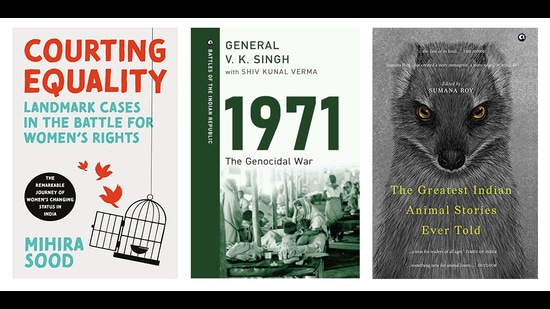
From the anti-dowry agitations of the 1970s to the current backlash against perceived misuse of laws, to Shah Bano and the UCC debate, to the Nirbhaya movement and its continuing reverberations – the story of women’s rights in India is nothing short of extraordinary, and the role of the courts is an integral part of that story.
In this compelling account, lawyer Mihira Sood takes us through landmark women’s rights cases of the past 50 years, as well as the social and political context that surrounded them. These cases were pivotal in challenging entrenched norms – at home, at work and in society – forcing us to confront what equality truly means and how far we have yet to go.
Written with clarity, authority and narrative force, the book examines both the promise of law, as well as its limitations as a vehicle for social change. It is essential reading for lawyers and non-lawyers alike, providing an engaging, informative, and much-needed chapter to the story of independent India.*
More beastly tales
For centuries, the animal kingdom has captured the Indian imagination. And the land of the Panchatantra and the Jataka Tales continues to give rise to literary masterpieces. Some of the greatest stories in modern Indian literature have animals as protagonists.
In The Greatest Indian Animal Stories Ever Told, Sumana Roy collects the best fiction written about animals from the past hundred years or so. Beginning with Premchand’s classic, A Tale of Two Bullocks, and taking in its sweep some of the greatest pieces of literary fiction to have originated in India, including Rikki-Tikki-Tavi by Rudyard Kipling, Mahesh by Sarat Chandra Chattopadhyay, The Mark of Vishnu by Khushwant Singh, A Horse and Two Goats by RK Narayan, Poonachi by Perumal Murugan, The Crocodile and the Monkey by Vikram Seth, The Reflections of a Hen in Her Last Hour by Paul Zacharia, The Last Tiger by Ruskin Bond and Elephant at Sea by Kanishk Tharoor, the stories in The Greatest Indian Animal Stories Ever Told are guaranteed to dazzle the reader.*
{{/usCountry}}In The Greatest Indian Animal Stories Ever Told, Sumana Roy collects the best fiction written about animals from the past hundred years or so. Beginning with Premchand’s classic, A Tale of Two Bullocks, and taking in its sweep some of the greatest pieces of literary fiction to have originated in India, including Rikki-Tikki-Tavi by Rudyard Kipling, Mahesh by Sarat Chandra Chattopadhyay, The Mark of Vishnu by Khushwant Singh, A Horse and Two Goats by RK Narayan, Poonachi by Perumal Murugan, The Crocodile and the Monkey by Vikram Seth, The Reflections of a Hen in Her Last Hour by Paul Zacharia, The Last Tiger by Ruskin Bond and Elephant at Sea by Kanishk Tharoor, the stories in The Greatest Indian Animal Stories Ever Told are guaranteed to dazzle the reader.*
{{/usCountry}}A tragedy erased by history
There are moments in a soldier’s life that divide time into before and after. For young 2nd Lieutenant VK Singh such a moment arrived in the aftermath of the Bangladesh War of 1971, when he was sent to investigate what was vaguely called a ‘race improvement camp’. There, he witnessed a scene for which no amount of military training could have prepared him.
The Bangladesh War is recounted well and often in terms of its operational brilliance leading to the surrender of Pakistan and the birth of a new nation. However, in these retellings, the reason that compelled India into war that year is entirely overlooked. In 1971: The Genocidal War, General VK Singh attempts to define the systematic massacre in East Pakistan as genocide, a term long denied to it. Based on General VK Singh’s first-hand accounts, this book describes in detail the events that preceded the war: the hapless human tide of refugees that started flowing into India in the early months of 1971, the rise of fragile makeshift camps across the frontier and the diseases that followed, India gearing up for hostilities amid strained resources and immense psychological pressure, and the creation of the Mukti Bahini that often worked in conjunction with the Indian Army.
The collapse of Pakistani forces was swift and surrender ceremonies were conducted on 17 December. Yet, the military victory did not erase the mass violence that had preceded it. Both factually meticulous and evocative, this book makes a poignant effort to restore dignity to a tragedy largely erased from history.*
*All copy from book flap.