
 E-Paper



Chitralekha Zutshi - “This is not an apologia for his actions”
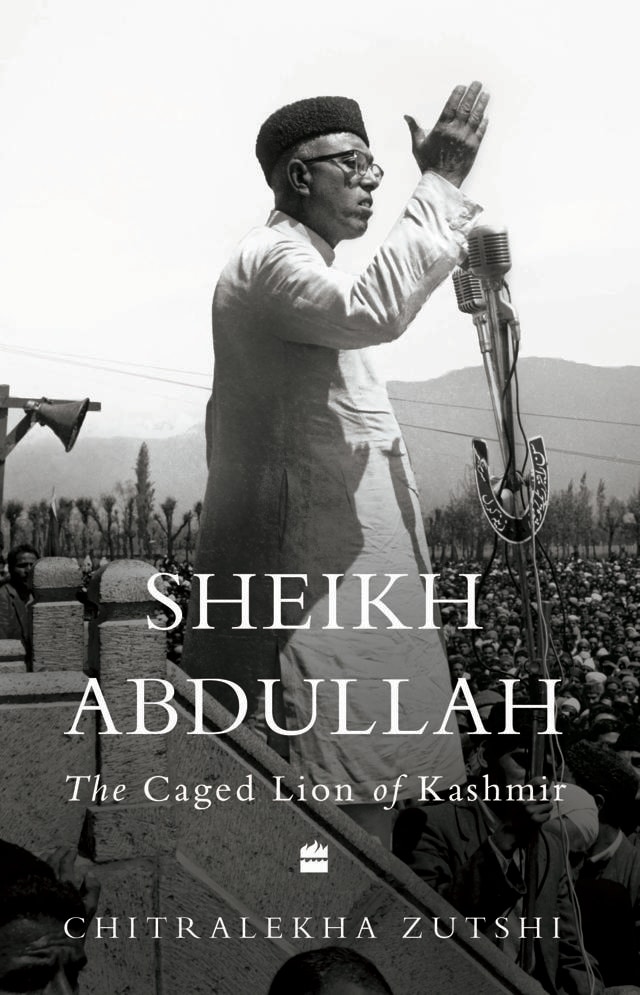
The author of Sheikh Abdullah; The Caged Lion of Kashmir talks about placing the Kashmiri leader’s life in the context of critical global developments in the twentieth century, accessing new archival material, and collecting new oral histories from those who were closely associated with Abdullah

 Prefer HTon Google


A lot has been written about Sheikh Mohammad Abdullah. Why did you feel the need to add to it?
In fact, there isn’t a lot of writing on Sheikh Abdullah, and there certainly aren’t many comprehensive, scholarly biographies that place his political life in its proper historical context. I wanted to write an impartial biography from a historical perspective that narrated his life in the context of the broader canvas of the twentieth century — its upheavals, its triumphs, its ideological currents, its institutions, and its leaders — all of which shaped Abdullah’s life and political actions in profound ways.
What new insights does the book offer about Sheikh Abdullah and his politics?
The biography adds nuance and perspective to the labels that have usually been applied to Abdullah — revolutionary martyr, conspiring traitor, demagogue, populist. This is not intended as an apologia for his actions, but as a way to understand the reasons behind his political choices and his own engagement with these images as he attempted to mould them to suit his political interests.
To what new archival sources and oral histories did you gain access?
I collected oral histories from a slew of individuals, including those who were closely associated with Abdullah during his heyday, not just at the top levels of politics, but also at the lower rungs of the party administration. Many of these individuals, including Balraj Puri and Ved Bhasin, are no more. Some of the most illuminating interviews were with those individuals (ordinary men and women) who did not directly know him, but had been impacted by him and his political message, since that gave me a textured sense of his oratory, charisma, and popular appeal. In terms of archival sources, other than the private papers of numerous individuals, I was also able to access the post-1947 Nehru papers, with its rich collection of correspondence amongst the top-tier leadership of the National Conference and Congress. Since I’m located in the US, I examined State Department records at the National Archives in Maryland, where I found plentiful material on the Kashmir issue as well as Indian leaders such as Abdullah, Nehru, and Patel, providing a unique external perspective on their relationships at critical moments. These documents were also a window into the role played by the US in mediating the Kashmir issue and its views on India and Pakistan during their formative years.
You write in the book that Sheikh Abdullah “wanted to be both a Muslim leader as well as a secular, nationalist one, but succeeded in being neither.” Can you elaborate on this assertion?
Abdullah was a devout Muslim and at the same time a believer in secular nationalism. For him, the Kashmiri nation could become prosperous and successful only if it encompassed the demands and aspirations of every Kashmiri regardless of religion, sect, or class background. However, especially once British India was partitioned into the two antagonistic states of India and Pakistan, it became well-nigh impossible for a Muslim to be accepted as a secular nationalist in India, especially one who insisted on speaking on behalf of fellow Muslims. Abdullah, who had always walked a fine line between these identities, found himself foundering as he tried to convince his Kashmiri Muslim constituents that he was a true Muslim while at the same time trying to convince Indians that he was a secular nationalist, in the end convincing neither group.
You also write that Abdullah’s “enduring popularity as the most significant leader of Kashmiris through a large part of the 20th century is understood best through the lens of two themes that defined his political career -- prisons and sacred spaces.” How far was he able to regain his lost credibility in Kashmir by taking recourse to these two things, especially post the Indira-Sheikh accord of 1975?
Well, after 1975, he couldn’t take recourse to prison to bolster his flagging image because he was the sitting Chief Minister, although he often reminded Kashmiri Muslims that he had spent the better part of two decades fighting for their rights in the political wilderness. To an extent, the rebuilding of Hazratbal restored some of the sheen, but that too was temporary. The main way in which he attempted to re-establish his credibility amongst Kashmiris in this time period was by verbally taking on the Centre, running for instance on a pro-370, anti-centre platform in the 1977 J&K assembly elections. The NC won this election in a landslide, but in the long run this served to further embitter his followers, since he could not deliver on the promises of autonomy and self-rule.
You point out that Abdullah handpicked candidates like Ghulam Mohd Sadiq and Ghulam Mohiuddin Kara to contest the election to the Praja Sabha but Choudhary Abbas was not happy. Why did Abbas this it was dangerous to support the idea?
This had less to do with the handpicking of candidates and more to do with the principle of participation in these elections. Abbas felt that the Muslim Conference should not contest the elections at all, because they were to an assembly that would have little power. Participating would allow the Maharaja to assert that he had created a representative body, which in actual fact had no real authority.
What was Sheikh Abdullah’s purpose behind his Pakistan visit in 1964? Suppose Nehru had not died and the dialogue continued, what would have been the possible outcome?
By 1964, Abdullah had cast himself as the bridge between India and Pakistan. He genuinely believed that there could be no real solution to the political and economic grievances of the Kashmiris in J&K state unless India and Pakistan resolved their dispute over the region and came to some sort of rapprochement. If Nehru had not died and been healthier, both physically and politically, then it was possible that a productive dialogue between the two sides might have ensued. However, my sense is that at that time, the primary feeling in the Pakistani establishment was against such an outcome. So even if Nehru had survived, I’m not sure that an acceptable solution would have materialized out of the talks.
Tell us something about Begum Abdullah (Akbar Jehan), the wife of Sheikh Abdullah, and her influence on him and his political journey.
Begum Abdullah (Akbar Jehan) was a formidable personality in her own right. The daughter of a Gujjar mother and an Austro-Hungarian father, she was raised a devout Muslim and stayed in purdah until events forced her to come out of it to enter the political limelight in the wake of her husband’s arrest in 1946 during the Quit Kashmir agitation. Throughout Abdullah’s various prison terms, she took over the reins of the movement and was crucial in steering its course as well as in keeping Abdullah’s memory alive among his constituents. Keen to preserve her family’s legacy in the politics of J&K, she was one of several individuals who convinced Abdullah to come to terms with the Indian government, which led to the Kashmir Accord in 1975. Subsequently, once he became Chief Minister through the terms of the accord, she was an active participant in the affairs of the state as the state administration became somewhat of a family business. She became a firm supporter of her son, Farooq Abdullah, as the heir to the Sheikh’s mantle, and persuaded her husband to name him the successor. After Abdullah’s death in 1982, she continued in this role and was active both behind the scenes as well as on the front lines of politics in J&K until her own death in 2000.
As a historian of Kashmir history, what would you consider some major political achievements and failures of Sheikh Abdullah’s leadership?
Abdullah’s greatest achievement was also his greatest failure, in a sense, and this was the creation of the idea of the Kashmiri nation and the ideology that gave it sustenance, Kashmiri nationalism. As its chief votary, Abdullah gave Kashmiris a powerful sense of purpose, a sense that for the first time in centuries they deserved better than to be serfs and vassals to rulers and their clients. He imagined the Kashmiri nation as inclusive, bringing within its purview the majority community of Kashmiri Muslims, but also Pandits and Sikhs, as well as not just the educated upper classes, but also the unlettered working classes and peasants. Everyone was to join together to build a prosperous Kashmir free of political repression, economic exploitation, and social inequalities. This is why Kashmiris took to Abdullah as their true leader with such fervour and were willing to lay down their lives for this idea.
However, at the heart of this idea lay the seeds of the divisions that would tear the state apart in the future. First, to create the idea he had to break from the Muslims of Jammu, and as that happened, he increasingly came to identify the Kashmiri nation with the Valley, leaving both Jammu and Ladakh out of his political vision. Second, in the process of uniting Kashmiris within the Valley itself under the banner of nationalism and consolidating his leadership in the process, he had to alienate an entire section of Kashmiri Muslims who never quite got behind his idea of an inclusive nationalism. Third, while he fervently wished for an autonomous status for J&K in a united India, he failed to recognize that this was a near impossibility, not just because of the aforementioned divisions, but also because the state, much like Punjab and Bengal, lay partitioned between India and Pakistan by 1949.
Thus, having birthed the Kashmiri nation and been its loudest proponent throughout his political life, Abdullah was unable, in the end, to bring it to fruition. Worse still, in the eyes of his followers who continued to believe in such a possibility, he had made a volte-face by coming to an agreement with the centre in 1975. This was his greatest failure, but despite this, at some level, he still remains an embodiment of the Kashmiri identity.
Majid Maqbool is an independent journalist based in Kashmir.


