What’s the story behind the NIF translation fellowship programme?
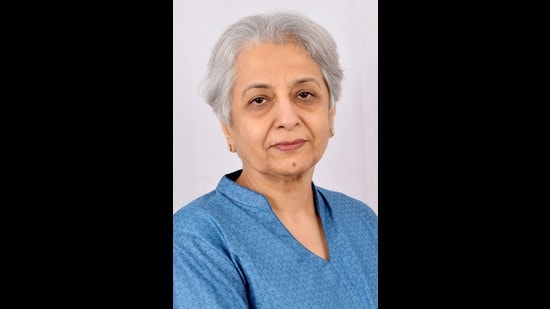
The translation fellowship programme is actually a logical outgrowth of the book-writing fellowships programme, which as you know is the flagship activity of the New India Foundation, aimed at nurturing high-quality scholarship on post-independence India. The first continuity between them then is the focus on modern Indian history, society and politics. However, while the book-writing fellowships are about India after 1947, the qualifying period for the translation fellowships is twentieth century India, even the late nineteenth century depending on the text. This is because there are many important works in Indian languages that could illuminate the longer period but to which readers of the English language, or indeed of other Indian languages, would not have access.
Secondly, the NIF has supported at least one translation as part of its book-writing fellowship programme. This was Ayesha Kidwai’s translation, with a superb introduction, of her grandmother Anis Kidwai’s book Azadi ki Chaaon Mein, which was published by Penguin in 2011, with the English title In Freedom’s Shade. At least two other books by NIF Fellows draw heavily upon sources and literature in regional languages – Akshay Mukul’s The Gita Press and the Making of Hindu India and SV Srinivas’s Politics as Performance: Social History of the Telugu Film Industry. Both these books, about different forms of cultural production, are deeply anchored in, respectively, Hindi and Telugu.
Tell us about the selection process? What are you looking for in applications?
We are looking for proposals that bring together interesting books and good translators. This year, in the first round, we are inviting applications for translations from 10 languages: Hindi, Urdu, Bangla, Kannada, Assamese, Gujarati, Marathi, Odia, Malayalam and Tamil. The deadline for applications is December 31, 2021. The applications – which must include a sample translation - will be assessed by language experts, on the basis of which the shortlist will be compiled, followed by interviews and the selection of three Fellows.
{{/usCountry}}We are looking for proposals that bring together interesting books and good translators. This year, in the first round, we are inviting applications for translations from 10 languages: Hindi, Urdu, Bangla, Kannada, Assamese, Gujarati, Marathi, Odia, Malayalam and Tamil. The deadline for applications is December 31, 2021. The applications – which must include a sample translation - will be assessed by language experts, on the basis of which the shortlist will be compiled, followed by interviews and the selection of three Fellows.
{{/usCountry}}We propose to constitute a Language Expert Committee, with one member for each of the three selected proposals, who will mentor the Fellows and help them structure and shape their work. We see these works as being on par with the other Fellowship projects in terms of their scholarly merit. We expect them to have a comprehensive introduction that provides the social, political and cultural context of the work, thorough annotations and a bibliography that could help the reader explore the terrain further.
Are there any caveats as to the texts that may be chosen for translation?
No fiction, no poetry, no drama. The focus will be on history (including social and cultural history), politics, society, biography, memoirs, and so forth.
What according to you are some of the challenges facing translators linguistically when it comes to expounding ideas contained in regional texts into the English language?
Ideally, any translation should be able to stand on its own, approximating the excellence of an original work. This is why translation is typically viewed as an art, rather than something mechanical. For this, translators have to be imaginative in how they render into English ideas or nuances that may be specific to the language with which they are working. Cultural differences can pose a challenge to translators who need not just felicity in the two languages they are working with, but also familiarity with the world of sociocultural meanings in both – else you can fall into the ‘lost in translation’ syndrome!
There is, of course, a very rich scholarly field of translation studies, with debates on language as identity, the politics of language, authenticity, and so on.
Do you feel that the outcomes of this fellowship will challenge and disrupt the conception of largely West-oriented notions of what constitutes a liberal public sphere?
That is not the driving motivation of the fellowship, but it could potentially do so, depending of course on the texts. Introducing readers to works in different languages should certainly contribute to an appreciation of the rich diversity of languages in our country; to recover indigenous debates on ideas that we have encountered only through the western canon; to encourage us to embrace our natural bilingualism, and perhaps also to value multilingualism.
Do you think that there is a lack of institutional support to translation projects from languages of the global South? What is required to encourage such projects?
I can’t speak to the global South, but certainly there is a lack of support for translation projects in the Indian languages. Quite a lot of fiction finds translation. As far as non-fiction goes, there is the Murthy Classical Library of India which has brought us fabulous English translations of great classics from the past two millennia. There is also the National Translation Mission that commissions translations, mainly of textbooks. The translation fellowships of the NIF represent a new beginning in a field that we believe has been largely neglected so far.
In its present form, the fellowship focuses on works of non-fiction in 10 languages. Are there any plans for more languages and for fiction works also to be included in the near future?
As of now, we envisage an expansion of the languages in the second round to include, for instance, Punjabi, Konkani, Manipuri, Bhojpuri, etc. We do not have plans to include fiction.
At the end of the fellowship, will all of the projects be published and available to a global audience?
Publication is the objective. As with the book writing fellowships, we would connect Fellows to publishers. We already provide in-house editorial help to our Fellows to shape and polish manuscripts into their final form, and this would be available to the translation Fellows as well.
To know more about the translation fellowships: https://www.newindiafoundation.org/nif-translation-fellowship
For queries, write to info@newindiafoundation.org
The link to apply : https://translationfellowships.paperform.co/
Simar Bhasin is an independent journalist. She lives in New Delhi.