Where did the germ for this book arise – merging a cooking competition with a universe of the future?
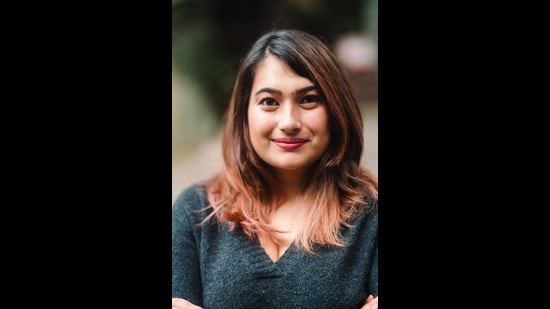
The germ had slightly less of an insane shape when it began. I was actually recovering after a bad bout of dengue and the only thing I felt like eating was my grandmother’s rasam and rice. The longer I kept subsisting on this exclusive diet, the more I kept thinking ‘how is it that rasam is such a hidden gem?’ Everybody knows of naan, chai, chicken tikka masala, but there are so many foods from every part of the world that are more home-style, that are more local, that nobody hears of until you visit or live there. This made me think about what makes foods catch on in the popular imagination. When cultures spread, when there is an intermingling of cultures, what is taken and what is left behind? As I delved deeper into my research, it began to strike me that when you’re chronicling the history of humanity, you also look at the history of food. The two cannot be separated. For me, science fiction is a reflection of humanity and what makes us human. Food is quintessential to making us human, not just from a survival point of view, but it’s something that brings us together. At the same time, food has become so divisive as well. All this kind of coalesced into building a universe, with the thought that ‘if this is where we are today with our relationship with food, what’s the future going to look like?’ That’s really where all of this came together. And cooking shows have always been an avenue to discover new foods. What better gateway to use than to introduce both readers and my characters into this world of food. I figured that would be a great vehicle, to just drop people into the middle of these clashing food cultures.
The book goes from first person to third person narrative for the main characters Saraswati and Serenity. Why did you do this?
When I’m writing, I spend a lot of time in my characters’ heads, trying to get to know them. Serenity is the kind of person who isn’t self-aware. But she always wants to put on this facade of bravado, no matter what is going on beneath the surface – if she’s feeling insecure or sad, she tends to hide it. When I’m spending time with my characters, I always ask – how are they comfortable being seen? Serenity Ko wanted to be this powerful person. One who says ‘you don’t know who I am. And I will not reveal that to you because I don’t trust you as you the reader’, even though you can see her flaws. She’s not comfortable being vulnerable. That was the main reason I decided to write her in third person. Saraswati, comes from a troubled past, but she really wants to be loved and liked. She wants to open herself up to you in the hopes that you, the reader, will connect with her and see her integrity. I think that need to be loved was one of the reasons why I wrote her in first person.
Despite the book being set 2000 years into the future, there’s a lot of things that the contemporary reader can identify with. What was the aim behind having this futuristic universe seem current?
{{/usCountry}}Despite the book being set 2000 years into the future, there’s a lot of things that the contemporary reader can identify with. What was the aim behind having this futuristic universe seem current?
{{/usCountry}}One of my early questions was, do I want to set this in the current world? I thought all the historical baggage that we carry today will influence everything. If I’m writing about contemporary foods and set them in contemporary India, everything will take on a different connotation. I felt that would detract from a lot of the thrust of the book as I wanted to write it, which was somewhere more removed from the history that we come from. I wanted to imagine a history for humanity and then throw these characters into that imagined future with a completely made-up history leading into it, to see how they might respond in those circumstances. I also did a lot of reading about how cultures evolve and spread, especially hegemonic and dominant cultures. Humanity still tends to identify with the past; we tend to seek strength and safety in numbers. That gives rise to a certain lack of fluidity. Even though the universe of my book is very anti-empire, what they can’t perceive for themselves is that they are a dominant culture and they’re trying to instil that culture and values in everyone. That’s a human tendency that has popped up across history – to be expansionist, to seek conformity. You tend to always witness a human assertion of identity.
What was your greatest challenge while writing this book?
It was prioritising and building these food cultures. The wonderful thing about food cultures we have right now, is that there’s a mythology associated with them, where we say ‘this has been made in my family this way for generations’ or ‘this is my great grandmother’s recipe’. How do you create that sense of historicity for a fictional food culture? They have all these cultural traditions that seem clinical, chemically precise and synthesised. How do you give that legitimacy and human connection? I think that was a challenge, building a culture that is so chemical. Their processes aren’t cooking processes that we use. Doing that, but still making it feel a bit human, giving it that philosophical meaningfulness that they attach to all of their foods. I wanted it to be believable. Just prioritising what aspects of food to touch upon was a challenge, because the scope was limitless. Choosing the battles I wanted to go into in terms of reflecting the politics of food was a big challenge too. And one of the things that I went into writing it as well was this thought that science fiction is usually so tech-focused. My first novel was like that. But food is something that’s so universal. I think breaking of that science fiction barrier was really important to me.
Science fiction books, especially by Indian writers, are not usually picked up by Indian readers – what led you down this path?
I was 11 when I read The Hobbit and The Lord of the Rings, and my mother introduced me to Star Wars, Star Trek and Arthur C Clarke. I always enjoyed the fact that in these imagined worlds, we’re talking about societies that don’t actually exist in real life, but mirror so much of who we are. I enjoyed the fact that characters needed to find their own way, build relationships, get to the heart of what makes us human – but in worlds that don’t have familiar markers of humanity. In science fiction, two or three parameters of reality are just offset by a small degree, and that immediately changes how human beings work and how they relate to each other and to the world. I love the fact that this presented me with these opportunities to let my imagination run amok. I like the freedom that this gives me to step away from questions of authenticity. How do you free yourself up from being tied to these notions of what is authentic in the popular imagination? You build a new world and you throw people into it. What you really have to focus on then is the authenticity of being human. That’s what really draws me to it. In terms of influences, it would be writers like Philip K Dick, Terry Pratchett and Douglas Adams. Ursula Le Guin as well, because she was phenomenally feminist and ahead of her time. In India, it’s obviously Samit Basu. I read his work in the early 2000s and that was the first time I read these fantasy worlds with Indian-sounding names and I felt I can have ownership of the space.
Huzan Tata is an independent journalist. She lives in Mumbai.