When the lockdown is called, we are unprepared, and my first thought is to get rice but nothing is open. Goa’s three-day curfew overlapped with the lockdown so we were unprepared, and it would be days till we would be able to get essentials. Luckily, a friend who owns a shop is able to give me two kilos of rice: all she has. Others are not so lucky. Within a few days, it is clear that there is no state plan for food. Grocery shops are closed, and my Whatsapp lists are buzzing with messages about food shares and trades. One message catches my attention: I have cilantro, basil, bhindi, tomatoes, squash, local lime and baby zucchini for anyone who wants. It’s from my partner. Over a year ago, he had told me about a community garden he was planning at our daughter’s school. The children would work the farm along with parents who wanted to. I hadn’t wanted anything to do with it. Much as I liked the idea of fresh vegetables, I cringed at the thought of weeding in the sun and wasn’t ashamed to say so. I would have many opportunities to ruefully recall the ease of that opt-out over the next many days. We ate almost entirely from that community garden for a week as we waited for the state government to sort out the food crisis. They were leisurely in their efforts.Of the many foods we no longer have, my daughters complain almost immediately about missing juice and sweet soft drinks. The local lime they harvest from the community garden is fist-size, like the gondhoraj, as much orange as lemon. The basil-lime cooler it makes is vivid green, and the girls happily de-stem fresh basil daily thereafter in anticipation of this libation.
We rotate through the vegetables we have, trying different things. My favourite discovery is pan-fried squash blossoms: we dip the orange squash flowers in a chick-pea-and-rice batter folded with chopped basil and crushed garlic, and pan fry them. The girls shriek as the oil splutters, and we all agree that they are delicious and must be made immediately the next day. We do, not only because we loved them, but also because the garden yields 15 squash blossoms every morning that must not be wasted.Despite the delights of farm-to-table moments, it’s hardly the kind of lockdown in which there is time or inclination to post photos of sumptuous food and piles of novels waiting to be read on social media. Replete as it might be with moments of satisfaction, the lockdown is inredibly tedious. Cooking, sweeping, mopping, laundry and doing dishes seem to eat away large chunks of the day. Zoom meetings devour the rest, and yet leaves still more day in which to fold laundry, check messages, and organize.
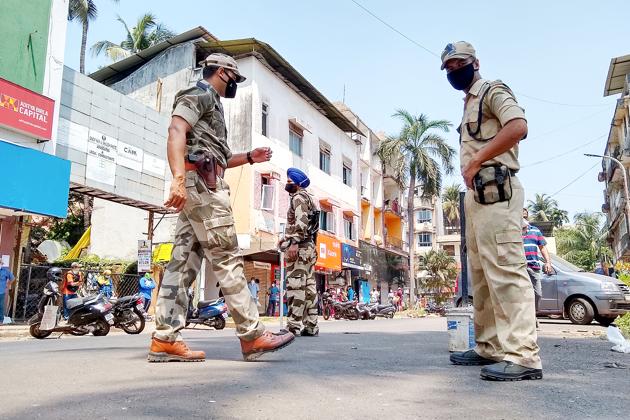
Within a few days, the Whatsapp list is buzzing with messages about organizing food for migrant workers. One of us collects money, another works out a deal with the owner of a big grocery who agrees to sell large volumes of rice, dal, sugar and tea, a third puts together volunteers for deliveries and packing. There are 12 on the team altogether. Everyone is a bit scared: rumour has it the cops have been heckling and sometimes beating people for curfew violations, even those in search of scarce food. I bite my tongue when P leaves with the truck that he generally uses for the community garden. He is gone for six hours: they have to dodge police, and food distribution takes longer when you are maintaining the 1.2 metre social distance. My girls and I make rag dolls and listen to Down by the Bay, over and over at the demand of the younger one. I am relieved as they dance around, happy to have a few minutes of reprieve from other realities.
{{/usCountry}}Within a few days, the Whatsapp list is buzzing with messages about organizing food for migrant workers. One of us collects money, another works out a deal with the owner of a big grocery who agrees to sell large volumes of rice, dal, sugar and tea, a third puts together volunteers for deliveries and packing. There are 12 on the team altogether. Everyone is a bit scared: rumour has it the cops have been heckling and sometimes beating people for curfew violations, even those in search of scarce food. I bite my tongue when P leaves with the truck that he generally uses for the community garden. He is gone for six hours: they have to dodge police, and food distribution takes longer when you are maintaining the 1.2 metre social distance. My girls and I make rag dolls and listen to Down by the Bay, over and over at the demand of the younger one. I am relieved as they dance around, happy to have a few minutes of reprieve from other realities.
{{/usCountry}}Now that it has become clear that we can feed ourselves — and some others — from the garden vegetables, P is spending the early mornings there, and late evenings on the migrant food deliveries. Daytime I see patients via Zoom while he takes the kids. The warm, sometimes noble, feeling that accrues from helping other people does not spare us from the relentlessness of each other. There is a predictable pattern to the day, much like there was before the lockdown, but it involves only four three-dimensional human beings. Travel and excursions outside the home, including school for the children, usually provides the sponsorship for our family harmony. With these exits closed, we find ourselves frayed faster than usual.
Time loops, the days are slower and less eventful, an odd foil to the literally viral general anxiety and alarm. I miss transitions: the moment of entering the house after work, not knowing whether the children will be home or out playing; the whirl of goodbye kisses and lunchbox reminders before the morning carpool horn sounds; the delicious quiet after the children leave; the lingering in front of the closet to choose a sari trying to remember where all I will go that day; planning what to do over the weekend; waiting for a haircut; perhaps even the dratted doorbell whose existence I have cursed many a time.
Minus these inflection points, entries, and exits, the lockdown stage set is oddly static. While the news is full of sorrow at the mounting losses and panic at what could be a potential impending crisis, the days stick together without separation, punctuated by Whatsapp forwards and memes, fingers traversing the screen in an unsatisfying desultory way.
When I made squash blossom fritters two days ago I swapped the basil in the batter for chaat masala, chopped onion, and cilantro. My youngest was not fooled. “This again?” she wails. “Amma has made it Indian style,” her sister explains, stifling laughter “The other times it was Italian style; tomorrow Amma will make it uhhh Antartican style.” Her sister whispers something, pokes her indignantly, and they collapse in giggles.
I show them photos of their own parents and those of their friends packing and distributing food packets. They must know I feel that we are lucky to have food at all. Then I realise that the desire to shake them out of giggles into care and concern is motivated by the uneasy memory of my former carefree unconcerned self, the one who thought she didn’t need to put her sweat into a kitchen garden, who was happy to be able to afford store-bought organic ones; the one to whom it would not occur to panic-buy, who could not imagine her government would leave no provision for food supply. For that naive self, already ill in the aftermath of the CAA, the Corona pestilence has closed a door permanently: no return to solipsism in the present, deathly inter-connected, world disorder.
Amrita Narayanan is a writer and psychoanalyst based in Goa. She is the author of A Pleasant Kind of Heavy and Other Erotic Stories.