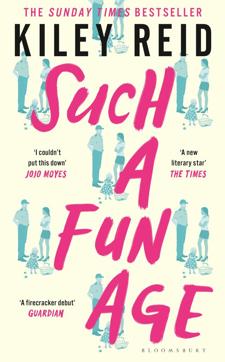
Your book addresses race, class and gender issues in a layered manner, showcasing the everydayness of living with prejudice. How important do you feel telling stories of precarious existences like Emira’s is in today’s deeply polarized world?
When I set out to write anything, a short story or a novel, it’s never because I feel the content or the issues are important. The story has to be gripping and real and the characters have to be interesting to me. I do like modern stories, and any story that includes domestic work must do the work of addressing race and the history that makes the transactional relationship still as fraught as ever. What’s most important to me as a reader and a writer is for a story to tell the truth.
It is interesting how the monetization and commoditization of child care is presented in the novel. This difficult quantification of care-based labour, was that a major concern that you wished to address through the narrative?
My major concern was addressing how childcare is presented to the Chamberlains and Emira. As a reader, I feel that I take away new thoughts on big broken systems by getting lost in the tiny personal details of characters that become real to me. I loved the idea of Alix and Emira’s worlds coming together and colliding over the past and new boyfriend, when really, the care of Briar should be the main focus. I think it’s interesting and heartbreaking that Emira offers wonderful child care, but the way her life is going is the same as many other black women, and she’ll never afford this level of childcare on her own. Showing Emira as a fully-fledged person, as well as a commodity in childcare, was very important to the story.
There are a lot of awkward moments and situations described in the text which address white privilege in ‘liberal’ circles from a nuanced perspective. How much of that came from personal experiences?
None of the events in the novel actual happened as I’m not great with auto-fiction, but I’d like to think they’re all based in truth. I’m constantly writing down things in my phone that I overhear or witness, and later I end up twisting them and shaping them against a plot till they work. I definitely inserted the feeling of working in a home, as I was a babysitter and nanny for many years, and there were many children that I grew to love very much. There is a moment where Emira is hit on while on a train, and Kelley tells a passenger that she is his girlfriend, that this is a little game they play. That did happen to me many years ago on the train. I have no idea what happened to that man but I hope he’s well.
There are a lot of awkward moments and situations described in the text which address white privilege in ‘liberal’ circles from a nuanced perspective. How much of that came from personal experiences?
None of the events in the novel actual happened as I’m not great with auto-fiction, but I’d like to think they’re all based in truth. I’m constantly writing down things in my phone that I overhear or witness, and later I end up twisting them and shaping them against a plot till they work. I definitely inserted the feeling of working in a home, as I was a babysitter and nanny for many years, and there were many children that I grew to love very much. There is a moment where Emira is hit on while on a train, and Kelley tells a passenger that she is his girlfriend, that this is a little game they play. That did happen to me many years ago on the train. I have no idea what happened to that man but I hope he’s well.
The story is narrated through by both Alix and Emira; how difficult was that to achieve and what were the most challenging scenes to be written from this dual perspective?
With any story, especially a novel, there are several starts and stops as you get to know your characters. There were many deleted pages for both Emira and Alix. I went in and out of first person at times, and while I eventually settled into close third, as that’s where I’m most comfortable, those original pages were helpful in getting to know their perspectives. The most difficult scene to write from a dual perspective was definitely the Thanksgiving scene. The two big questions are always, “Whose perspective will be the most interesting? And whose perspective will best serve the plot?” There were many moments in the Thanksgiving scene where it took writing a scene from one character’s point of view to fully understand that the other character’s point of view would actually work better.
Do you feel that writing for an author of colour will always be a political act?
I don’t feel that writing is always a political act, but I do think that stories are always political, regardless of the race or background of the author. There have been books that alter my way of thinking and made me see money and power quite differently, but I think it’s important to acknowledge that when I, or any other author, take pen to paper, and are lucky enough to receive a platform, that power isn’t being redistributed in a way that can have real impact and in a way that it should be. But stories are always political. Any story that claims to not be political becomes doubly so, in that the author is only highlighting their ability and privilege to make that choice.
Since a film adaptation is in the works, what are some of your concerns as an author? Also, what do you as an active participant in the process look forward to?
I think every author holds concerns about a film adaptation properly recreating the spirit of a novel. I don’t want to be too precious about it, as I think it’s important to let the experts do their job, and my favorite adaptations often stray from the plot of novel they are based on. But as an executive producer I’ll absolutely step in when I feel that I can offer more insights to these characters. I’m very much hoping we can translate the awkward scenes into even more visceral moments on screen.
Having penned both short stories and a full length novel, which would you say is the more difficult form to compose in and conversely, which do you enjoy writing more?
For me, novels are harder and more enjoyable. Especially with plot-centered novels, bringing a story and characters together in a wonderfully choreographed mess is difficult but so gratifying in a way that short fiction doesn’t always allow. That said, I still love short stories and I think reading and writing them makes me a better listener.
How has the pandemic and the subsequent lockdown affected your writing process?
The pandemic has definitely affected the travel and publication dynamics of my book tour. I was so disappointed to cancel so many events as I’ve learned that a book tour is where such lovely relationships can be made between authors and readers, but I’m even more thankful that I can stay safe and healthy. I’m writing just as much as before as I’m used to working from home, but I do find that I’m reading more. I used to only be able to hold one book in my head at a time, but lately I’ve been doing one fiction book, one book on tape, and one non-fiction book, and I’m able to keep them nicely separated in my mind.
What are you working on next?
I’ll be working on the film adaptation of Such A Fun Age as well as very slowly starting on novel number two.
Simar Bhasin is an independent journalist. She lives in New Delhi.