
 E-Paper



On watching It Was Just an Accident
Revisiting the Jafar Panahi Palme d’Or-winner, that insists on kindness, in a new and uncertain year that sees growing protests in Iran

 Prefer HTon Google


Four political prisoners in Iran, each tormented by a cruel man during their imprisonment, are drawn together by the lingering pull of vengeance. They grapple with the prospect of murdering the man, but only after they have identified him. Here’s the catch: none of the former prisoners, with the exception of one, possess the intrinsic resolve to kill a man — even one who has caused them great suffering. The tormentor, who has an artificial limb, is blindfolded, locked in a trunk, entirely powerless. The prisoners practise restraint, using the unverified nature of the man’s identity as a rational cover for their inability to act violently.
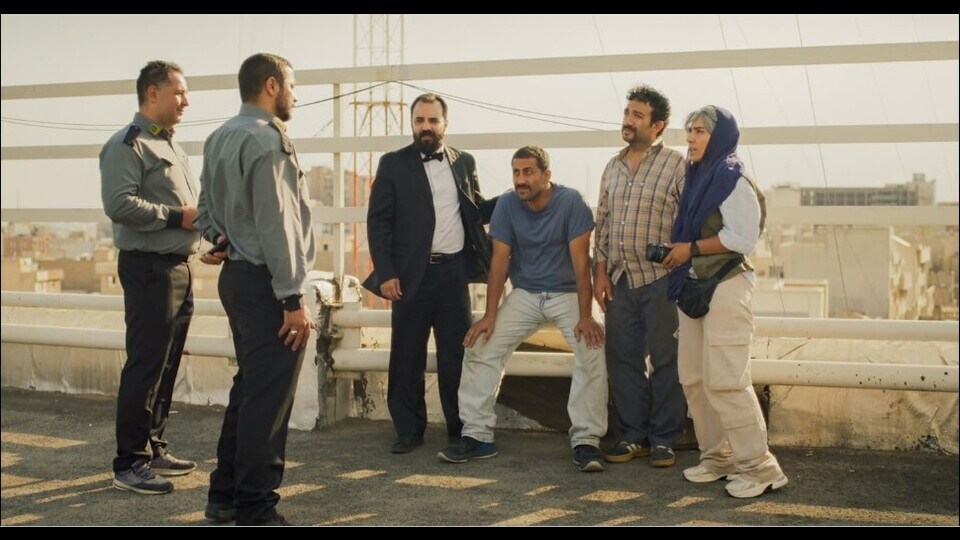
Jafar Panahi’s Palme d’Or-winning It Was Just An Accident, rages against the authoritarian Iranian regime with its draconian and corruption. While No Bears (2022) and This Is Not a Film (2011) were more self-reflective and relatively mellow, It Was Just an Accident is scathing in its critique of a regime which has, for far too long, failed its people. That Panahi is one of the most audacious and defiant filmmakers of our times is well-known — he shot this film without official permission from the authorities. He has been to jail multiple times. He once smuggled a film out of Iran in a USB drive concealed within a cake.
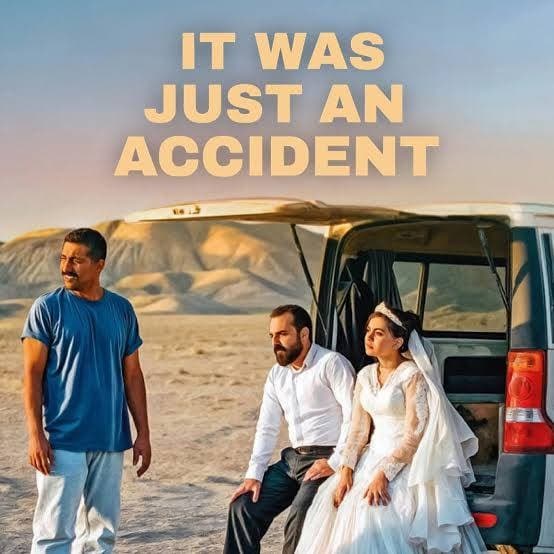
Panahi’s defiance acts as artistic fuel for he uses his real-life experiences in jail to flesh out some of the characters and specific instances in the film. The prisoners are all given personal histories. We get to hear, in graphic detail, the horrors they were subjected to. The most triggering and affecting is Goli’s (Hadis Pakbaten) story — her tormentor deflowered her before tightening the noose around her neck as a last-ditch measure to ensure that she goes to hell. Through Goli’s testimony, Panahi amplifies the voices of Iranian women denied basic rights, living under a regime that weaponizes Sharia law to sustain their subjugation.
While the film is entirely rooted in Iran’s political and cultural realities, it asks more philosophical questions which transcend geographical boundaries. Is violence against state actors justified? How fair is it to hold an individual responsible for systemic failure? Should state actors, acting in the name of survival within a draconian regime, be held accountable for torturing those who resist? Panahi engages with these questions through the explosive dynamic between Shiva (Mariam Afshari) and Hamid (Mohammad Ali Elyasmehr), former lovers who don’t see eye-to-eye on many pressing issues.
Hamid is a volatile, short-tempered man whose desire for vengeance overpowers his intellectual faculties. He goes against the group consensus and wants to, by all means, kill the tormentor. Shiva knows better. Each time Hamid suggests a violent action plan, Shiva reigns him in. “You are confusing a submissive agent and the state,” she tells Hamid who stays firm in his pro-violence stance. What starts as a spirited argument turns into a full-blown confrontation as Shiva and Hamid part ways. This coincides with Shiva and Vahid’s (Vahid Mobasseri) bond growing stronger more as a result of shared trauma and desire for justice, than romance.
Through his characters, Panahi articulates contrasting ways in which people living under an oppressive regime perceive reality. Shiva is the level-headed skeptic who balances emotion with practicality. Hamid is an extremist who wouldn’t flinch before resorting to violence. Goli wants instant justice, as impatience and restlessness get the best of her. Vahid, though vengeful, is restrained. And Ali, the most dangerous of them all, is neutral (read: apolitical) — he is unaffected by injustice as long as it doesn’t directly impact a loved one.
Samuel Beckket’s Waiting For Godot finds a mention. Fitting, one might argue, for the prisoners, much like the central characters in the play, spend a lot of time contemplating their next course of action. It Was Just an Accident, the title, refers to the tormentor’s claim that his cruelty was a result of his employment, not personal intent, supporting the view that life is all but a series of disconnected, often nonsensical events. An absurdist play, Waiting For Godot suggests that life itself lacks meaning and clear, rational order. Ironic, one might argue, for in the film’s world, nothing is an accident — the state engineers a society that is easy to control, where dissenting voices are suppressed.

The film tackles heavy themes — violence, vengeance, state oppression but doesn’t forget to celebrate humanity. Vahid, the car mechanic who abducted the tormentor, doesn’t let vengeance overpower him. He endangers himself solely to help Eghbal’s (Ebrahim Azizi) wife deliver her baby. At the risk of sounding sentimental, I found myself tearing up when Eghbal’s daughter bonded with her newfound uncle, Vahid. An oppressive state engineers such deep fractures between conformers and dissenters that finding solidarity is unthinkable even when the two aren’t in direct conflict with each other. When an authoritarian regime fails its people, perhaps it is shared solidarity and kindness, among both the dissenters and conformists, that endures. Vahid embodies this kindness, refusing to let his desire for revenge deter him from being kind.
All in all, It Was Just an Accident is just the rage-against-the-machine narrative that deserves the spotlight. As states across the world move to silence dissent, films that insist on kindness — especially when it is difficult — deserve to be celebrated.
Deepansh Duggal writes on art and culture. He tweets at Deepansh75.


