
 E-Paper



Report: Koshala Literature Festival
The fight for equality, the Mahabharata, the global financial meltdown and Habba Khatoon all featured in the third edition of Lucknow’s Koshala Literature Festival, which hosted more than 100 speakers and artists

 Prefer HTon Google


Apart from kababs, the Imambara and chikankari, Lucknow is famous for its syncretic culture. In honour of all that, the third edition of the Koshala Literature Festival chose ‘Celebrating Sanskriti’ as its tagline. Held at Lucknow’s Sangeet Natak Akademi from 22 to 24 November, 2024, and led by founding director Prashant Kumar Singh and festival director Amitabh Singh Baghel, the event hosted more than 100 speakers and artists.
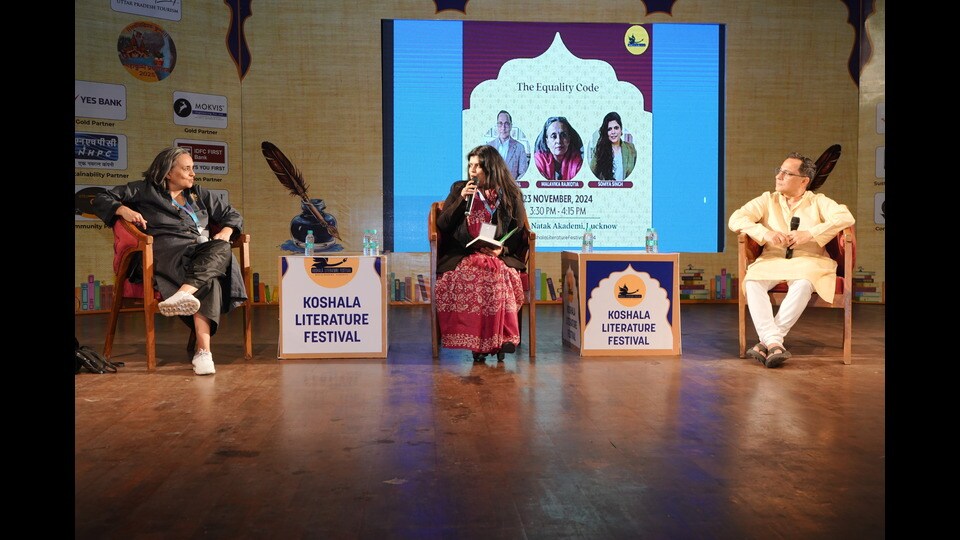
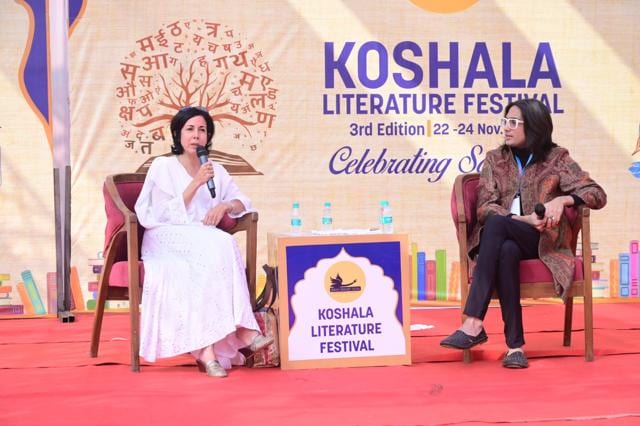
The first session took a deep dive into the history of Awadh with historian and writer Ira Mukhoty talking about her book, The Lion and the Lily: The Rise and The Fall of Awadh, with Eric Chopra, founder of Itihasology, a popular Instagram handle that celebrates Indian history. The conversation presented an unusual picture of an era with Mukhoty focussing on the prominence of women and revealing that courtesans were the highest tax payers of the time.
In the following session, former diplomat TCA Raghavan, who served as the Indian High Commissioner in Pakistan and Singapore, and whose latest book, Circles of Freedom, looks at the Indian freedom struggle through the lives of a group of prominent individuals, highlighted some of the social challenges of the first half of the 20th century. For instance, when Asaf Ali and Aruna Ganguly decided to marry each other, their decision was not welcomed though, in the end, love persevered.
Well-known Hindi writer Nilotpal Mrinal and Chandra Shekhar Verma, who is often acknowledged as Shabdon Ka Jadugar (Magician of words), discussed their literary journey and how the Hindi language stays relevant despite changing times. Chandra Shekhar said he chose to connect with the youth by talking about issues that are relevant today and asserted that literature should be about reaching out to non-readers and making them interested in it.
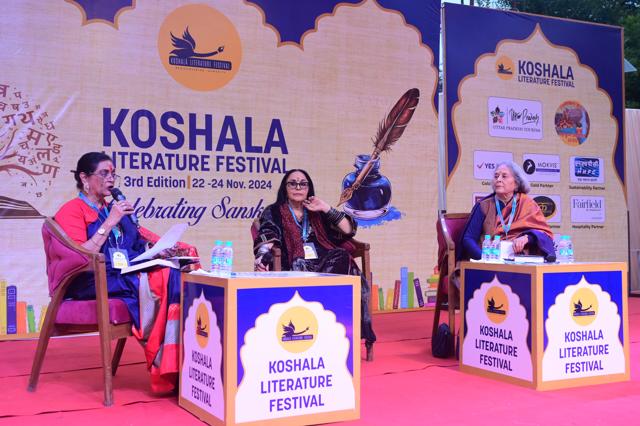
Towards the end of the first day, the session that left everyone high on both literature and music was a discussion led by performer Ila Arun and Anjula Bedi, with whom she wrote her autobiography, Parde ke Peechhey. The conversation with Nishi Pandey touched on Ila Arun’s journey of breaking barriers and singing songs that were controversial for their time. They also discussed how her personal life has been carefully and sensitively covered in the book.
The next day began on a sombre note as advocate and writer Malavika Rajkotia and author Aanchal Malhotra spoke with Eric Chopra on Echoes from the Unpartitioned Times. Rajkotia said some of the silences in her home were the direct result of Partition as no one had wanted to talk about what happened. She also underlined that the present communal environment is a reverberation of the past but that Indians also carry several memories of unpartitioned times, which need to be savoured and cherished.
The next session had Hindi poet Suman Keshari talking about her collection, Nimitta Nahi, where poems are dedicated to women characters from the Mahabharata. She said she has tried to give voices to characters who are often ignored or silenced.
The theme of the Mahabharata continued in the next session, as author and scholar Purushottam Agarwal talked to Anubhav Tyagi about his next project that grew out of having studied the epic and contemplated its contradictions for 25 years. Especially interesting was the session featuring advocates Saurabh Kirpal (author, Who is Equal?) and Malavika Rajkotia talking to Somya Singh about India’s various inequalities.
The next session titled Ishq Mein Lucknow Hona had Instagram sensation Maroof Culmen, food writer Taiyaba Ali, visual artist Taha Ahmad and writer Raj Smriti talking about their love for Lucknow. The panel did not limit their conversation to mainstream attractions but also included their personal stories, which made the session warm and personal.
The last day of the festival began with former RBI Governor Duvvuri Subbarao talking about his recently published book, Just A Mercenary? He revealed how working at the RBI and being a civil servant taught him to be ready for any challenges, including the global financial meltdown. He revealed that his wife had encouraged him to write the book in the hope that it would help future generations of civil servants to learn from his experiences.
Next, historian Devika Rangachari, who spoke about the Mauryan dynasty with Eric Chopra, pointed to some fascinating annals of history, which are seldom talked about.
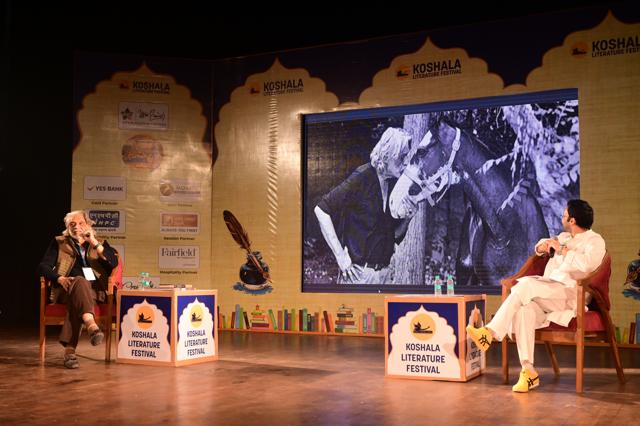
Filmmaker and artist Muzaffar Ali captivated everyone when he spoke about how he started to see horses as symbols of peace, beauty and love. He also spoke about his unreleased film, Zooni about Kashmiri poet Habba Khatoon, that is set to be restored.
Another highlight was popular historian Rana Safvi’s lively session on her recently published book, A Firestorm in Paradise.
All three days of the Koshala Literature Festival were enlivened by different kinds of musical performances and by open mic sessions.
With thoughtful sessions, interesting cultural presentations and excellent audience engagement, it is clear that the Koshala Literature Festival has made its mark on the Indian literary scene.
Chittajit Mitra (he/him) is a queer writer, translator and editor from Allahabad. He is co-founder of RAQS, an organization working on gender, sexuality and mental health.


