...
...
Next Story

Report: The 16th IDSFFK

The International Documentary and Short Film Festival of Kerala recognised some interesting Indian and international work

Published on: Nov 21, 2024 08:06 PM IST
By
Prefer HTon Google
Advertisement

A mind-boggling package of 335 films from 54 countries was the cornerstone of the 16th International Documentary and Short Film Festival of Kerala held in Thiruvananthapuram in late July, earlier this year. As many as 31 documentaries and 18 fiction short films were also showcased. These included documentaries and short films from Palestine that reflected Kerala’s solidarity with the troubled state. The short documentary category showcased 24 films in Marathi, Bengali, Hindi, Santhali, Odia, Kannada, Tamil, Assamese and Sylheti. These
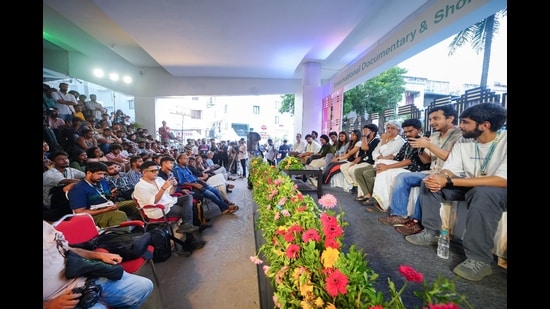
PREMIUMAudience interaction at the 16th IDSFFK (Courtesy IDSFFK)
Audience interaction at the 16th IDSFFK (Courtesy IDSFFK)
The festival’s opening film was Ernest Cole: Lost and Found, a documentary on the South African photographer whose images made the rest of the world confront the horrible reality of South Africa’s Apartheid regime. (https://idsffk.in/)

The opening film Ernest Cole: Lost and Found, a documentary on the South African photographer, who exposed the horrors of apartheid to the world, was greatly admired. Cole’s book, House of Bondage, published in 1967, when he was just 27, forced him into exile in New York City and Europe for the rest of his life. Director Raoul Peck vividly brought out Cole’s wanderings, his turmoil as an artist and his justifiable anger at the complicity of the Western world in the horrors of the apartheid regime. The documentary also showed how 60,000 negatives of Cole’s work that had been missing for 40 years were discovered in the safe of a Swedish bank in 2017.

Anand Patwardhan’s Vasudhaiva Kudumbakam (The World is Family), a deeply personal history of the film maker’s family intertwined with the history of the nation, was adjudged the Best Long Documentary, an award that carried a cash prize of 2 lakhs. Patwardhan also won the Kumar Talkies award for best editing.

Anand Patwardhan’s Vasudhaiva Kudumbakam (The World is Family) was adjudged the Best Long Documentary (Courtesy https://idsffk.in/)

Ranajit Ray’s Putulnama (Dolls Don’t Die), on the daily struggles of puppet artistes, won the award for the Second Best Long Documentary. It also won the Jury Award for Best Cinematography. Documentaries on the farmer’s protests (Nishtha Jain and Akash Basumatari’s Farming the Revolution) and on caste (Jhaal by Sneha Malakar and Srishti Garg) were also appreciated.

In the fiction category, the jury comprising screenwriter Urmi Juvekar and filmmakers Pushpendra Singh and Krishand RK gave the best short fiction award to Vishwas K for the Kannada-Marathi film, Waterman, which portrayed the world through the eyes of a child on stilts.

The famous Bedi brothers, Naresh and Rajesh, who were presented the Lifetime Achievement award in wildlife filmmaking, assured the gathering that they would not be resting on their laurels: “It would have been fruitful to have put our foot in glamorous Bollywood but our heart said to follow a passion,” Naresh Bedi said recounting how they shot in Ladakh for three consecutive winters to capture the elusive snow leopard in its natural habitat. “Every moment was joy filled, where local trackers in different valleys helped up with the update on spotting the animal. We let out a shriek of joy, delight and fear when a snow leopard waked barely six feet away from our hide,” he added. The duo also reflected on their debut film, The Ganges Gharial, which won the prestigious Panda Award (“Green Oscars” for best wildlife cinematography at the Wildscreen festival in UK) and on Whistling Hunters, their work on the dhole or the Indian wild dog. “These decades of filming have taught us the effects of climate change and global warming,” they said.

Oscar winning sound designer Resul Pookutty on ‘The Sonic Landscape’. (Courtesy idfssk)

Aspiring filmmakers also thronged screenwriter-director Urmi Juvekar’s session. “When you engage the audience with hope and fear, half the battle is won for the filmmaker. The bottom line of focusing on the emotional information about the characters should not be missed out,” said Juvekar, who was the chairperson of the fiction jury.

All in all, the 16th IDSFFK showcased some interesting work and provided much food for thought for film enthusiasts.

KV Vasudevan is an independent journalist. He lives in Chennai.

A mind-boggling package of 335 films from 54 countries was the cornerstone of the 16th International Documentary and Short Film Festival of Kerala held in Thiruvananthapuram in late July, earlier this year. As many as 31 documentaries and 18 fiction short films were also showcased. These included documentaries and short films from Palestine that reflected Kerala’s solidarity with the troubled state. The short documentary category showcased 24 films in Marathi, Bengali, Hindi, Santhali, Odia, Kannada, Tamil, Assamese and Sylheti. These films explored everything from women’s lives to drought, mining and people’s movements.

PREMIUMAudience interaction at the 16th IDSFFK (Courtesy IDSFFK)
Audience interaction at the 16th IDSFFK (Courtesy IDSFFK)
The festival’s opening film was Ernest Cole: Lost and Found, a documentary on the South African photographer whose images made the rest of the world confront the horrible reality of South Africa’s Apartheid regime. (https://idsffk.in/)

The opening film Ernest Cole: Lost and Found, a documentary on the South African photographer, who exposed the horrors of apartheid to the world, was greatly admired. Cole’s book, House of Bondage, published in 1967, when he was just 27, forced him into exile in New York City and Europe for the rest of his life. Director Raoul Peck vividly brought out Cole’s wanderings, his turmoil as an artist and his justifiable anger at the complicity of the Western world in the horrors of the apartheid regime. The documentary also showed how 60,000 negatives of Cole’s work that had been missing for 40 years were discovered in the safe of a Swedish bank in 2017.

Anand Patwardhan’s Vasudhaiva Kudumbakam (The World is Family), a deeply personal history of the film maker’s family intertwined with the history of the nation, was adjudged the Best Long Documentary, an award that carried a cash prize of 2 lakhs. Patwardhan also won the Kumar Talkies award for best editing.

Anand Patwardhan’s Vasudhaiva Kudumbakam (The World is Family) was adjudged the Best Long Documentary (Courtesy https://idsffk.in/)

Ranajit Ray’s Putulnama (Dolls Don’t Die), on the daily struggles of puppet artistes, won the award for the Second Best Long Documentary. It also won the Jury Award for Best Cinematography. Documentaries on the farmer’s protests (Nishtha Jain and Akash Basumatari’s Farming the Revolution) and on caste (Jhaal by Sneha Malakar and Srishti Garg) were also appreciated.

In the fiction category, the jury comprising screenwriter Urmi Juvekar and filmmakers Pushpendra Singh and Krishand RK gave the best short fiction award to Vishwas K for the Kannada-Marathi film, Waterman, which portrayed the world through the eyes of a child on stilts.

The famous Bedi brothers, Naresh and Rajesh, who were presented the Lifetime Achievement award in wildlife filmmaking, assured the gathering that they would not be resting on their laurels: “It would have been fruitful to have put our foot in glamorous Bollywood but our heart said to follow a passion,” Naresh Bedi said recounting how they shot in Ladakh for three consecutive winters to capture the elusive snow leopard in its natural habitat. “Every moment was joy filled, where local trackers in different valleys helped up with the update on spotting the animal. We let out a shriek of joy, delight and fear when a snow leopard waked barely six feet away from our hide,” he added. The duo also reflected on their debut film, The Ganges Gharial, which won the prestigious Panda Award (“Green Oscars” for best wildlife cinematography at the Wildscreen festival in UK) and on Whistling Hunters, their work on the dhole or the Indian wild dog. “These decades of filming have taught us the effects of climate change and global warming,” they said.

Oscar winning sound designer Resul Pookutty on ‘The Sonic Landscape’. (Courtesy idfssk)

Aspiring filmmakers also thronged screenwriter-director Urmi Juvekar’s session. “When you engage the audience with hope and fear, half the battle is won for the filmmaker. The bottom line of focusing on the emotional information about the characters should not be missed out,” said Juvekar, who was the chairperson of the fiction jury.

All in all, the 16th IDSFFK showcased some interesting work and provided much food for thought for film enthusiasts.

KV Vasudevan is an independent journalist. He lives in Chennai.

All Access.
One Subscription.

Get 360° coverage—from daily headlines
to 100 year archives.

E-Paper
Full
Archives
Full Access to
HT App & Website
Games
 
SHARE THIS ARTICLE ON