
 E-Paper



Review: A New World Romance by Susham Bedi
Set on the premise that love ends when commitment or marriage begins, the novel recounts the story of two middle-aged Indian scholars in a US city

 Prefer HTon Google


When a woman has worked on slowly recreating her identity post-divorce, she would naturally be hesitant about entering another commitment. A contemporary reader located in the social and psychological landscape of red/green flags and situationships, however, wonders how fair it is for someone to want all the benefits of a relationship without stepping into one.

Susham Bedi’s A New World Romance, translated from the Hindi by Astri Ghosh, recounts the story of the chance encounter of two middle-aged scholars, Ketaki and Aditya, in a city in Navabhum (New World/USA). They fall in love quickly and surprisingly but practise caution in their actions that are governed by the values instilled in them during their childhood in Purabhum (Old World/India). As they begin to learn more about each other and become aware of their own feelings, their past lives, marriages and love affairs begin to dictate their behaviour. The more Aditya devotes himself to Ketaki and to building a life together, the more Ketaki eludes him despite loving him.
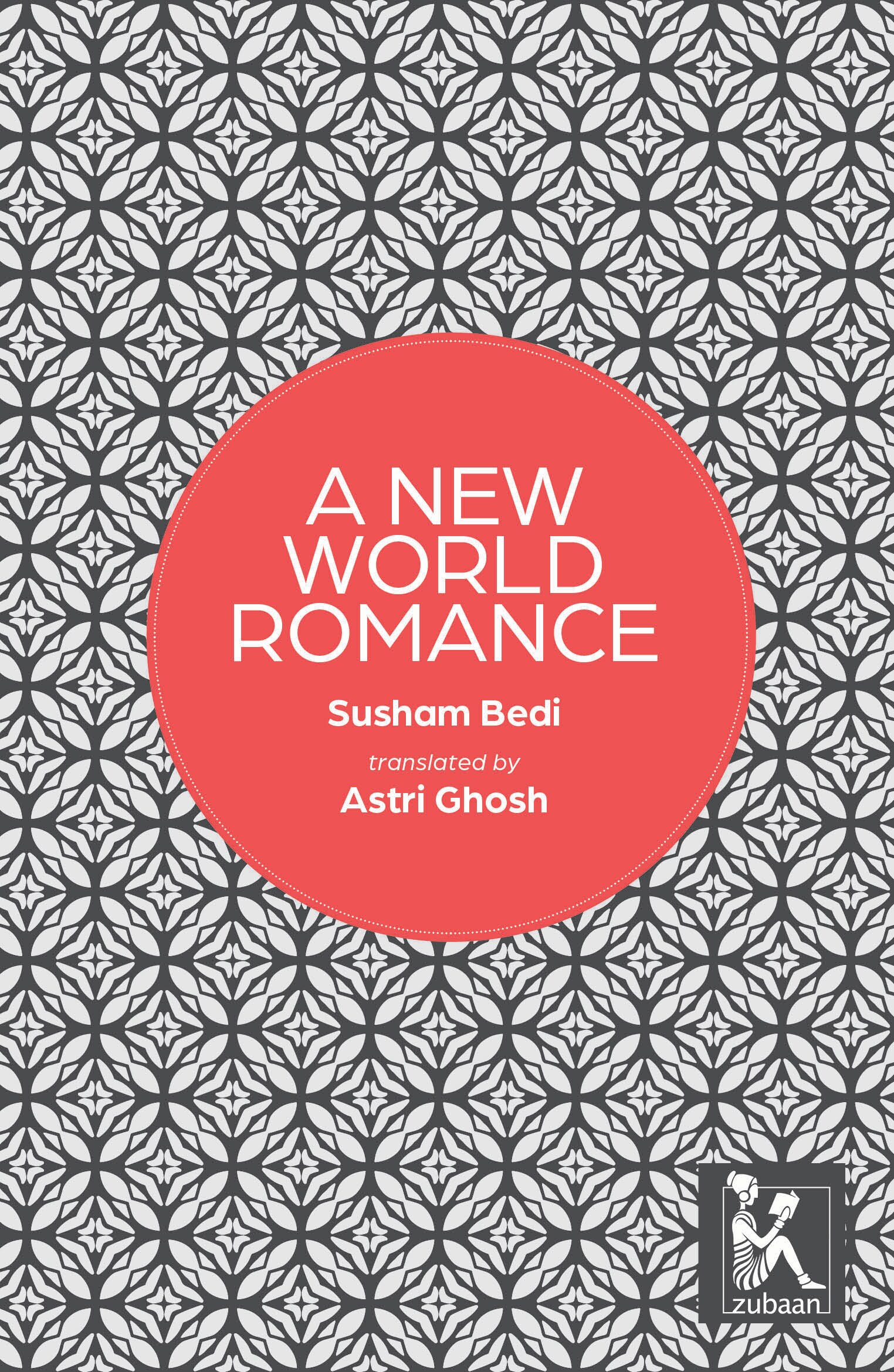
The story is set on the premise that love ends when commitment or marriage begins. The novel that cites various love stories from the folklore and mythology of both worlds, is divided into different parts based on the different stages of love according to the shastras: Purvarag (the dawning of love), Ayog (semi-union), Sanyog (union), Viyog (partition). It moves back and forth in looking at the Old World values rooted in the New World lifestyles of the immigrant characters. Both Aditya and Ketaki have entertained multiple suitors prior to falling in love with each other. As they do, Aditya makes Ketaki his whole world while she remains consistent with her community of people though she does prioritise Aditya.
Today’s Instagram-therapy-speak reader sees right away that this is doomed to be a situationship as the lack of alignment between the characters is clear. Aditya is so focused on dedicating himself to Ketaki that he overlooks the moments of doubt that are bound to turn into resentment. Simultaneously, Ketaki’s expressions of love are ephemeral though she desires all the benefits of being in a relationship. When they fantasise about living together, Aditya looks at it as creating a life where they share household chores, work on their independent research, and continue to retain their individuality despite the spiritual union of their souls. Having learnt from their respective divorces, they want to create a new reality based on equality and freedom. However, Ketaki, having once lost her sense of self, is cautious about making this fantasy a reality. This eventually makes the entire experience a confusing one for both individuals. They “neither die nor live. They are like those straws that neither drown nor swim; all they do is float along with the water and the wind.”
In the beginning, people of both Purabhum and Navabhum are described: “…people in Purabhum are remarkably incapable of keeping track of things. They only know how to scuttle around all day long. Not to keep accounts of things. … In Navabhum, people do not believe just about anything. This is why they are incredibly proud that they have invented a machine capable of keeping track of everything, a computer. [They] write down details of every activity of theirs. Everything holds a historical significance for them.”
Later, these descriptions seem to become characteristic of Ketaki and Aditya respectively. Conflict grows as Aditya begins to ask questions about Ketaki’s whereabouts.
The story’s omniscient narrator, a woman, constantly wonders about her own authority to tell her friend’s story and to intervene. She takes it upon herself to introduce the New World and the Old World, the USA and India to her readers, talk at length about storytelling in both places, and the nature of love in stories. She adds the historical, political and cultural aspects of being men and women vis-à-vis personal experiences in the past to help interpret Ketaki and Aditya’s actions in love. In doing so, very little is left for the reader to interpret or analyse. This intervention is akin to a person orally narrating a story to her audience, adding flavours and questions when needed, but also restrains the reader from arriving at her own conclusions. The narrator clearly also feels the need to cater to both men and women, lest she is seen as favouring her friend Ketaki. Though it seems unnecessary, this intervention shines a light on the constant doubts that writers tackle as they put their work out in the world. Working as a speck of sand in the eye, this device constantly reminds the reader that the story is being told specifically by a woman who wishes not to be misunderstood.

Originally published in 2002, A New World Romance highlights the experience of being rooted in the values of the Old World, especially when both characters are from there and do not want their intentions to be misunderstood before they get to know each other. Bedi also shows how Ketaki’s childhood experience of abandonment and the betrayal of Aditya’s first love are a source of their insecurities. Astri Ghosh ensures the integration of nuances of communication in Hindi for English readers, such as the implication of ‘aap’ turning to ‘tum’ in the story.
What begins as a heady and exciting scene from a film slowly burns into a cycle of repetitive conversations and concerns that lead the characters and readers nowhere. This is a nuanced character sketch of two people in love working through their past to remain present in their relationship even as the future hangs on the thread of uncertainty. The author does not give us an easy happy or sad ending. Instead, the reader has three plausible endings to choose from.
Whether that is satisfying or just mystifying depends on how you view love, relationships and the world, whether old or new.
Akankshya Abismruta is an independent writer.


