Samira Shackle begins Karachi Vice with her aunt’s safety advice, “If a man on a motorbike stops by your car window and flashes a gun, don’t ask questions, just hand over your cash and phone. Change your timings, routes, and vehicles frequently to minimize the risk of kidnap. If you pass through a dangerous district, don’t stop - not even if someone crashes into you.” This sets the tone for what is to follow. Shackle’s account of Karachi is intimate and tender, as she traces its cosmopolitan roots and gives the reader a front-row view of its post-Partition violence.
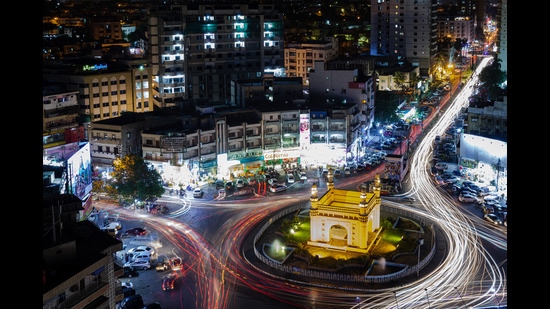
On her multiple trips venturing out from the city within a city - from its affluent, sealed-off districts into dangerous locales she notices that despite Karachi’s vast sprawl, most of its citizens remain confined to their surrounding areas.
To understand the contemporary city is to know its history. Shackle chronicles the post-Partition waves of displaced people who turned towards it for hope and shelter. Different ethnic groups including the Mohajirs, the Pashtuns and the local Sindhis compete in Karachi for limited resources, virtually no physical space, and basic amenities including sewerage and electricity that have simply been unable to keep up with the city’s uncontrolled, unplanned expansion. The power vacuum in place of an able police force has led to the formation of gangs along ethnic lines, mafias that trade in drugs, protection, and amenities. Over time, most of these gangs have become closely affiliated to political parties, some officially and some covertly. Add to this, the decades that Pakistan has spent under military rule, the countless elected governments overthrown by its army and the crippling effect on state institutions that are now powerless.
Shackle presents the major events that have defined Karachi through the viewpoints of five of its citizens. They are an eclectic mix of characters. We speed through the streets of Karachi with Safdar, a Pashtun ambulance driver for a local NGO. Haunted by the experience of extricating bodies from bomb blast sites he comments on the reasons why he took up the profession and why he volunteers to go to the most dangerous locations. We hear from Parveen, the local street school teacher, whose aunt drinks tea with the wife of the most famous gangster in Lyari; of her struggle to keep kids in school and prevent them from joining local gangs. From her parents, Shackle draws out a history of violence so pervasive and long-lasting that it is tinged with its own nostalgia. Parveen’s parents dream of the good old days, “when gangsters fought with knives, not guns, and sold hashish instead of heroin.”
{{/usCountry}}Shackle presents the major events that have defined Karachi through the viewpoints of five of its citizens. They are an eclectic mix of characters. We speed through the streets of Karachi with Safdar, a Pashtun ambulance driver for a local NGO. Haunted by the experience of extricating bodies from bomb blast sites he comments on the reasons why he took up the profession and why he volunteers to go to the most dangerous locations. We hear from Parveen, the local street school teacher, whose aunt drinks tea with the wife of the most famous gangster in Lyari; of her struggle to keep kids in school and prevent them from joining local gangs. From her parents, Shackle draws out a history of violence so pervasive and long-lasting that it is tinged with its own nostalgia. Parveen’s parents dream of the good old days, “when gangsters fought with knives, not guns, and sold hashish instead of heroin.”
{{/usCountry}}Through her other interviewees that include Siraj, a mapmaker and surveyor, Jannat, a student and later mother, and Zille, a crime reporter, Shackle traces a network of human conflict across the city’s various ethnic demarcations; unerasable lines that connect political leaders to businessmen to gang lords to community leaders. Through the eyes of Jannat, we see the fight to save the Lal Baksh village from an upcoming township that threatens homes with bulldozers. Through Zille, the crime reporter, we uncover the alleged link between Benazir Bhutto and the biggest kingpin in Lyari. Zille gets so addicted to his profession that upon being shot he worries about losing his job rather than about continuing with it. The degree of operational efficiency between crime and politics is at such a high level, that when Parveen goes to her local gang lord to request funds she runs into her civil servant cousin whose legitimate government posting is as his bodyguard.
The structure and pacing of Karachi Vice is refreshing. Shackle’s writing is vivid and she maintains a heady pace. The vignettes break off at poignant points and old characters return in fresh events. Amid harsh violence, the author turns to relatable events like Safdar’s grandmother feigning an illness to trick him into getting married. Warm moments in the book touch on the hole-in-the-wall shops where people discuss politics over chai and on characters who recall childhood memories of growing up with gangsters.
Karachi Vice would be of particular interest to those looking to study the city and its political history. Few books can match Shackle’s rigorous research, tight narration, and the iron resolve of her subjects. The work itself stands on the shoulders of local activists, reformers and citizens; extraordinary individuals grappling with insurmountable odds.
Percy Bharucha is a freelance writer and illustrator with two biweekly comics, The Adult Manual and Cats Over Coffee. Instagram: @percybharucha