Not many know about an Indian justice of the court who thwarted the colonial British government’s subjugation of Indians often with the tacit support of the judiciary. His legal acumen pierced through the inherent racism of the British judicial system of the period and paved the way for democratic adjudicatory governance.
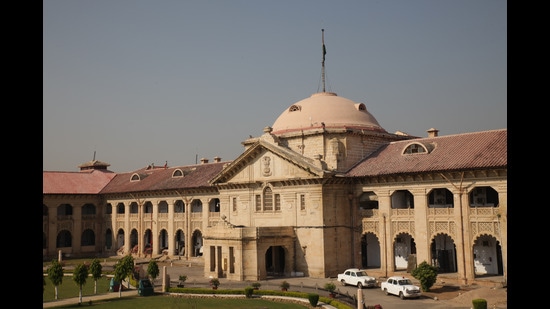
Syed Mahmood (1850-1903) served the Allahabad High Court as Justice between 1887 and 1893 and knocked down the colonial British judicial system’s hierarchy. He contextualized dissent within the cultural ethos and social moorings of Indians and made judicial legislation altruistic. Sadly, his illustrious father, Sir Syed, overshadowed him, and his great contribution to the collective life of India remains little known. A new book attempts to change that. Syed Mahmood: Colonial India’s Dissenting Judge by two young law academics, Mohammad Nasir and Samreen Ahmad is both informative and analytical in its dissection of his erudite and often astounding judgements.
Mahmood’s authentic interpretation of Muslim law that discarded rigidity and allowed change was discussed in a doctoral thesis entitled Syed Mahmood and the transformation of Muslim Law in British India (2004) submitted at the Institute of McGill University, Canada. The dissertation meticulously documents how he propounded Anglo-Islamic Law. Justice Hidayatullah also wrote a discerning article on the man. But apart from this, there has been no substantial study exploring Mahmood’s legacy of presenting dissent as a vital democratic tool. The authors of the book being reviewed go beyond hagiography to objectively portray Mahmood’s idiosyncrasies, his close and stormy engagement with the British, and his unerring legal acuity.
The book’s six illuminating chapters seek to acquaint readers with the portrait of a judge whose legal profundity, industry and erudition did not save him from being pilloried for opposing Sir John Edge, the Chief Justice of the Allahabad Court, for arbitrarily usurping the powers of other judges and for not allowing differences over specific lawsuits. Mahmood’s begrudging resignation partly owes to his infirmity, delineated in the introduction. The young researchers relying on close scrutiny of letters and other documents do not absolve him entirely. Their assertion betrays a sense of academic neutrality: “The Chief Justice’s intolerance of contrary views by a native judge was the root cause of the tension. However, some of Mahmood’s errant personality traits, such as impetuous behaviour, resulted in his disappointment turning into outrage, which brought in an element of vehemence in his response.”
{{/usCountry}}The book’s six illuminating chapters seek to acquaint readers with the portrait of a judge whose legal profundity, industry and erudition did not save him from being pilloried for opposing Sir John Edge, the Chief Justice of the Allahabad Court, for arbitrarily usurping the powers of other judges and for not allowing differences over specific lawsuits. Mahmood’s begrudging resignation partly owes to his infirmity, delineated in the introduction. The young researchers relying on close scrutiny of letters and other documents do not absolve him entirely. Their assertion betrays a sense of academic neutrality: “The Chief Justice’s intolerance of contrary views by a native judge was the root cause of the tension. However, some of Mahmood’s errant personality traits, such as impetuous behaviour, resulted in his disappointment turning into outrage, which brought in an element of vehemence in his response.”
{{/usCountry}}Mahmood’s multifaceted personality is revealed through vivid details central to the understanding of this important nineteen century Indian. Three chapters titled Landmark Judgement, Educationist; Contribution to Aligarh Muslim University, and Shaping Interfaith Dialogue are particularly interesting.
A fourth chapter focuses on 22 legal suits including 11 dissenting ones. Carefully culled from Mahmood’s 383 judgements mentioned in the Indian Law Reports, these judgements were not sensational but did reveal his unprecedented sense of justice coupled with a knowledge of the tradition of western jurisprudence. For Justice Hidayatullah, Mahmood did not elect between rival arguments. After doing all the necessary research to apply the law correctly, he formed an opinion.
This surfaces prominently in Mahmood’s trailblazing dissent in the case of Queen-Empress vs Pophi, which redefined the concept of a free trial. The authors have produced a summary of the case with relevant excerpts. Five accused, sentenced to 10 years of rigorous imprisonment by a subordinate court, filed an appeal at Justice Mahmood’s court. No lawyer represented them nor were they released from jail to appear in person. The majority opinion articulated by Chief Justice Edge maintained that if the accused is neither present in person nor represented by a lawyer, the court is to peruse the record of the accused in deciding the case. For Mahmood, this upended the principle of natural justice. He roped in two fundamental doctrines of human jurisprudence - hear the other side, and where there is a right, there is a remedy. The case prompted the former chief justice of the Supreme Court, Justice Venkatachaliah, to observe, “One sterling example in India is Justice Mahmood who, in 1891, enunciated the essential of natural justice and the consequences of its non-observance.”
Justice Syed Mahmood can be compared to John Marshall Harlan (1833-1911), the iconic figure of the American judiciary known as “the Great dissenter”, and was the precursor of Indian Supreme Court justices Murtaza Fazal Ali (1920-1985) and Hans Raj Khanna (1912-2008) who were both known as able dissenters.
The book adds significantly to the body of legal literature in India. Nasir and Ahmad have done well to jog our memory about a forgotten pioneer of dissent especially at a time when the judiciary finds it easy to swim with the tide.
Shafey Kidwai is a professor of mass communication at Aligarh Muslim University.